Why Are Most Glass Pipes Made From Borosilicate Glass?
Why Boro Became the Standard for Glass Pipes
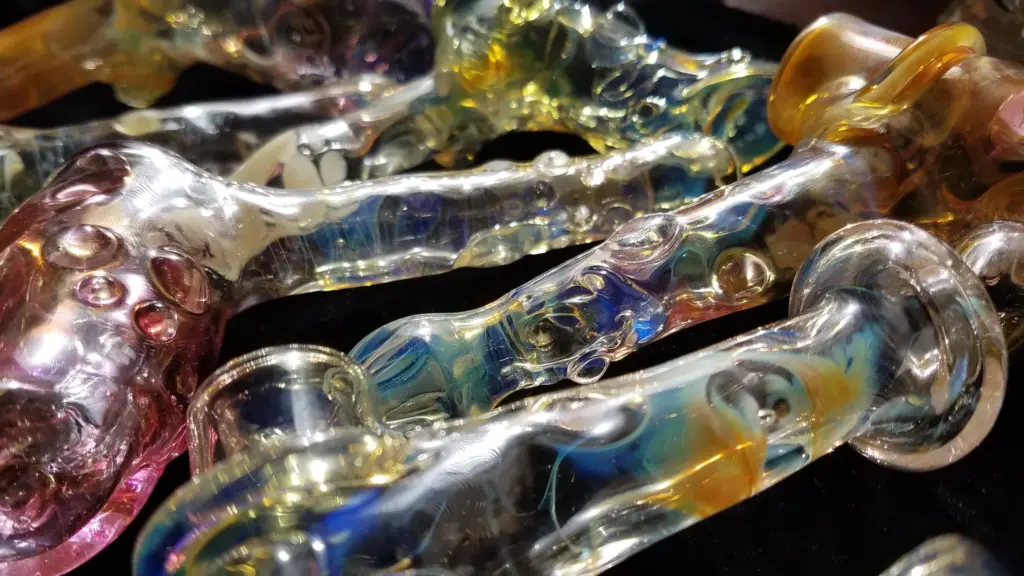
Walk into almost any American glass shop today and the overwhelming majority of artist-made pipes, bongs, bubblers, and dab rigs will be made from borosilicate glass, usually just called boro. There are exceptions, but boro has become the standard material for modern functional glass. The biggest reason is simple: borosilicate expands and contracts much less when its temperature changes than ordinary soda-lime glass, giving it excellent resistance to thermal shock. That makes it particularly well suited to both the intense heat involved in making a pipe and the repeated heating and cooling it may experience afterward.
What Is Borosilicate Glass?
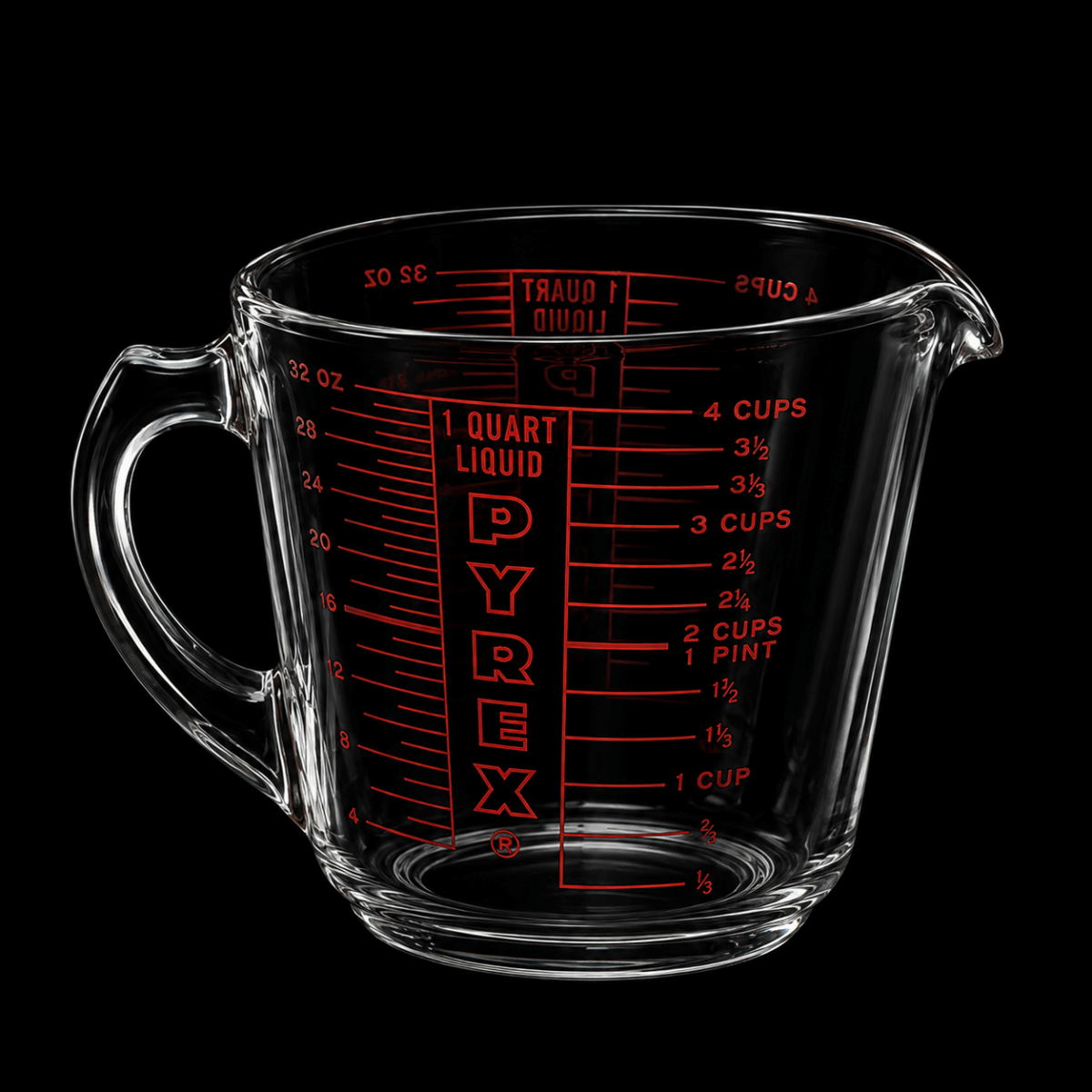
Borosilicate is a family of glass made primarily from silica with boron-containing compounds added to the glass mixture. The addition of boron helps give the finished glass its characteristically low coefficient of thermal expansion. In practical terms, boro doesn’t change size as dramatically when it gets hot or cold, so temperature differences are less likely to create enough stress to crack the glass. This is the same basic property that made borosilicate valuable for laboratory glassware such as PYREX. It is also one of the reasons glass artists can heat a relatively small area of a borosilicate tube with a torch while manipulating it into a much more complex shape.
Why Does Borosilicate Work So Well for Glass Pipes?
Thermal resistance is only part of the answer. Modern pipemaking relies heavily on lampworking, where rods and tubes of glass are heated in a torch flame and shaped, joined, stretched, blown, or decorated. Borosilicate is exceptionally useful for this style of construction. Artists can start with standardized clear tubing and add bowls, mouthpieces, joints, percolators, colored sections, marbles, horns, and other components. An enormous industry has also developed around compatible borosilicate tubing, rods, colors, ground joints, and artistic materials. Once boro became the dominant material, the tools and techniques of modern functional glass increasingly developed around it as well.
How Did Boro Become the Standard for American Glass Pipes?
The material has been around much longer than the modern glass pipe industry, but Bob Snodgrass is one of the key figures in the story of American functional borosilicate glass. Snodgrass began working with glass in Ohio in 1971 and later traveled around the country selling his work. During the 1980s he became closely associated with the Grateful Dead touring scene, where his glass pipes reached customers and other aspiring glassworkers across the country. He eventually settled in Eugene, Oregon in 1990. Snodgrass taught and influenced other artists there, helping Eugene develop into one of the most important centers of American borosilicate pipe making. The Corning Museum of Glass describes the movement that grew around Snodgrass as a uniquely American development within flameworking.



Why Isn’t Soft Glass Used for More Pipes?
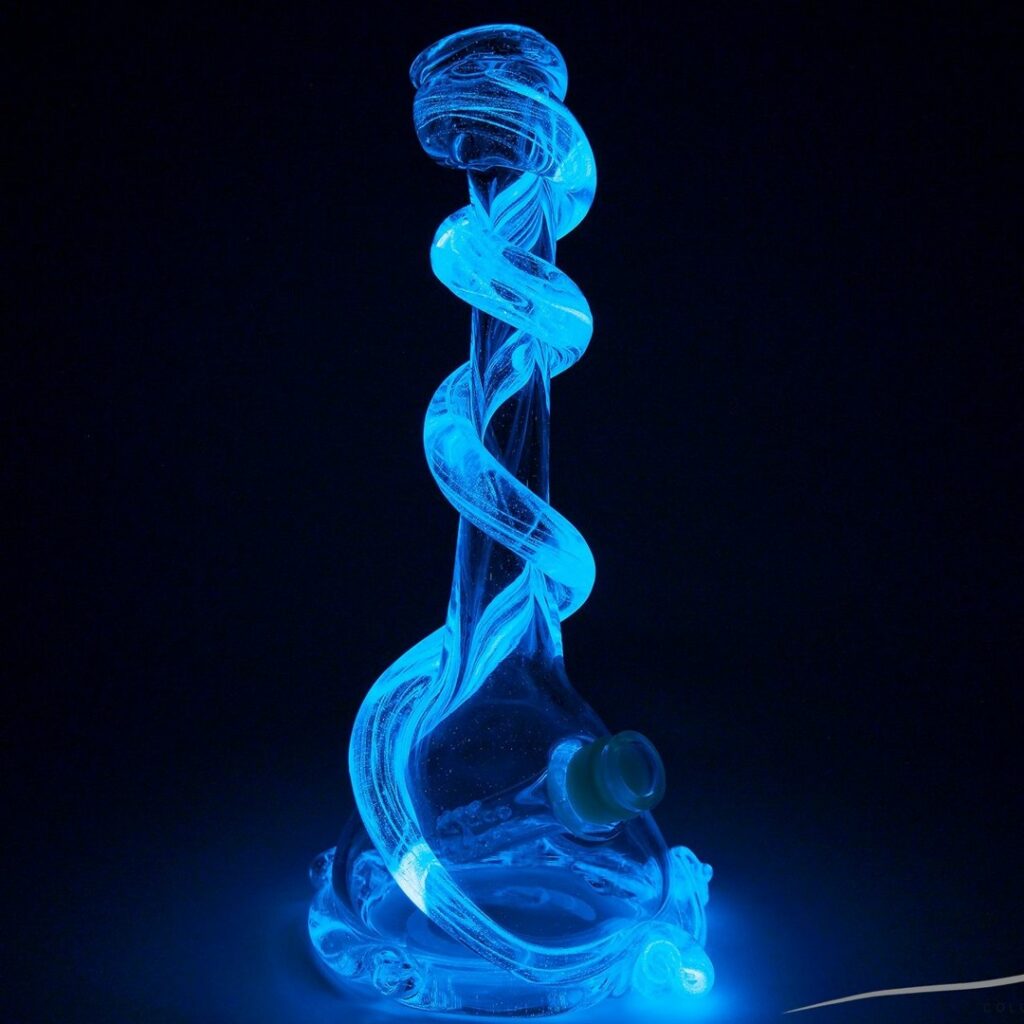
What glassworkers commonly call soft glass—often soda-lime based glass—has a higher coefficient of thermal expansion and behaves differently in the flame. It can absolutely be used to make functional glass, but it requires different techniques and is generally less forgiving of rapid temperature changes than borosilicate. That does not mean soft glass is cheap, weak, or inherently inferior. Soft glass has its own enormous artistic tradition and can offer spectacular colors and working characteristics. Boro simply proved particularly compatible with the torch-based methods that came to dominate the American functional-glass industry.
Special K Glass and the Exceptions to the Rule
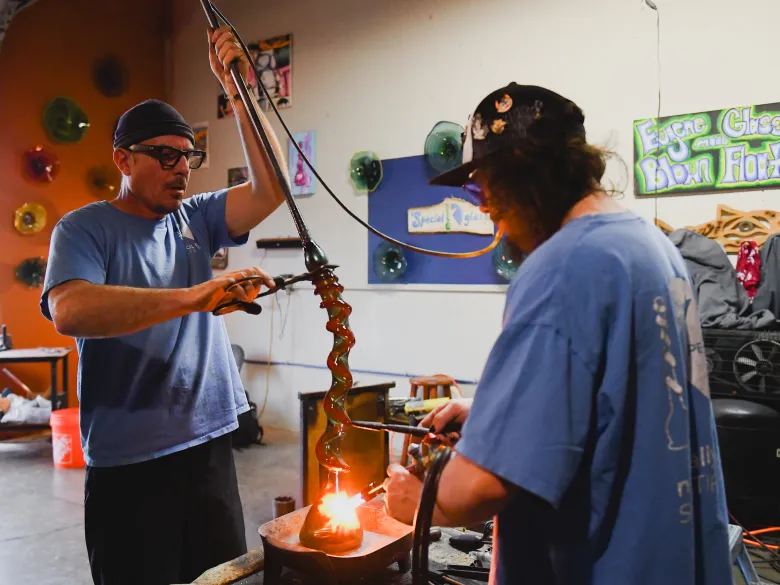
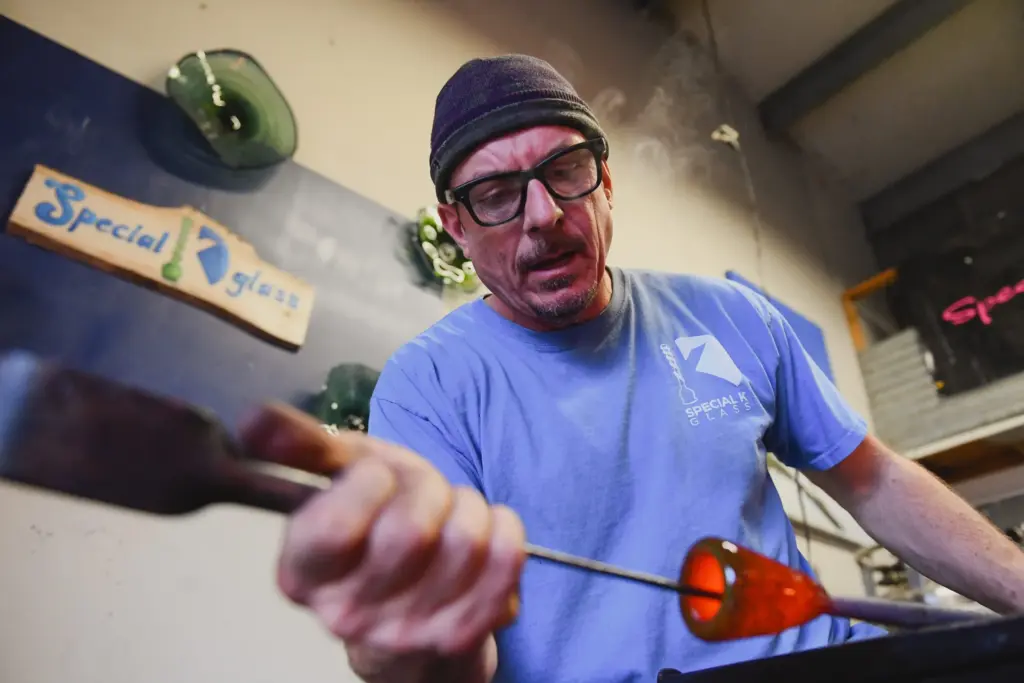
Special K Glass is a particularly good example of why “good pipe” and “borosilicate pipe” are not interchangeable terms. Founded by glass artist Kris Uhlhorn, Special K has been producing functional glass since 1998 and deliberately works in soft glass, using traditional glassblowing methods to create its bongs and pipes. Uhlhorn grew up in Eugene as its modern functional-glass scene was beginning to develop, and in 1991 he bought his first glass pipe at the Oregon Country Fair—a Top Hat made by Bob Snodgrass. Looking back on that piece, Uhlhorn said it “started the whole modern big glass movement, made by Snodgrass, the Godfather of Glass.” Even one of the most prolific functional soft-glass artists working today was originally inspired by Snodgrass and the emerging borosilicate movement around him. Special K demonstrates that soft glass can make excellent functional pieces while also showing just how far the influence of the early American boro movement extended.

Is Borosilicate Better for Glass Pipes?
For the style of torch-worked functional glass that dominates the American glass industry today, borosilicate offers an unusually useful combination of thermal-shock resistance, workability, available tubing and color, and compatibility with complex construction. That is why nearly every contemporary glass artist working in this tradition uses it. Boro isn’t unbreakable, and being made from borosilicate does not automatically make a pipe well made. Artist skill, wall thickness, design, annealing, and construction quality still matter. But as a starting material for modern functional glass, boro is extremely hard to beat.
Boro and the Modern Glass Pipe
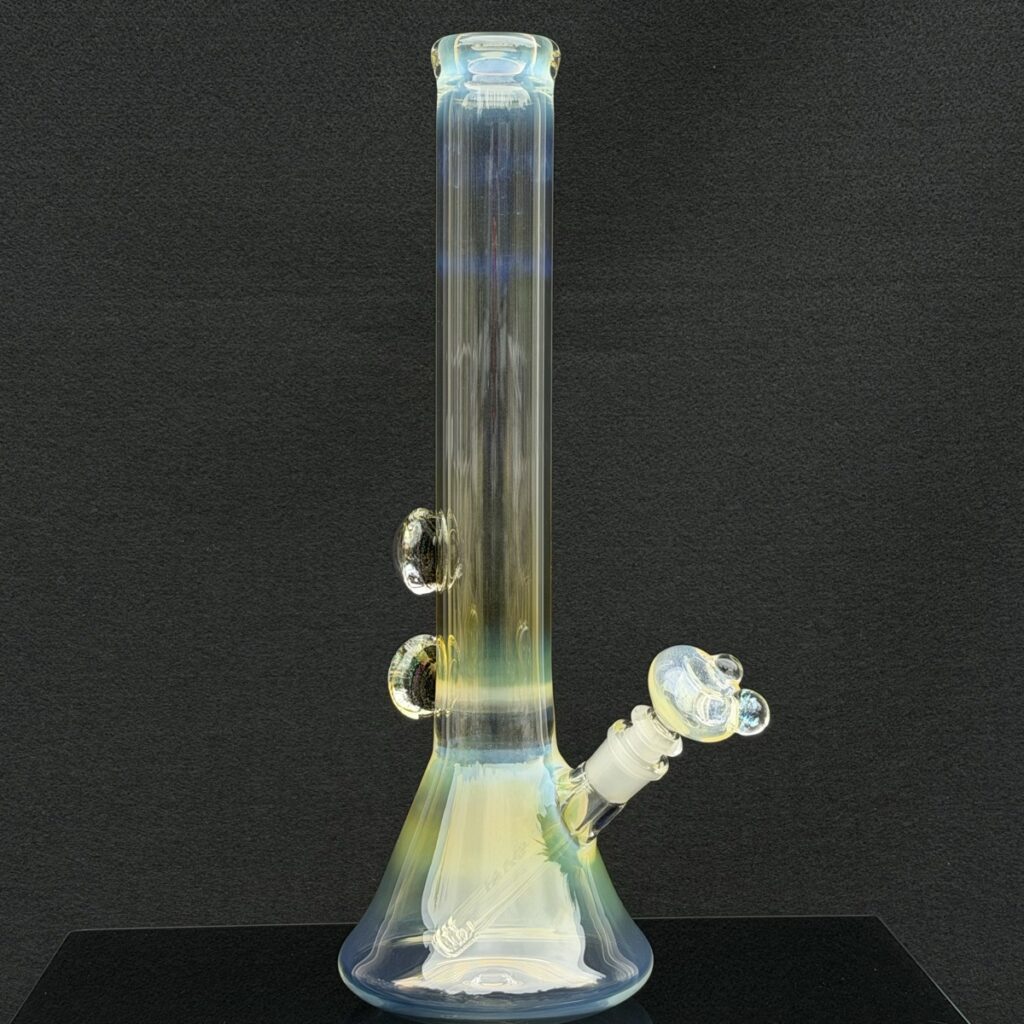
Borosilicate didn’t become synonymous with American functional glass because it was the only material capable of making a pipe. It became dominant because its physical properties were a particularly good match for lampworking just as artists such as Bob Snodgrass were helping turn pipemaking into a distinct American glass art movement. Decades later, that combination of boro glass, torchworking, technical innovation, and artistic tradition still defines much of the handmade glass pipe industry we know today.
Tako Glass already carries a huge selection of borosilicate pieces, from compact pocket pipes to massive bongs and everything in between. But what about soft glass? If you’d like to see more functional soft-glass options in the shop, let us know. We’d love to hear what kinds of pieces you’d want to see us carry next!
Questions About Borosilicate Glass Pipes
What does “boro” mean in glass pipes?
“Boro” is simply a common abbreviation for borosilicate glass. When a glass artist or shop describes a pipe, bong, bubbler, or other piece as boro, they are referring to the type of glass used to make it. Borosilicate has become the standard material for most modern American artist-made functional glass.
Why is borosilicate glass used for pipes?
Borosilicate glass has a low rate of thermal expansion, which means it expands and contracts relatively little as its temperature changes. This gives boro excellent resistance to thermal shock and makes it particularly well suited to torchworking. It can be heated, shaped, joined, and blown into the complex forms commonly used in modern glass pipes.
Is borosilicate glass stronger than regular glass?
Borosilicate is better described as more resistant to thermal shock than ordinary soda-lime glass. It handles rapid temperature changes much better, but that does not mean it cannot break from being dropped or struck against a hard surface. The design, wall thickness, construction, and annealing of a piece also affect its durability.
Can borosilicate glass still break?
Yes. Borosilicate glass is still glass and can crack, chip, or shatter if it receives enough physical force. Its major advantage is resistance to stress caused by changes in temperature, not immunity to impact. A boro pipe should still be handled and stored carefully.
Is borosilicate glass the same thing as Pyrex?
Not exactly. PYREX became famous as a brand of borosilicate glass, which is why the names are sometimes used interchangeably. However, not everything sold under the Pyrex name today is borosilicate. “Borosilicate” describes a family of glass compositions, while Pyrex is a brand name.
How can you tell if a glass pipe is borosilicate?
It can be difficult to reliably identify borosilicate by appearance alone. Clear borosilicate and clear soda-lime glass can look very similar to the eye. The most reliable method is to check the product description or ask the artist, manufacturer, or retailer what type of glass was used rather than relying on color, weight, or appearance.
Are all glass pipes made from borosilicate?
No. Borosilicate is the dominant material in modern American artist-made functional glass, but it is not the only glass that can be used to make a pipe. Some artists deliberately work with soft glass or other glass formulations. Special K Glass is a notable example, producing functional soft-glass pipes and bongs despite founder Kris Uhlhorn’s early inspiration from Bob Snodgrass and the emerging American borosilicate pipe movement. This shows that while boro became the industry standard, excellent functional glass can be made using other materials and traditions.
What is the difference between borosilicate glass and soft glass?
Borosilicate and soft glass have different compositions, working characteristics, and rates of thermal expansion. Soft glass generally becomes workable at a lower temperature and is more sensitive to rapid temperature changes. Borosilicate requires hotter torch temperatures but offers excellent thermal-shock resistance, making it especially useful for the lampworking techniques common in modern pipemaking.
Does borosilicate glass need to be annealed?
Yes. Properly made borosilicate pieces are annealed in a kiln after they are worked. Annealing allows internal stresses created during heating, shaping, and cooling to relax before the glass is slowly brought back to room temperature. Good annealing is an important part of producing durable functional glass, even when the piece is made from borosilicate.
Does borosilicate glass mean a pipe is high quality?
Not by itself. Borosilicate is an excellent material for functional glass, but the material alone does not determine the quality of a finished pipe. Wall thickness, design, seals, welds, annealing, proportions, and the skill of the glass artist all matter. A well-made boro pipe combines the advantages of the material with good craftsmanship.