Bong Percolator Types Explained: From Natural Percs to Recyclers
What Is the Purpose of a Percolator, or “Perc,” in a Water Pipe?
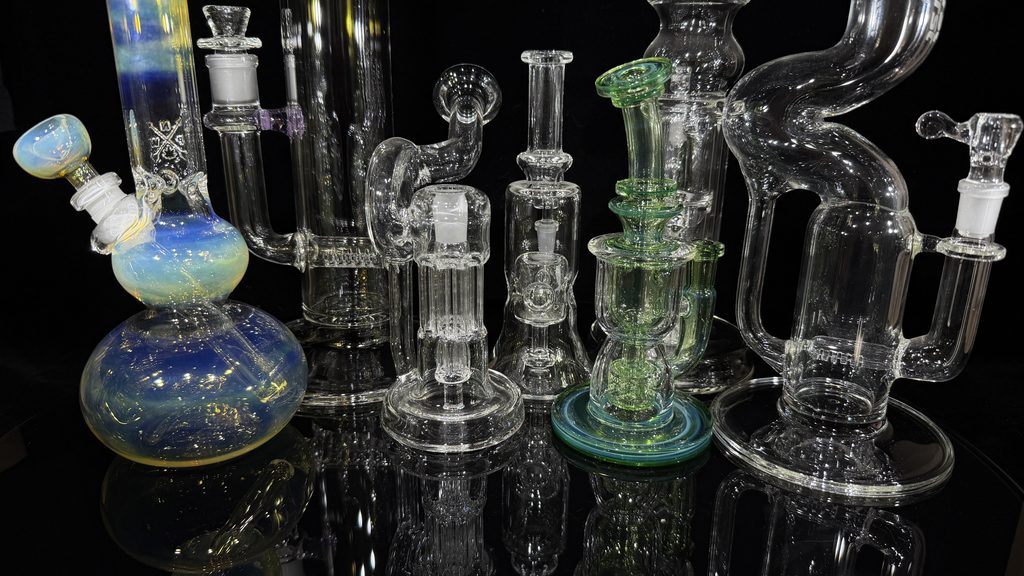
Bongs, bubblers, dab rigs, and other water pipes all rely on water percolation to cool smoke or vapor and capture some material as it passes through water. Percolators come in an incredible variety of shapes and sizes, but they all build on this basic principle. Some percs are little more than an opening beneath the water, while others feature intricate networks of tubes, chambers, and carefully arranged diffusion holes. Each design changes how air and water move through the piece, giving different bongs their own distinct character.
Understanding these systems makes choosing your next bong more interesting. We’ll start with the simplest forms of percolation and work through increasingly complex designs, looking at how each one functions, how it affects the draw, and what it’s like to own.
What Does a Percolator Actually Do?
A percolator, usually shortened to perc, is the part of a water pipe that sends smoke through water, producing bubbles. As those bubbles rise through the chamber, the smoke comes into contact with water and can lose some heat.
Diffusion describes how airflow is divided and dispersed into water. A single large opening generally produces fewer, larger bubbles, while multiple smaller openings can create many smaller bubbles. This increases the surface area in contact with water, but diffusion alone doesn’t determine how a bong feels.
Water displacement is another major part of the equation. When you draw through a bong, changes in pressure move water away from the perc openings. A design that requires considerable water displacement before air can flow freely may feel heavier, perc harder, or produce a more pronounced bubbling action commonly called chug.
That displaced water has to return to its resting position when you stop drawing. As it settles, the resulting back pressure can push air toward the bowl. On pieces with substantial displacement, this can actually pop loose material out of the bowl if the slide is still in place. Removing the slide to clear the chamber, and allowing the water to settle before replacing it, is especially important with these designs.
Water level directly affects this behavior. More water covering a perc’s openings generally increases the pressure needed to begin bubbling. Finding the right level can change the feel of a piece considerably.
Water cooling shouldn’t be confused with eliminating the health risks of smoking. As the CDC’s cannabis and lung-health guidance explains, smoking cannabis can harm lung tissue regardless of the method used.
Bong Percolator Types at a Glance
Here’s a quick comparison of common bong percolator types and their practical trade-offs.
| Perc Type | Main Advantage | Main Drawback | Cleaning Effort |
|---|---|---|---|
| Natural | Simple construction and pronounced chug | Less divided diffusion | Low |
| Diffused Downstem | Distributed bubbles; often replaceable | Small openings may clog | Low |
| Tree | Diffusion through multiple arms | Delicate branches and welds | Moderate–High |
| Showerhead | Compact, circular diffusion | Slits can collect buildup | Low–Moderate |
| Inline | Spreads diffusion across the chamber | Sensitive to opening placement and water level | Moderate |
| Honeycomb | Dense bubbling and stacking potential | Tiny holes trap debris | High |
| Matrix | Diffusion from multiple sides of a cylinder | Closely spaced openings can be difficult to access | Moderate–High |
Cleaning ratings describe common maintenance challenges, not measured performance. A removable perc or accessible chamber may be easier to maintain than a fixed version of the same design. Inverted percs, multi-perc systems, and recyclers are covered separately because they describe arrangements that can incorporate several of these basic perc styles.
Natural Percs: Keeping Things Simple
The simplest form of bong percolation doesn’t require a separate diffuser. Smoke travels down an open-ended stem, exits beneath the water, forms bubbles, and rises into the main chamber.
This is commonly called a natural perc, referring to the direct-opening water path rather than an additional glass structure.
Natural percs often have a pronounced bubbling action, producing the familiar chug associated with traditional water pipes. The size of the chamber, the downstem opening, and the water depth all contribute to that feeling.
Their simplicity has practical advantages. There are fewer small openings to clog, fewer internal components to damage, and generally easier cleaning. A well-made natural-perc bong can be an excellent piece in its own right, particularly for someone who enjoys a direct, old-school draw.
Diffused Downstems: One Opening Becomes Many
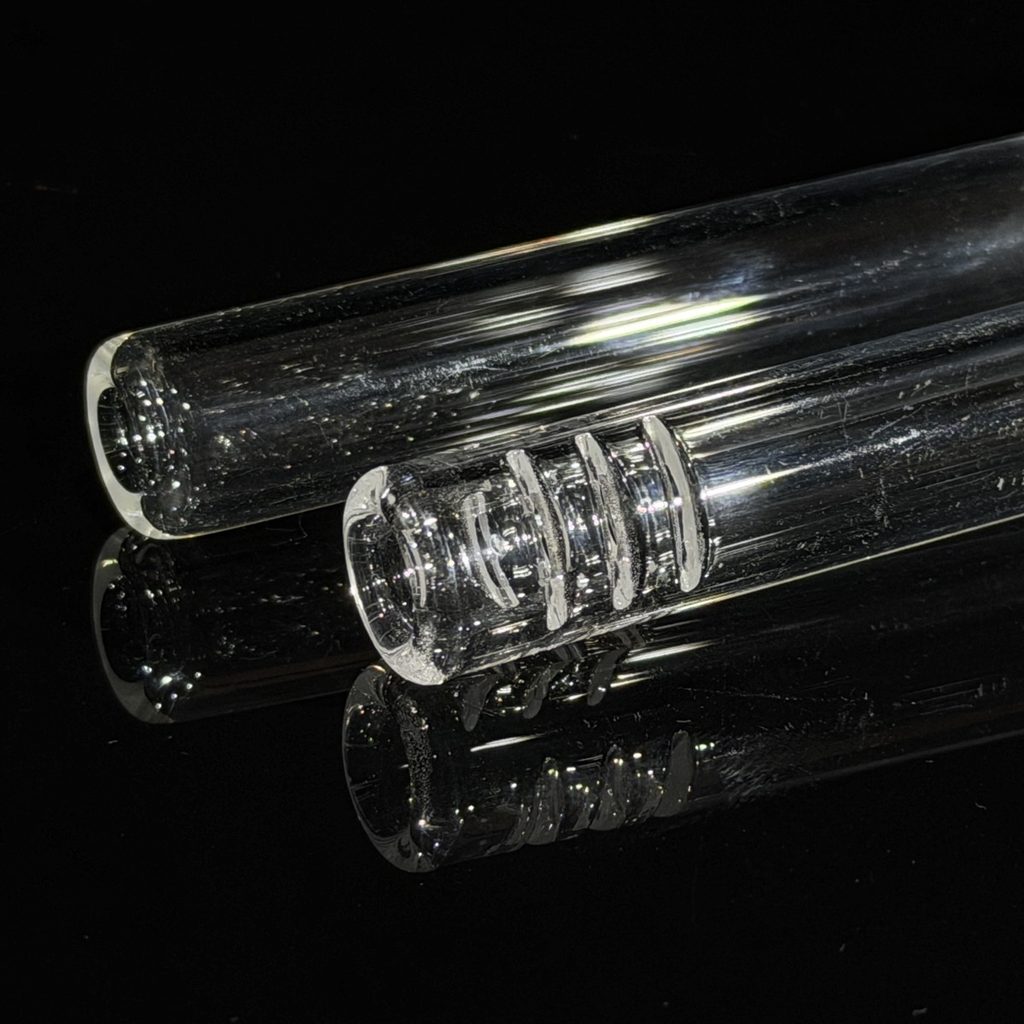
A diffused downstem builds on natural percolation by adding multiple openings near the submerged end. These may be slits, drilled holes, or more elaborate cuts.
Instead of releasing all the incoming air through one large opening, the downstem distributes it through several smaller outlets. This changes how bubbles form and spread through the water, sometimes making a familiar beaker bong feel quite different without altering the main chamber.
More openings don’t necessarily mean less resistance. Their combined open area, individual size, placement, and the amount of water covering them all influence how freely air moves.
Many diffused downstems are removable, making them easy to replace or upgrade. They’re one of the simplest ways to experiment with different percolation characteristics without buying an entirely new bong.
Specialized Bong Percolator Types
From branching tubes to perforated discs, specialized percolators give glassmakers greater control over where bubbles form and how water moves through a chamber.
Tree Percs: Branching Out
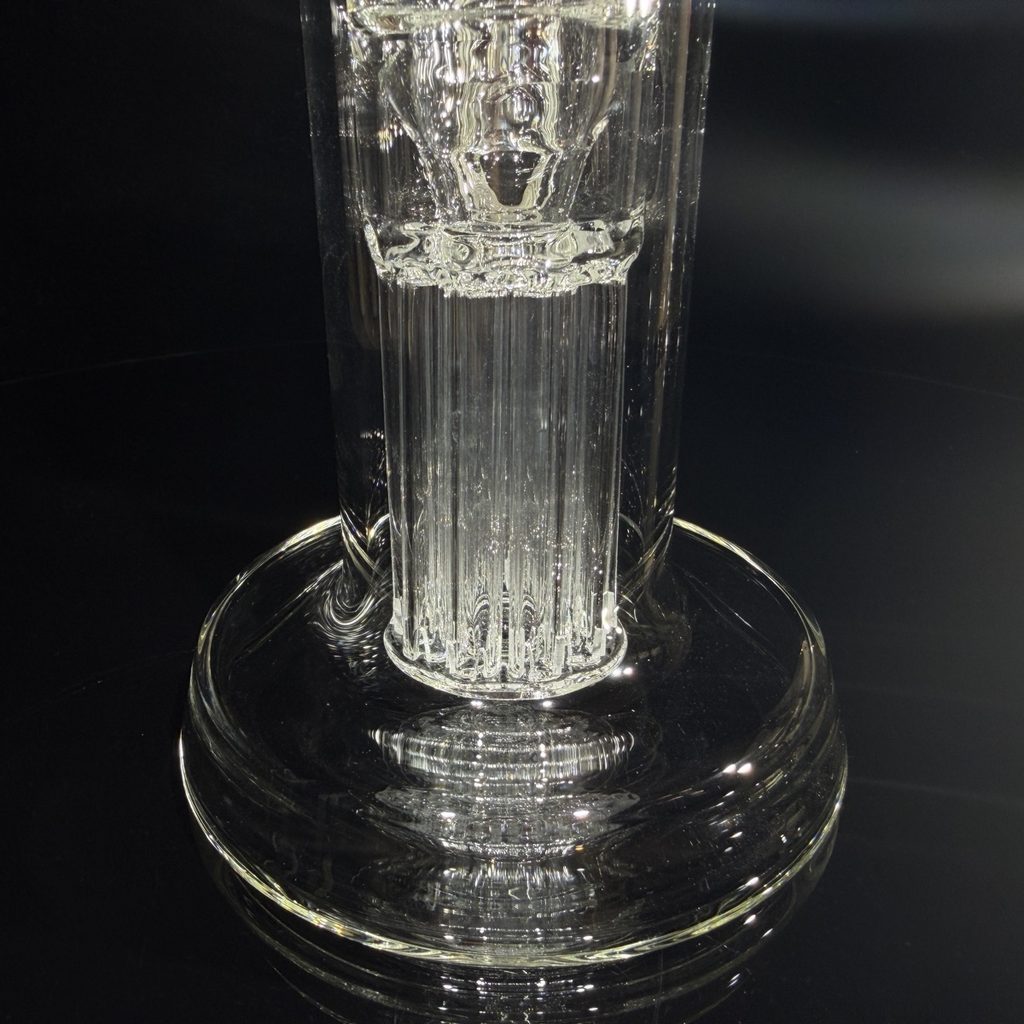
A tree percolator distributes airflow from a central passage into multiple smaller arms. Each arm releases bubbles through openings near its end.
By dividing the air among several branches, tree percs spread diffusion across a larger area of the chamber. The number of arms, their length, and the arrangement of their openings all influence the function.
Their construction introduces additional points of vulnerability. Individual arms and connecting welds can be susceptible to breakage, particularly in crowded designs with little internal support.
Tree percs remain distinctive for their appearance and bubbling action. A well-built example should have secure connections, properly aligned arms, and enough space around the structure for water to move freely.
Showerhead Percs: Spreading the Airflow
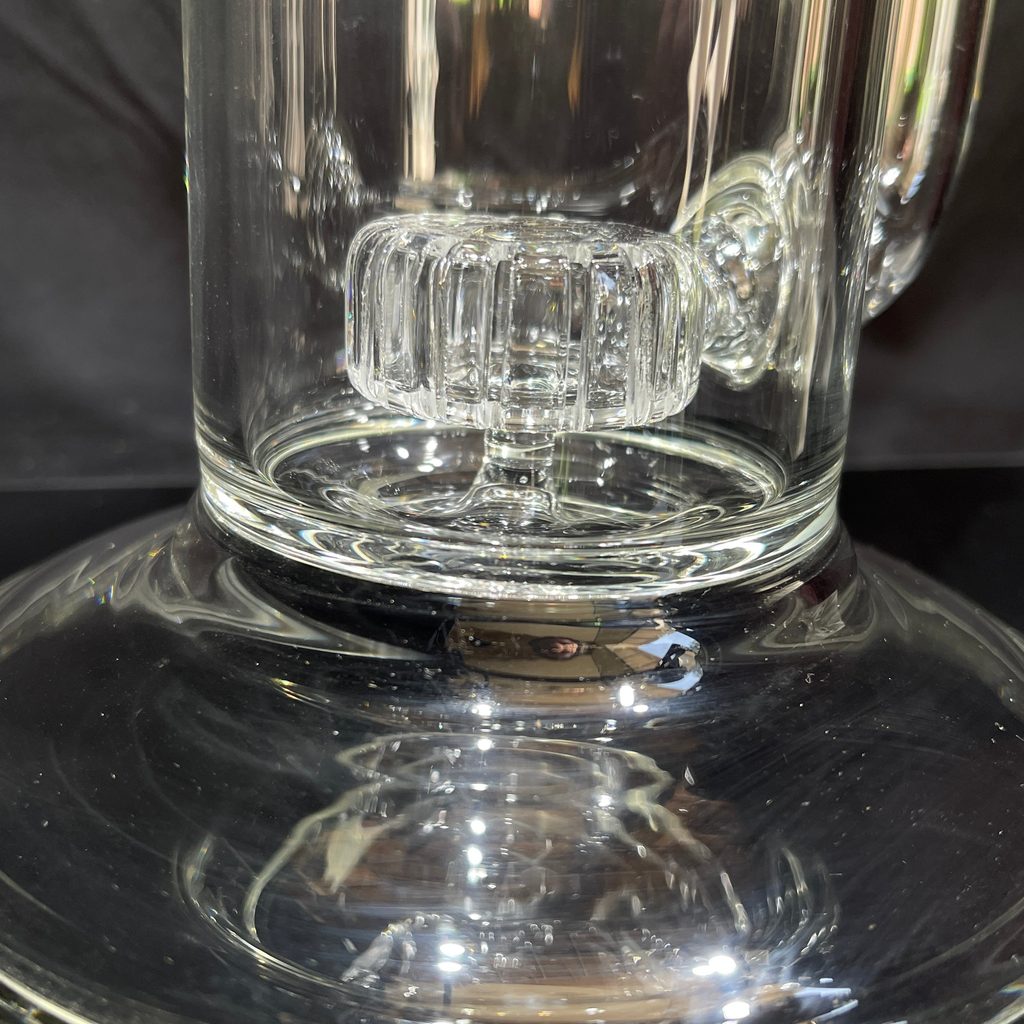
Showerhead percolators get their name from their resemblance to a showerhead. Just as a showerhead divides one stream of water into many smaller streams, a showerhead perc divides incoming air through multiple openings arranged around a widened circular section.
Air typically travels through a central tube before reaching a flared outlet fitted with slits or holes. These distribute bubbles around the perimeter of the perc.
Showerheads are versatile. They can function as standalone percolators, appear inside removable downstems or ash catchers, or form part of more complicated glass assemblies.
Their compact construction avoids the many individual arms found in tree percs. That can simplify maintenance, although opening size and accessibility still matter.
Inline Percs: Taking Diffusion Sideways
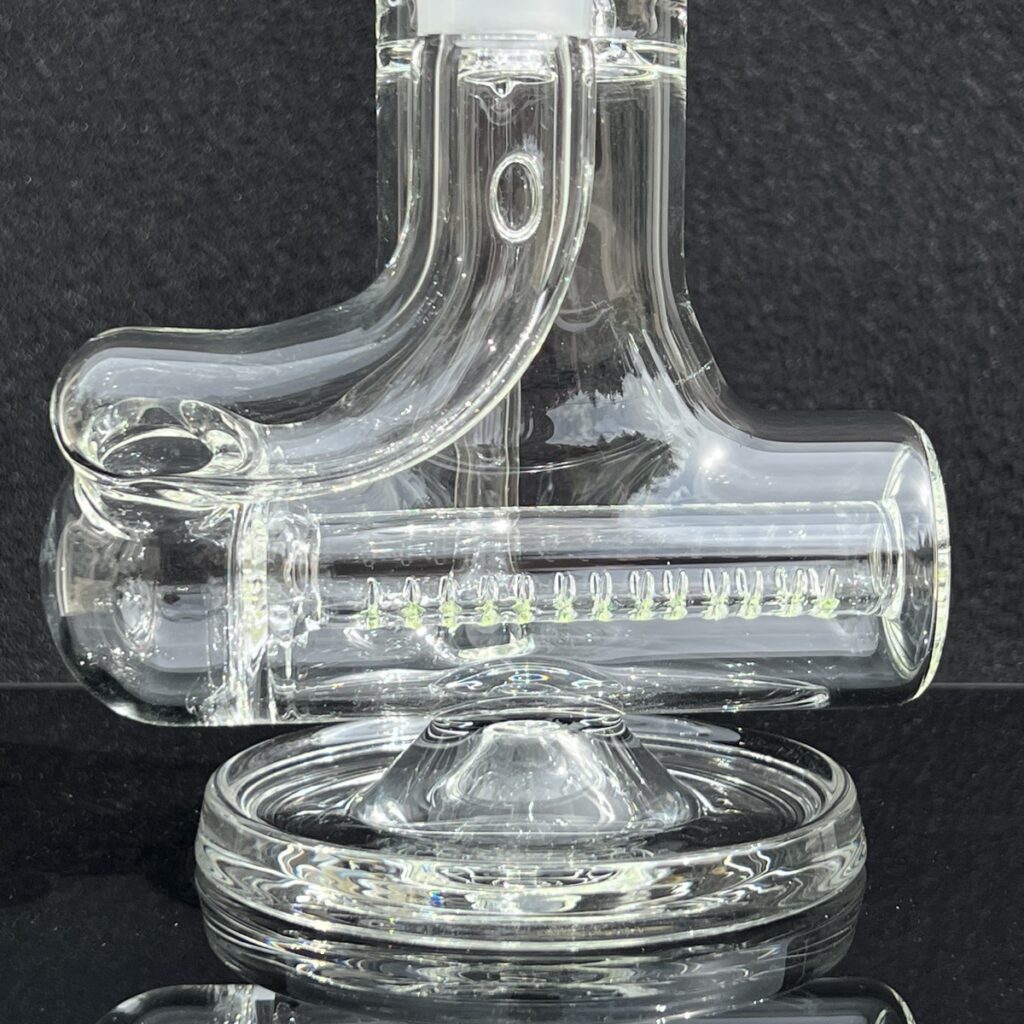
An inline percolator uses a horizontal tube with multiple openings distributed along its length.
Instead of concentrating bubble formation at one central outlet, an inline spreads diffusion across the width of a chamber. Gridded versions further divide the openings to create finer patterns of bubbling.
The surrounding chamber plays a major role in performance. Water depth, available space above the tube, and opening placement all influence the movement of water.
A well-executed inline can provide extensive diffusion from a single component. It’s an interesting option for anyone who enjoys active bubbling without a stack of separate percolators.
Honeycomb Percs: Surface Tension and Water Levels
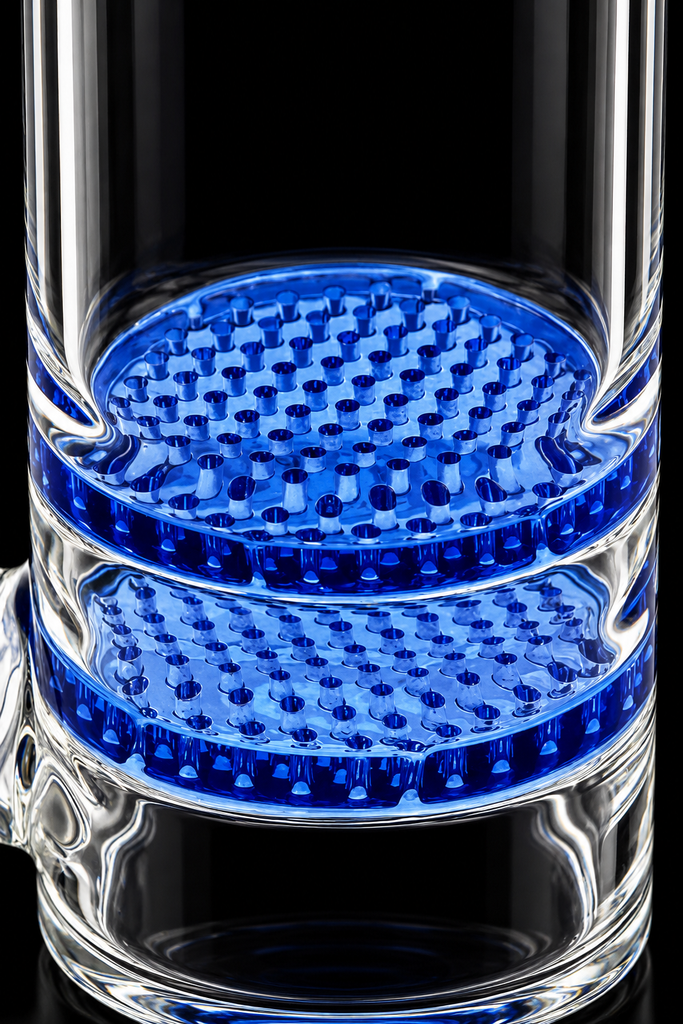
A honeycomb percolator uses a flat glass disc covered in small holes. Air passes through those openings, dividing into numerous bubbles across the disc’s surface.
The name comes from its perforated appearance. This is different from honeycomb-pattern glasswork, a decorative technique involving repeating cell-like patterns in colored glass. Honeycomb decoration and honeycomb percolation are two entirely different things.
Honeycomb percs make interesting use of water pressure and surface tension. These forces influence how water passes through or remains on a perforated disc, allowing certain designs to produce dense formations of bubbles known as bubble stacking.
This is particularly noticeable in bongs with several honeycomb discs arranged vertically. Unlike a tree perc, which distributes bubbles through separate glass arms, a honeycomb spreads diffusion across a perforated surface. That avoids delicate branches but introduces numerous small passages that need to stay clear.
A common mistake is overfilling these pieces in an attempt to submerge every disc before taking a hit. In many stacked honeycomb designs, that isn’t necessary. Drawing through the bong lifts water upward, activating higher discs as water collects and bubbles across them.
For many of these pieces, a good starting point is water resting just above the lowest honeycomb disc. Take a gentle test draw and watch how the water rises. Surface tension can help retain water on the upper discs, although the exact behavior depends on their construction.
Not every stacked honeycomb works identically. Some have separately filled chambers or arrangements that require different water levels. The actual water path should guide your adjustments.
With honeycomb percs, less water can often produce better function. Overfilling may increase resistance, interfere with bubble stacking, or create unnecessary splashback.
One downside is cleaning. Those numerous small openings can trap ash, plant particles, and resin, making honeycomb percs particularly vulnerable to buildup.
This is where an ash catcher becomes especially valuable. Mounted between the bowl and bong, an ash catcher collects much of the falling ash and debris before it reaches the honeycomb’s tiny openings. It won’t eliminate resin buildup or regular cleaning, but it can make maintaining these intricate percolators considerably easier.
If you’re protecting a bong that already has substantial diffusion, consider a dry ash catcher. It can collect debris without adding another water-percolation stage. Wet ash catchers are another option, although their additional diffusion and water displacement may change the draw. Be sure to match the accessory’s joint size and angle to your bong.
Matrix Percs: Diffusion in Multiple Directions
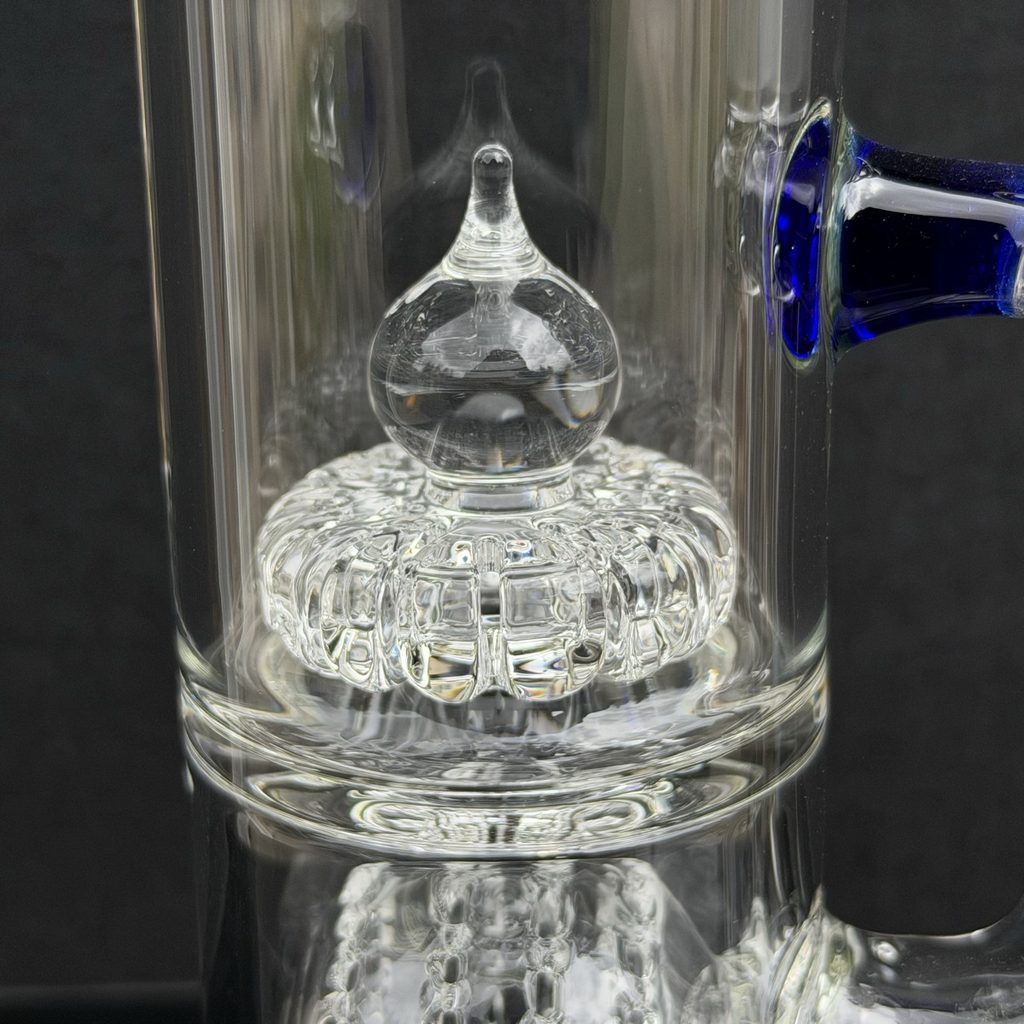
A matrix percolator typically uses a cylindrical glass body with rows of openings arranged around its surface.
Instead of distributing air across a flat disc, a matrix releases bubbles from multiple positions around the cylinder. Some designs incorporate remarkably large numbers of openings within a compact structure.
A showerhead generally spreads air around a ring of outlets. A matrix uses openings arranged over a larger cylindrical surface, potentially releasing bubbles at several heights as well as around the sides. It’s a different way to distribute airflow within the chamber.
Matrix percs can offer extensive diffusion without necessarily creating an excessively heavy draw. Opening size, construction quality, and water level remain decisive, while closely spaced passages can make cleaning more challenging.
Inverted Percolators: Redirecting the Airflow
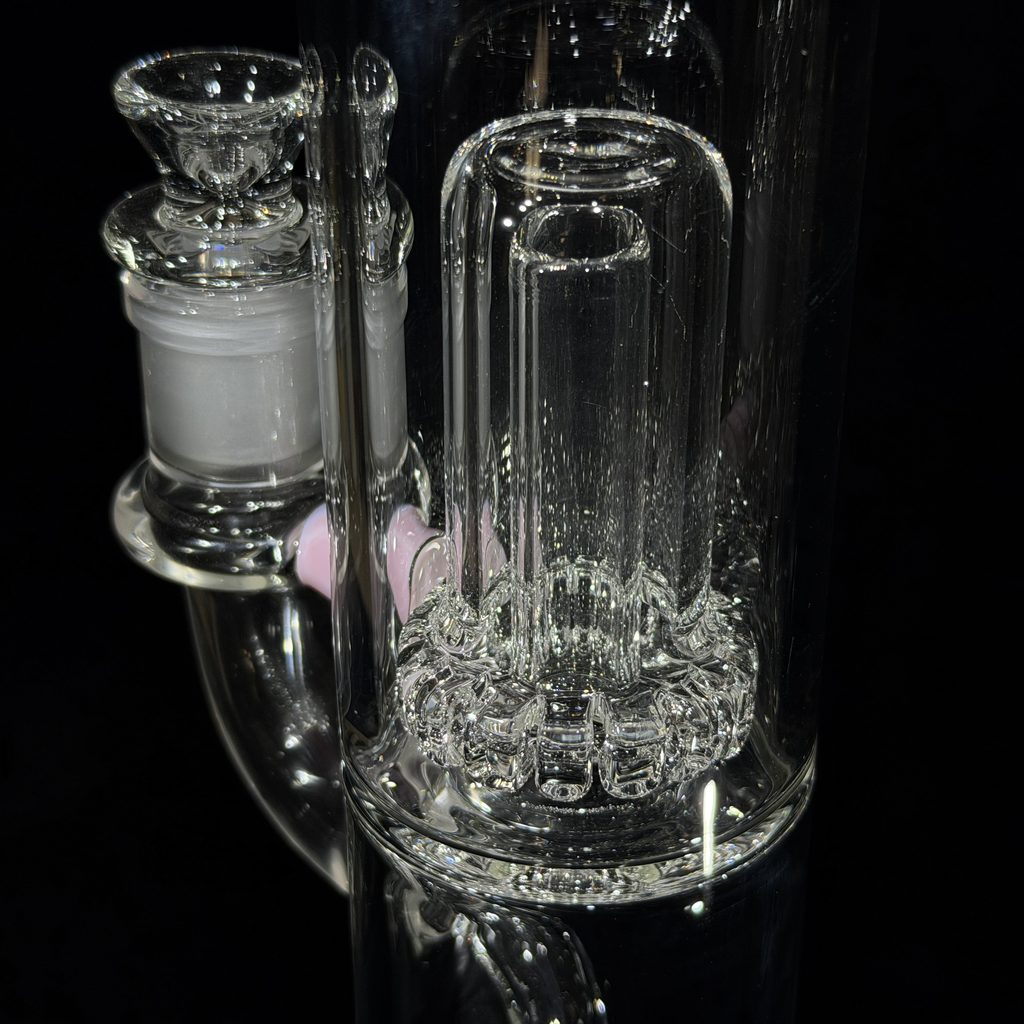
As percolator systems become more complex, glassmakers sometimes need to move air into a higher chamber and then redirect it downward for another round of percolation.
This is where inverted percolator designs become especially useful.
In a common inverted arrangement, air enters from below and travels upward through an inner tube. The path then turns downward through the percolator structure, releasing air from openings beneath the waterline of the surrounding chamber.
Air can travel upward to reach another section of the bong, then move downward into the water for additional diffusion before continuing toward the mouthpiece.
You can often recognize this style by following the internal airpath. Look for a central passage leading upward into a structure with downward-facing outlets. The geometry varies, and the term inverted isn’t applied consistently to every design.
Inverted percs are especially useful in multi-perc bongs, where air must travel between separate water chambers without bypassing the next diffusion stage. They also allow glassmakers to experiment with unusual chamber layouts that are difficult to accomplish using conventional upward-facing diffusers.
Multiple Percolators: Adding Another Stage
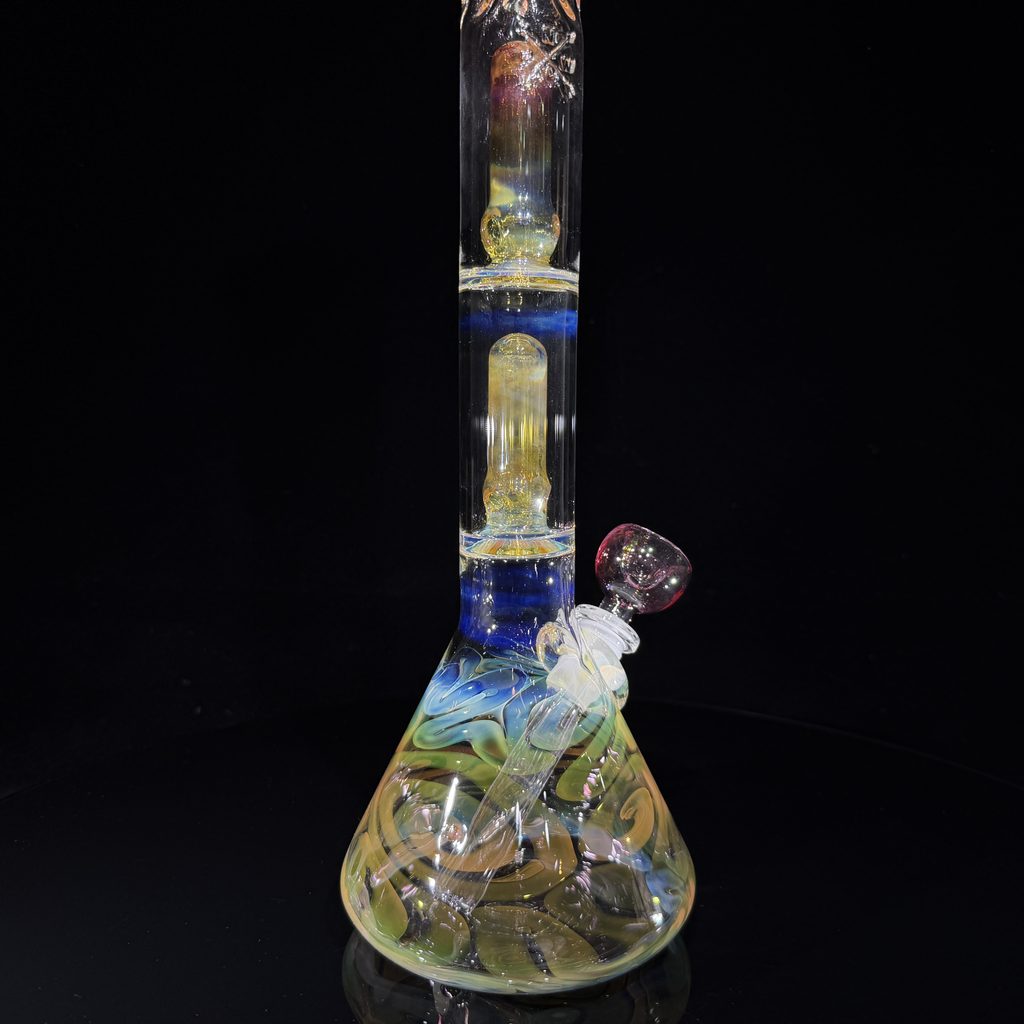
Combining percolators creates additional diffusion stages within a single bong.
A common arrangement might use an inline perc in the lower chamber, followed by an inverted showerhead or tree-style perc above it. The first stage divides incoming air into bubbles, while the next directs it through another chamber of water.
Second and subsequent stages often use inverted-style arrangements because they provide a practical way to carry air upward between chambers and then redirect it beneath the next waterline. Other configurations are possible, including disc percs and alternative chamber connections.
Each stage creates another opportunity for water contact and cooling. It also adds complexity. Every chamber needs an appropriate water level, and the combined resistance of several restrictive percs can become noticeable.
Multi-perc bongs may also experience considerable water displacement. As water moves between chambers, pressure changes can make the return to the resting state more dramatic, occasionally producing backflow toward the bowl.
A properly balanced double-perc bong can be a pleasure to use. A poorly balanced one may require an unnecessarily hard pull, splash into the neck, or shift water between chambers.
If you’d like to see how different perc arrangements are combined, browse our multi-perc bongs.
Adding percolators is relatively straightforward. Making them work well together takes thoughtful glass design.
Recycler Bongs: Taking Water Movement Further
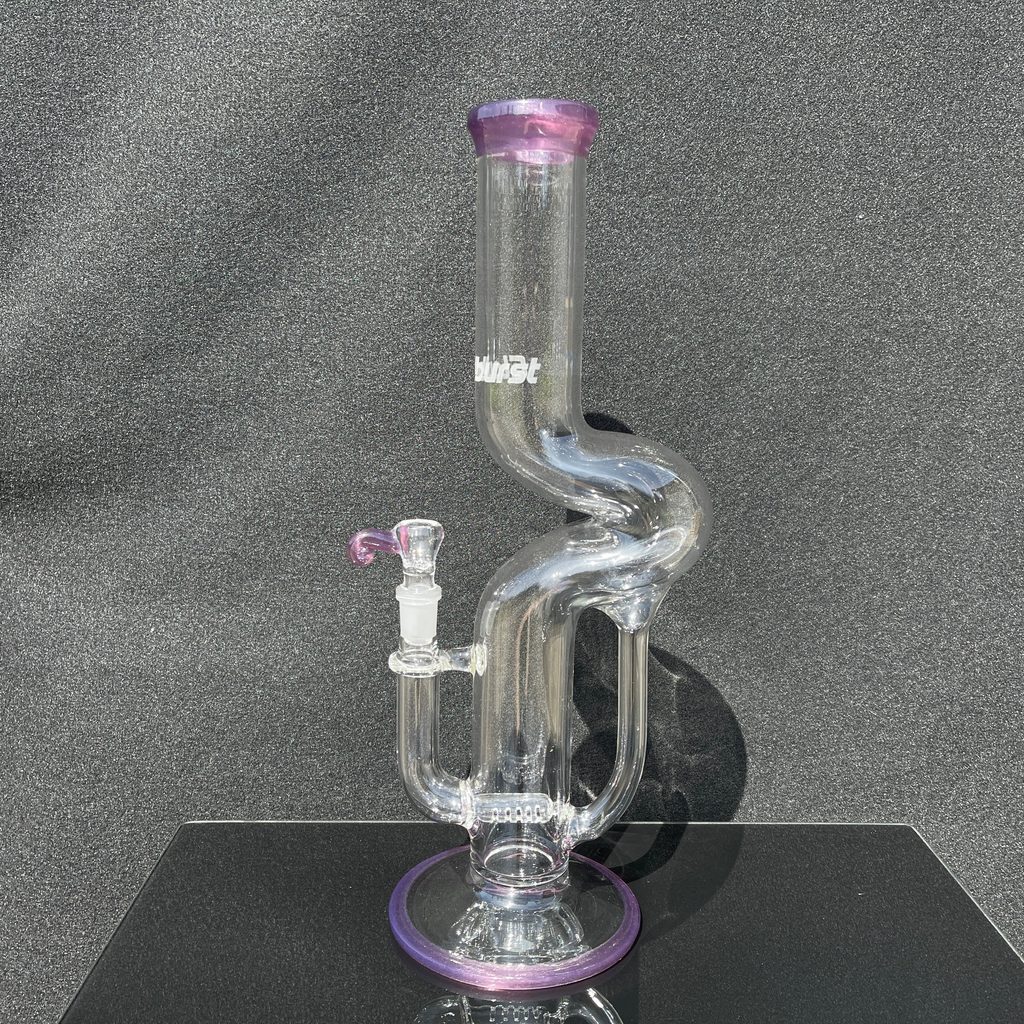
Recycler bongs introduce another dimension to percolation by actively circulating water through the piece.
In a typical recycler, the primary perc creates bubbling and water movement in the lower chamber. Water travels upward through an uptake into another section before returning through a separate drain.
This creates a circulating loop while the user draws. The water moves through the system, while smoke continues along its path toward the mouthpiece.
Recycling can help manage water distribution and splashback, but it isn’t necessarily an additional diffusion stage by itself. A recycler’s circulation function and a percolator’s diffusion function are related, but distinct.
Some recyclers use a single perc to generate circulation. Others combine multiple percolators with recycling pathways, creating elaborate arrangements in which air and water follow different routes.
The challenge is balancing the system. Uptake placement, drain diameter, chamber proportions, and water level all influence whether the recycling action works properly.
What Makes a Well-Built Percolator?
Percolator names describe particular designs, but they tell only part of the story. Two bongs with the same style of perc can function very differently.
Opening size and placement affect airflow. Water depth influences displacement and resistance. Chamber proportions determine how much room water has to move, while weld quality and internal supports contribute to the durability of complex assemblies.
Which bong percolator has the best airflow? The perc name alone can’t answer that. Total open area, the narrowest point in the airpath, water depth, and the amount of water that must move before bubbling begins all affect draw resistance. A carefully made showerhead can pull more freely than a poorly executed matrix, and the reverse can also be true.
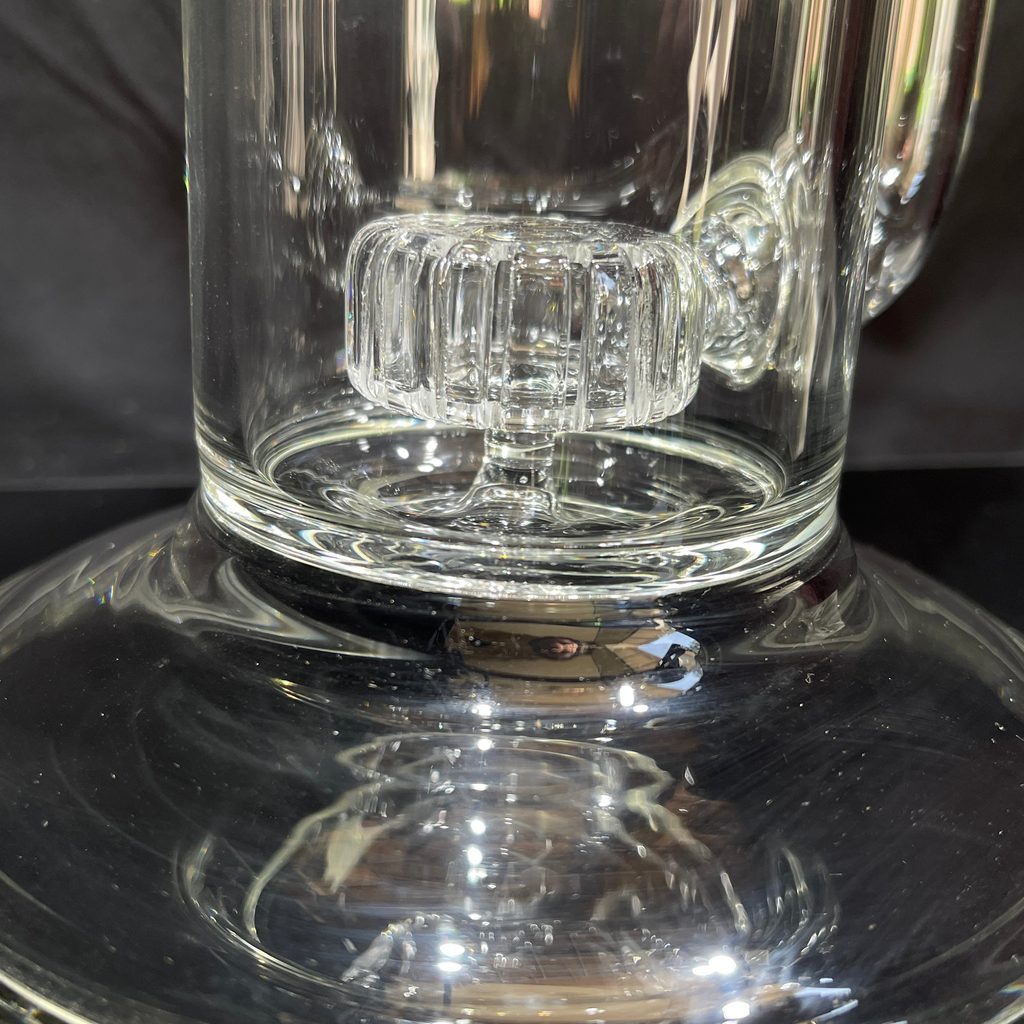
Cleaning access deserves equal consideration. Intricate glasswork may look impressive, but it becomes less practical when particles accumulate in places that are difficult to flush. Our guide to how often you should clean your glass pipe or bong covers maintenance in more detail.
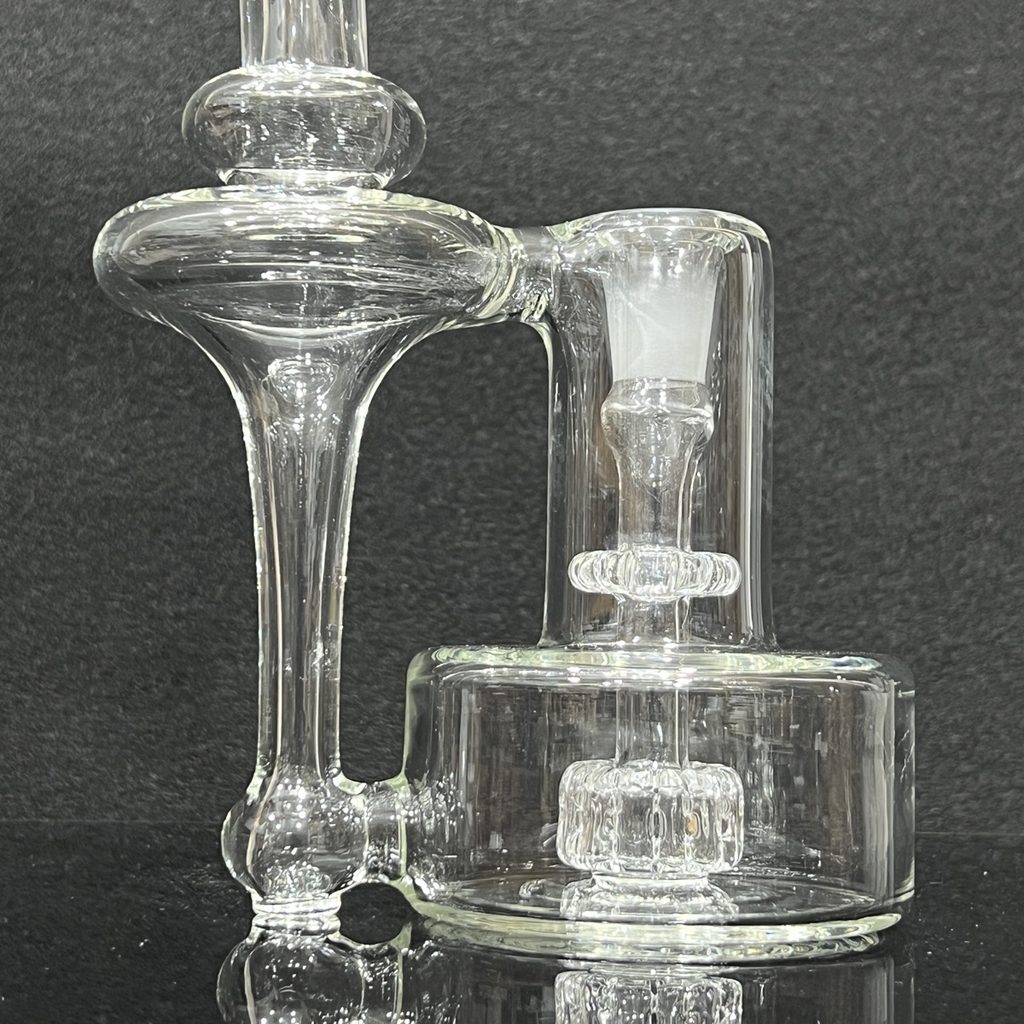
Recyclers are an especially good example of why appearance alone can be misleading.
Just because a bong has recycler tubing doesn’t mean it actually recycles water effectively. A functioning recycler requires the uptake and drain paths to work together. Water must rise into the intended chamber and return at a rate that maintains circulation without draining too quickly or flooding the upper chamber.
Correct water level is essential, but careful filling cannot always compensate for poor construction. Some inexpensive imported recyclers imitate sophisticated designs without reproducing their intended function.
The best way to evaluate a recycler is to observe it working. If you’re shopping online, look for a clear function video rather than relying on photographs of the recycler tubing. Water should circulate with a reasonable draw, return consistently through the drain, and settle properly afterward.
A well-made perc is one in which geometry, airflow, water movement, and surrounding glasswork all complement one another.
Which Bong Percolator Is Best?
After exploring all these designs, which perc comes out on top?
The best percolator is the one you enjoy using most.
Some people love the deep chug of a natural perc. Others prefer the active bubbling of a honeycomb or matrix. A well-made inline might have exactly the draw you’re looking for, while a multi-perc recycler offers a completely different experience.
There’s no substitute for trying different styles. Ask your friends about their pieces, compare how different percs feel, and pay attention to the little differences in water movement, resistance, and sound.
If you find a perc you love, remember that proper water levels and regular maintenance keep it working as intended. An ash catcher is also worth considering, especially when your favorite bong has complicated internal glasswork that’s difficult to clean.
Already have a favorite? Consider expanding your collection with something different. Browse our wide selection of bongs at Tako Glass and find a piece that brings a new kind of function to your collection.
Common Questions About Bong Percolators
What does a percolator do in a bong?
A bong percolator divides incoming smoke into bubbles as it passes through water. Different designs change bubble formation, water displacement, and draw resistance. The water can cool the smoke, but additional percolation does not eliminate the health risks associated with smoking.
Is a double-perc bong better than a single-perc bong?
Not necessarily. A double-perc bong sends smoke through two diffusion stages, potentially increasing water contact and cooling. However, additional percs can increase draw resistance, complicate cleaning, and require more careful water-level adjustment. A well-designed single perc may be more enjoyable than a poorly balanced double-perc system.
Which bong percolator is easiest to clean?
Natural percs and removable diffused downstems are generally among the easiest to maintain because they have fewer small passages and accessible surfaces. Honeycomb and matrix percs can be more challenging when particles become trapped in their numerous openings. Chamber access and overall construction also make a substantial difference.
How do I choose the correct ash catcher size and angle for my bong?
Match the ash catcher’s joint size, gender, and angle to the connections on your bong and bowl. Common joint sizes include 14mm and 18mm, while 45-degree and 90-degree orientations accommodate different joint positions. Check your specific piece rather than assuming all beakers or straight tubes use the same configuration. See our glass joint size guide for more information.
Will adding an ash catcher change how my bong draws?
It can. A dry ash catcher primarily intercepts ash and debris, though its additional airpath may introduce some resistance. A wet ash catcher adds water displacement and sometimes another diffusion stage. For a bong with restrictive or multiple percolators, a simpler dry ash catcher may be preferable when the main goal is keeping the internal glasswork cleaner.
Why are only some of the holes on my bong percolator bubbling?
Uneven bubbling may result from water level, opening placement, differences in flow resistance, or clogged passages. Not every perc is designed to activate every hole equally during a gentle draw. If its performance has changed, inspect the openings for buildup. Otherwise, adjust the water level gradually and observe how the perc functions.
Can I replace a natural-perc downstem with a diffused downstem?
Often, yes, provided your bong has a removable downstem and the replacement matches its required joint size, length, and connection dimensions. A diffused downstem can change bubble formation and draw characteristics without replacing the bong itself. Fixed downstems generally cannot be swapped without glassworking modifications.
How can I tell whether a recycler bong actually works before buying?
Look for a function demonstration showing water traveling through the uptake and returning consistently through the drain during a normal draw. The upper chamber should not simply flood, and circulation should not depend on excessive suction. If shopping online, a clear function video is more informative than photographs of recycler tubing alone.