Glass Joints 101: Understanding 10mm, 14mm & 18mm Joint Sizes

Whether you’re replacing a bowl, shopping for a new quartz banger, or trying to figure out which ash catcher fits your favorite bong, sooner or later you’ll run into one of the most confusing aspects of functional glass: joint sizes.
Is your piece 10mm, 14mm, or 18mm? Why do some websites call an 18mm joint “19mm?” Is a larger joint always better? And how can you tell which size your own piece uses before ordering new accessories?
These are some of the most common questions asked by both new smokers and experienced collectors alike. Fortunately, the answers are much simpler than they may first appear.
Unlike many aspects of functional glass, joint sizes aren’t based on trends or individual artist preference. They follow a standardized system that originated in scientific laboratories more than a century ago. Understanding that system makes it much easier to buy compatible accessories and understand why different pieces are designed the way they are.
In this first installment of our Glass Joints series, we’ll focus on the three standard joint sizes used throughout the industry, explain where each one is commonly found, and show you how to identify the size of your own piece.
Already familiar with the basics of glass joints? Jump right into our Glass Joints 102 article to dig deeper!
What Is a Glass Joint?
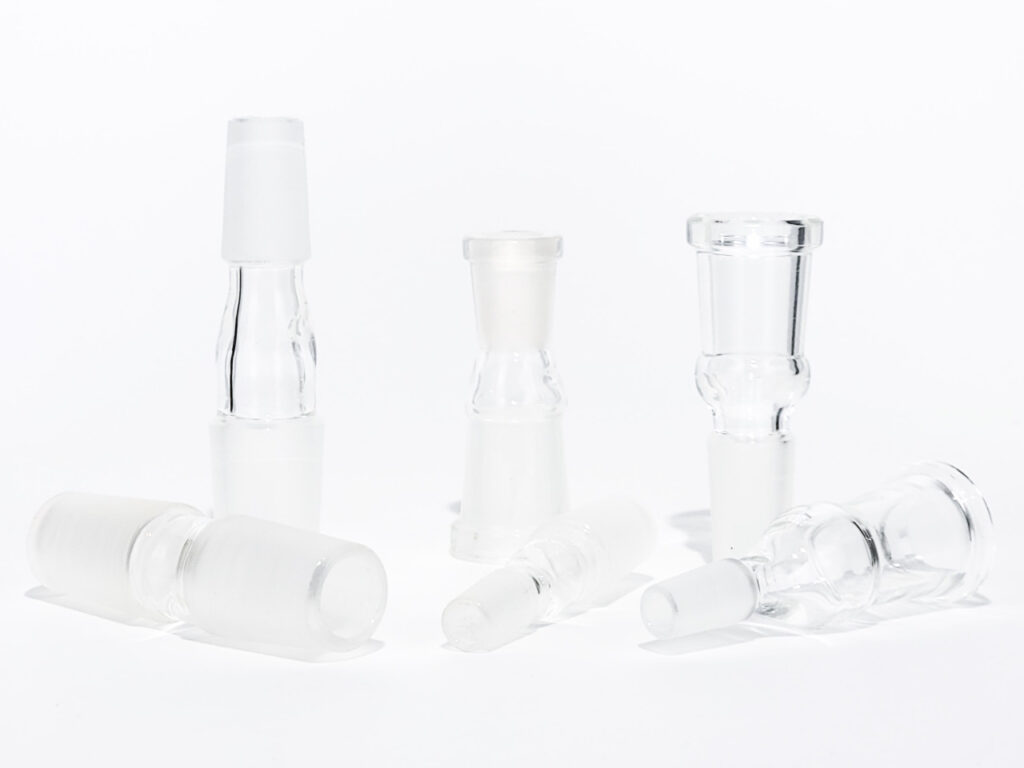
A glass joint is the precision-made connection where two separate pieces of glass fit together.
Instead of using threads, rubber seals, or plastic fittings, borosilicate glass relies on carefully matched tapered glass surfaces to create a secure, airtight connection.
You’ll find glass joints on countless accessories, including:
One of the biggest advantages of standardized joints is interchangeability. A bowl made by one artist can often fit perfectly into a bong made by another, allowing collectors to customize their setups without replacing an entire piece.
That level of compatibility isn’t an accident—it’s the result of a standardized system borrowed directly from laboratory glassware.
Why Do Glass Joint Sizes Exist?

Long before borosilicate artists were creating elaborate recyclers and sculptural rigs, scientific laboratories faced a frustrating problem.
Early laboratory equipment often relied on cork stoppers, rubber plugs, wax seals, or individually matched glass fittings. Equipment from one manufacturer didn’t always fit equipment from another, making it difficult to replace components or build modular laboratory apparatus.
To solve that problem, glass manufacturers developed standardized ground-glass joints. Every joint shared the same carefully engineered taper, allowing glass made by different manufacturers to fit together reliably.
That same system eventually made its way into functional glass.
Today, nearly every modern bong, bubbler, dab rig, ash catcher, and downstem still uses those same standardized tapers. While artists have pushed functional glass into incredible new artistic territory, the underlying connection system remains one of the industry’s oldest and most important standards.
The Three Standard Joint Sizes
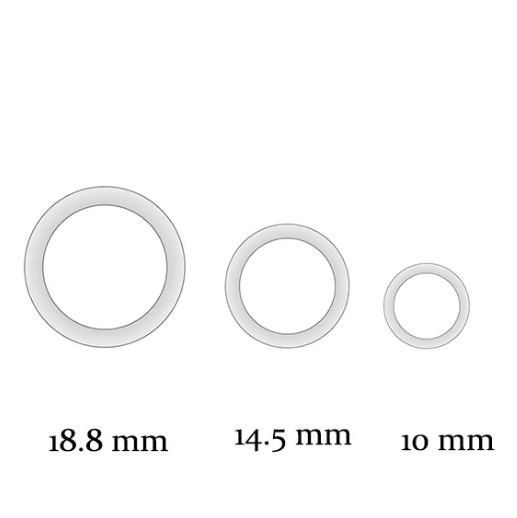
Laboratory glass is manufactured in dozens of standardized sizes, but the functional glass industry has overwhelmingly settled on three primary joint diameters:
Together, these three sizes account for the vast majority of modern bongs, bubblers, dab rigs, and accessories.
Each size offers its own advantages. Larger joints generally allow for greater airflow, while smaller joints help keep compact pieces light, balanced, and visually proportional.
Understanding when and why each size is used makes it much easier to choose accessories that match both your piece and your smoking style.
How to Measure Your Glass Joint
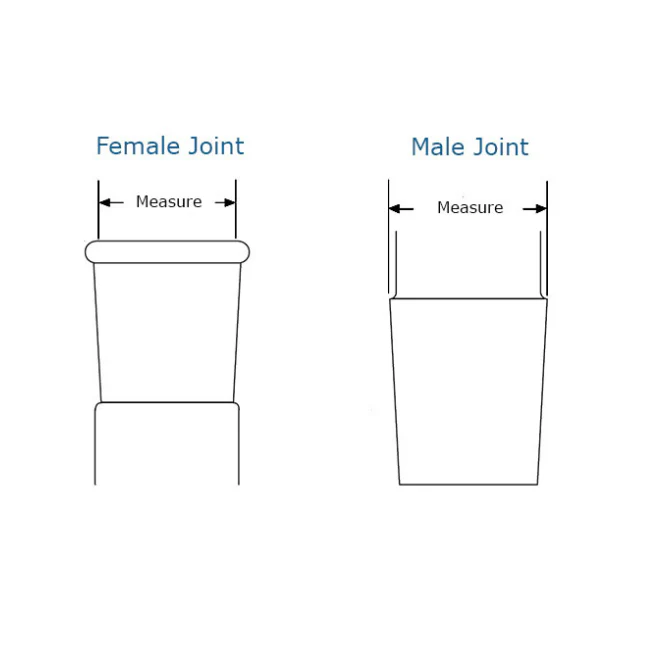
Now that you’re familiar with the three common joint sizes, the next step is identifying which one your own piece uses. Fortunately, measuring a glass joint is quick and doesn’t require any specialized knowledge.
The most accurate method is to use a pair of digital calipers, but a standard ruler or tape measure is usually close enough to determine whether your joint is 10mm, 14mm, or 18mm.
Measuring a Male Joint
A male joint is designed to slide into another joint. To measure it:
- Measure the outside diameter of the widest part of the frosted ground-glass section.
- Ignore any decorative lip or flared edge above the joint.
- Compare your measurement to the three standard sizes:
- Approximately 10mm
- Approximately 14mm
- Approximately 18–19mm
Because the common joint sizes are separated by several millimeters, your measurement doesn’t need to be perfectly precise to identify the correct size.
Measuring a Female Joint
A female joint accepts another component inside it. Measuring one is just as straightforward:
- Measure the inside diameter of the opening at the top of the joint.
- Ignore any decorative shaping around the rim.
- Compare your measurement to the standard sizes.
If you’re using a ruler instead of calipers, simply determining which of the three standard diameters your measurement is closest to is usually enough to identify your joint.
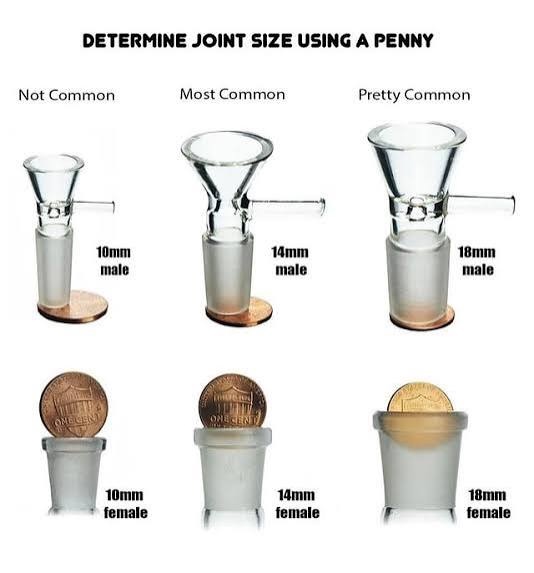
The Penny Trick
Don’t have a ruler or calipers nearby? There’s a surprisingly handy alternative.
A modern U.S. penny measures 19.05mm in diameter, making it almost the same size as a standard 18mm (18.8mm) glass joint.
Here’s how to use it:
- If a penny almost perfectly matches the opening of your female joint, there’s a good chance it’s an 18mm joint.
- If the penny is too large to fit but only overlaps the opening slightly, your piece is likely a 14mm joint.
- If the penny is noticeably larger than the opening and barely covers it at all, your piece is likely a 10mm joint.
10mm Glass Joints
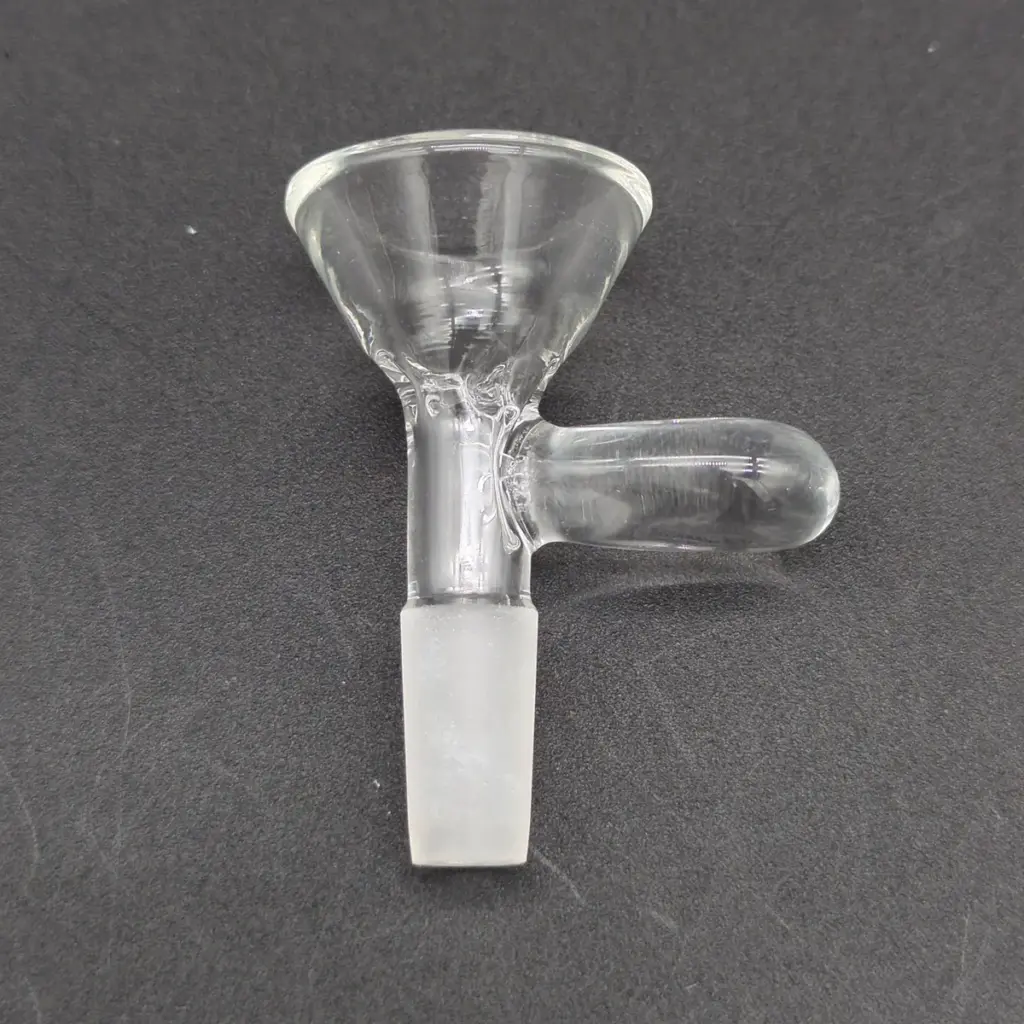
The 10mm joint is the smallest of the three common standards and has become increasingly popular among compact rigs and finely crafted heady glass.
You’ll most often encounter 10mm joints on:
One of the biggest advantages of a 10mm joint is proportion.
Imagine a tiny recycler standing only six or seven inches tall. An oversized 18mm joint would dominate the design visually and add unnecessary weight to the upper portion of the piece. A 10mm joint allows artists to maintain elegant proportions while still providing plenty of airflow for a compact rig.
Many collectors also appreciate the lighter accessories that accompany a 10mm setup. Smaller bowls and bangers place less stress on delicate pieces and contribute to a cleaner overall aesthetic.
The primary downside is compatibility. While 10mm accessories have become much more common over the last decade, they’re still less prevalent than 14mm accessories. Replacement bowls, ash catchers, and specialty accessories are generally easiest to find in larger sizes.
For collectors who appreciate compact rigs, however, 10mm remains an outstanding choice.
14mm Glass Joints
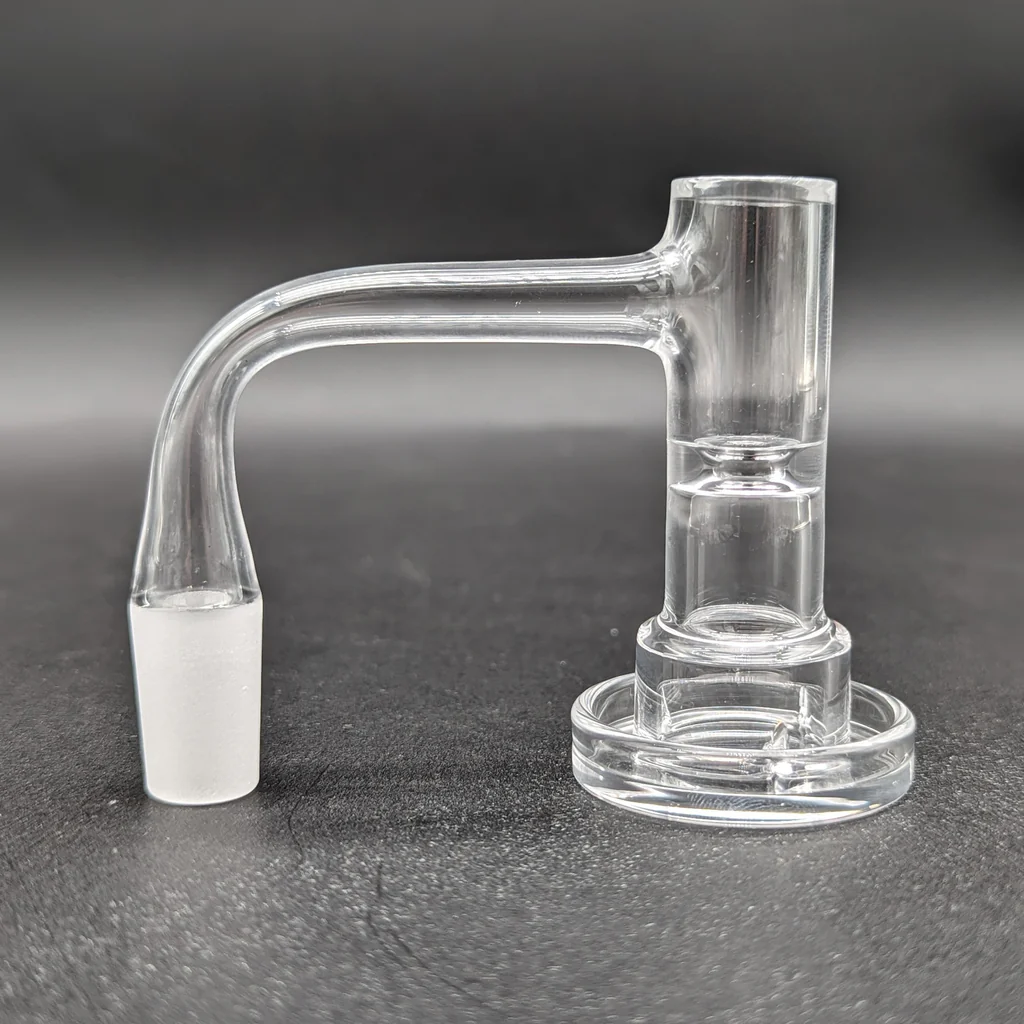
If one joint size could be called the modern industry standard, it would almost certainly be 14mm.
Walk through virtually any glass shop or browse an online retailer, and you’ll quickly notice that the majority of replacement bowls, quartz bangers, downstems, and ash catchers are designed around 14mm compatibility.
Its popularity comes down to balance.
A 14mm joint offers generous airflow while remaining compact enough to complement everything from bubblers and medium-sized beakers to recyclers and daily-driver flower tubes. It accommodates a wide variety of accessories without adding unnecessary bulk or weight to the piece itself.
Because of that versatility, both production manufacturers and many American glass artists have adopted 14mm as their default size for a huge range of designs.
Another major advantage is availability.
Need a replacement or upgrade bowl? Looking for a terp slurper? Want to add an ash catcher or reclaim catcher to your setup?
There’s an excellent chance you’ll find more options in 14mm than in any other size.
For many smokers, 14mm represents the ideal balance between compact proportions, unrestricted airflow, and accessory compatibility.
18mm Glass Joints
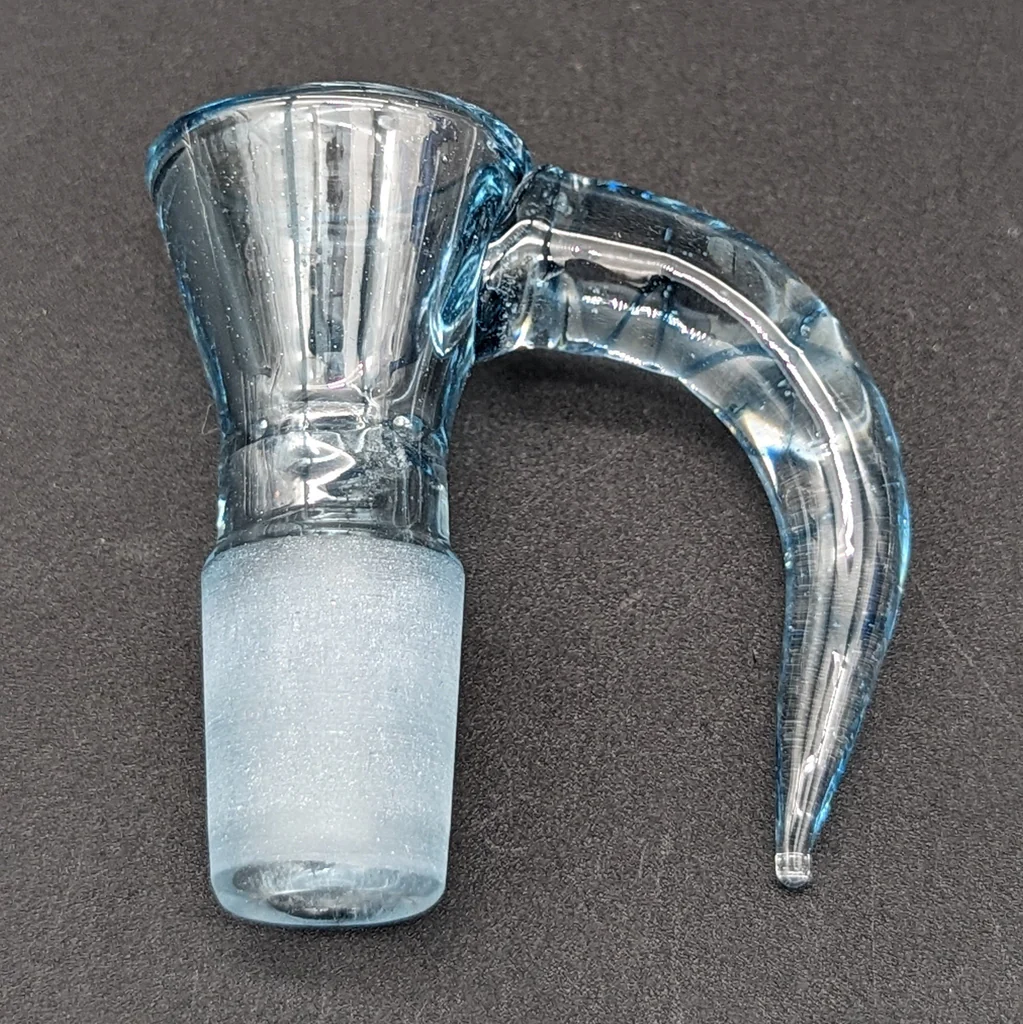
At the opposite end of the spectrum is the 18mm joint, the largest standard size commonly found on functional glass.
Larger joints naturally allow for increased airflow and are especially well suited to larger flower pieces designed to move greater volumes of smoke.
Because of that, 18mm joints are frequently found on:
- Large straight tubes
- Full-sized beakers
- High-volume flower tubes
- Larger ash catchers
- Premium American-made flower pieces
Many collectors associate 18mm joints with larger, higher-end flower tubes from respected American makers. Brands such as Toro and Sovereignty have produced many iconic flower pieces built around 18mm hardware, helping reinforce the association between larger joints with unrestricted airflow, and premium brand names.
One point of confusion surrounding this size is its name.
You’ll often see these joints advertised as either 18mm or 19mm, and many people assume they’re different sizes.
In reality, they’re describing the same standard.
The original scientific designation is based on a joint measuring approximately 18.8 millimeters in diameter. Over time, the functional glass industry shortened that measurement, with some manufacturers rounding down to 18mm while others rounded up to 19mm.
So if you encounter an accessory labeled either 18mm or 19mm, it’s almost always referring to the same joint family.
While larger joints offer excellent airflow and accommodate larger accessories, they aren’t automatically better than smaller sizes. Artists choose 18mm joints because they complement larger pieces, just as they choose 10mm joints to preserve the proportions of smaller rigs.
The right size depends less on performance alone and more on the intended design of the piece.
Whether you’re replacing a bowl, upgrading to a new quartz banger, or building a completely customized setup, choosing the correct joint size is the first step toward ensuring everything fits together properly.
At Tako Glass, you’ll find a wide selection of accessories, replacement parts, and complete pieces featuring all three common joint sizes. From 10mm mini rigs and 14mm daily drivers to 18mm flower tubes, along with matching bowls, bangers, downstems, ash catchers, and more, we carry the components you need to keep your setup performing at its best.
Common Questions About Glass Joint Sizes
What is the most common glass joint size?
The 14mm joint is the most common size found on modern flower bongs and water pipes. It offers an excellent balance of airflow, durability, and accessory availability, making it the standard choice for many glass artists and manufacturers.
Are 18mm and 19mm glass joints the same?
Yes. An 18mm joint is actually manufactured to approximately 18.8mm, which is why some brands label it as 19mm. Likewise, a 14mm joint measures about 14.5mm. In practice, these names refer to the same standard joint sizes and are interchangeable.
Can I use a 14mm bowl in an 18mm bong?
Not directly. The joint sizes must match, so a 14mm bowl will not fit into an 18mm joint without an adapter. Many larger bongs instead use an 18mm downstem that reduces internally to accept a standard 14mm slide, which is a common source of confusion.
How do I know if my joint is male or female?
A male joint inserts into another piece, while a female joint receives the male connection. When shopping for replacement bowls, bangers, ash catchers, or adapters, you’ll need both the correct joint size and the correct gender to ensure everything fits properly.
What is a 10mm joint typically used for?
Ten-millimeter joints are most commonly found on compact dab rigs, mini bubblers, and travel-sized pieces. While they can be used for flower, they are much less common than 14mm and 18mm joints and are typically associated with smaller glass.
What’s the easiest way to measure my glass joint?
Measure the widest part of the ground glass joint using a ruler or calipers. For male joints, measure the outside diameter. For female joints, measure the inside diameter. If you don’t have measuring tools, common household objects, like a penny, can also help identify whether your joint is 10mm, 14mm, or 18mm.