Opal Inclusions: What they are, and how they’re made
Are They Real Opals?
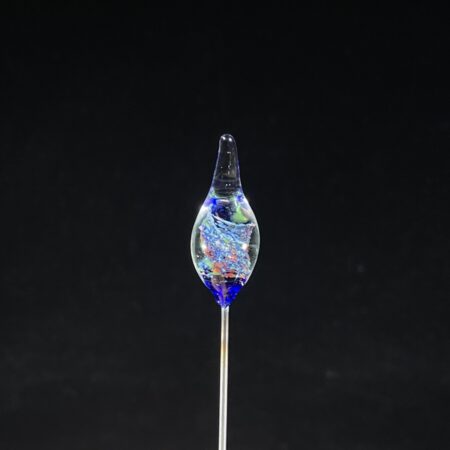
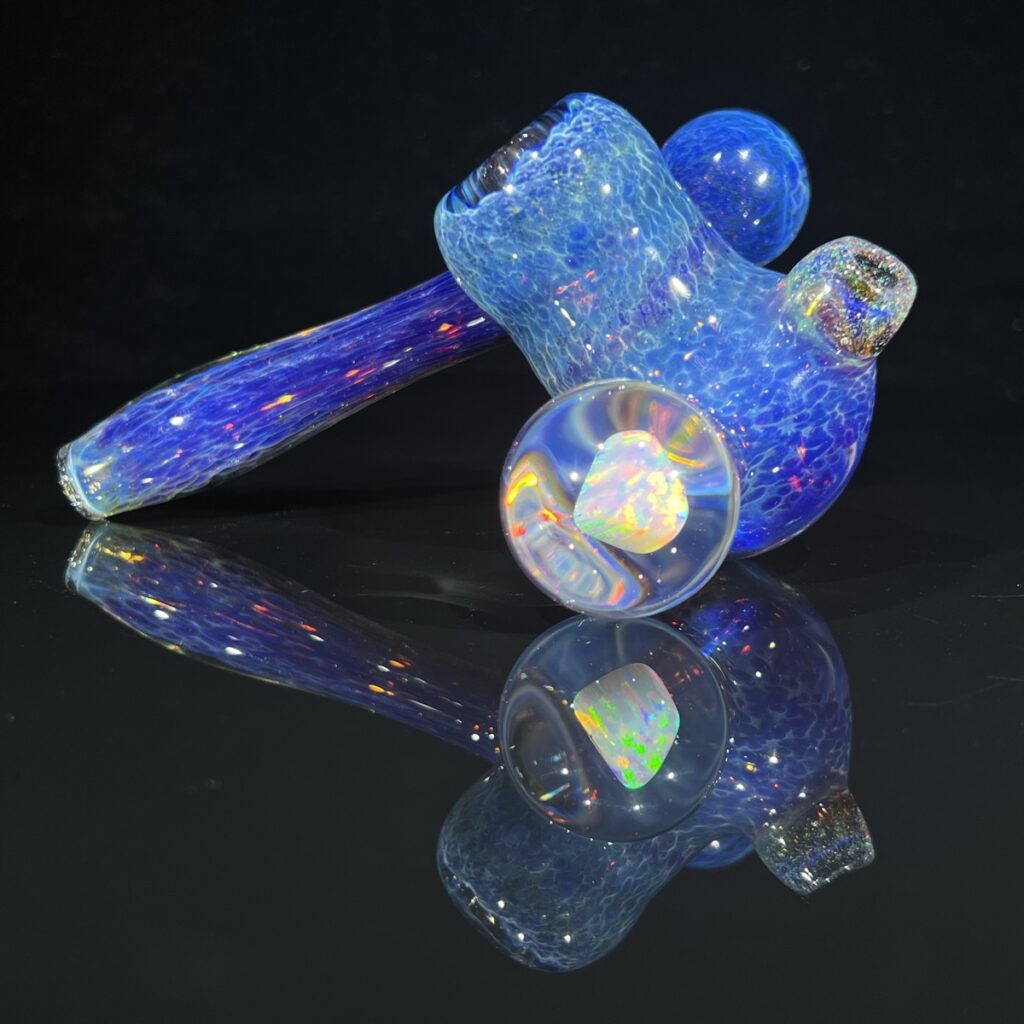
Opals are some of the most eye-catching inclusions found in handmade glass. Sealed beneath clear borosilicate, they appear to float inside the piece, flashing green, blue, orange and red as the viewing angle changes.
But are the opals inside glass pipes real gemstones? How can a glass artist place one inside solid glass without destroying it?
The answer begins with the material opals are made from—and the important differences between natural and laboratory-created opal.
Natural Opal vs. Lab-Created Opal
Both natural opal and the heat-resistant opal used by glass artists are made primarily from silica, a compound of silicon and oxygen. The main difference is what else is contained within that silica structure.
Natural opal forms when silica-rich water collects in cracks and open spaces underground. As much of the water evaporates, it leaves behind microscopic silica particles. Some water remains trapped inside the finished material, however, and natural opal may also contain minerals, sediment and other impurities.
These additional materials help give natural opals their varied body colors, clarity and unique appearance. They also make natural opal poorly suited to the extreme heat used in borosilicate glasswork.
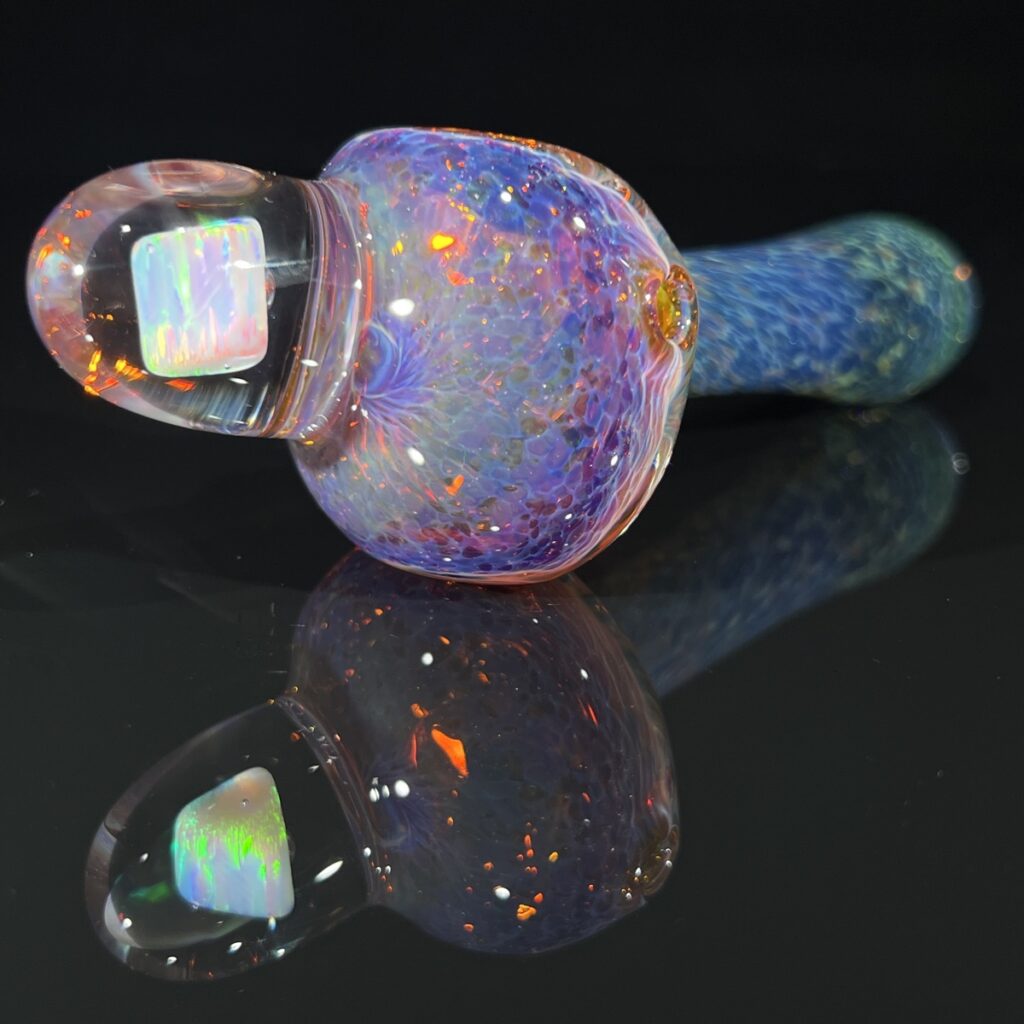
The opals fully encased inside most glass pipes are instead produced under controlled laboratory conditions. Glass artists generally use a resin-free, water-free opal material made from highly pure silica. Its microscopic structure recreates the colorful optical effect associated with natural precious opal, but without the trapped water and unstable materials that could cause it to crack or burn in the flame.
These inclusions are often described as lab-created, synthetic or Gilson-style opals. They should not be confused with inexpensive plastic imitation opals. Many jewelry-grade lab opals also contain polymer or resin for added strength, but those varieties are not suitable for direct exposure to a glassworking flame.
The heat-resistant opal used by lampworkers is specifically chosen because it can survive being completely encased inside hot borosilicate glass.
How Does an Artist Put an Opal Inside Glass?
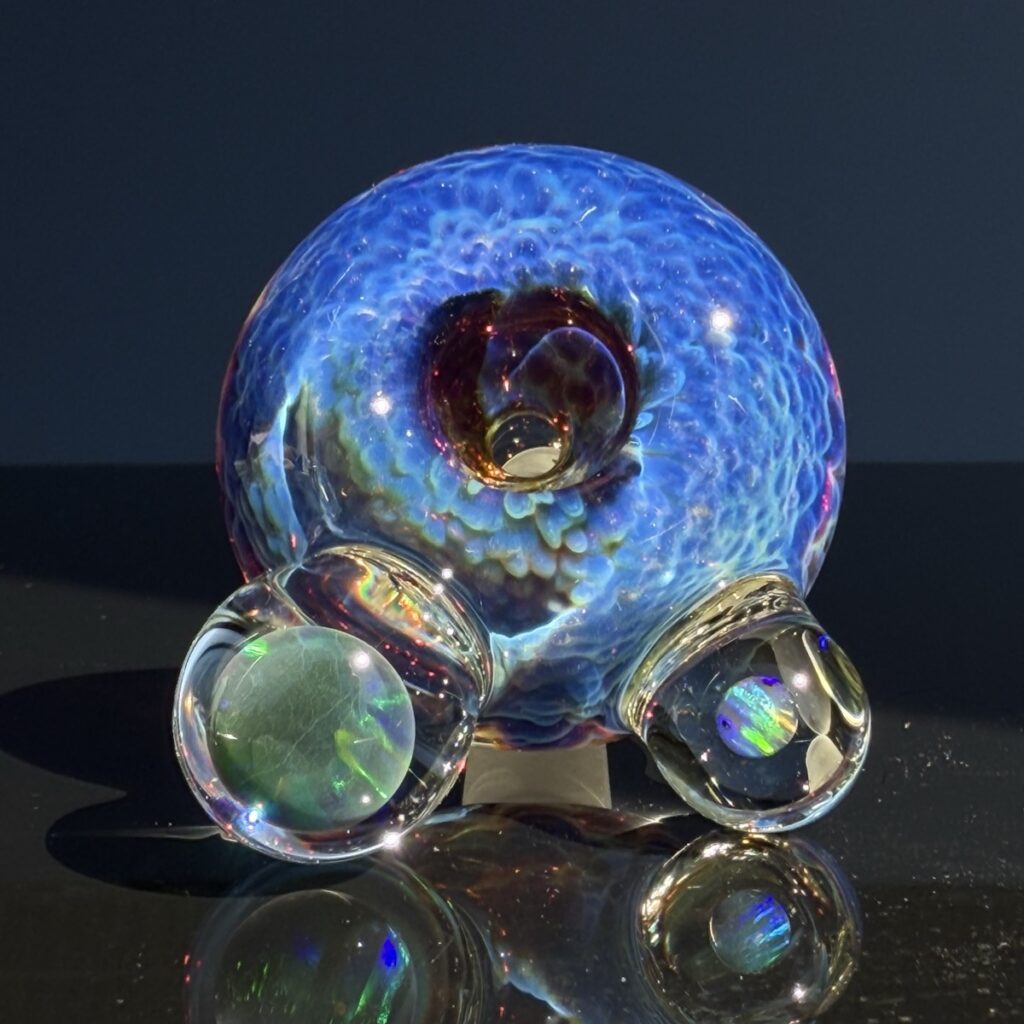
The opal is not pushed into a finished pipe or glued into an opening. It is surrounded by hot glass while the component is being made.
One common method begins by placing the opal inside clear borosilicate tubing. The artist carefully heats and collapses the surrounding glass around it, controlling the flame to avoid trapped air, cracking or excessive internal stress.
Once the opal has been completely sealed inside clear glass, the finished component can be incorporated into a pipe, pendant, marble or sculpture.
The clear glass protects the opal while also acting like a lens. Depending on the shape and thickness of the encasement, it can make the inclusion appear larger, brighter or suspended inside the finished piece.
Encasing an opal requires additional preparation, torch time and heat control. A mistake can trap air around the inclusion or ruin the entire component. These extra time, skill, and material costs are why opal pieces tend to command higher prices.
Why Do Opals Flash Different Colors?
The shifting rainbow effect seen in opal is known as play-of-color.
Inside the material are extremely small silica spheres arranged in an orderly structure. As light interacts with the spaces between those spheres, different wavelengths are reflected in different directions.
Moving the opal changes the angle at which the light enters and leaves the material. That reveals changing flashes of green, blue, yellow, orange and red.
The surrounding glass can further alter the effect. A rounded layer of clear glass may magnify the opal, while dark or colored glass placed behind it can increase the contrast and make its colors appear more intense.
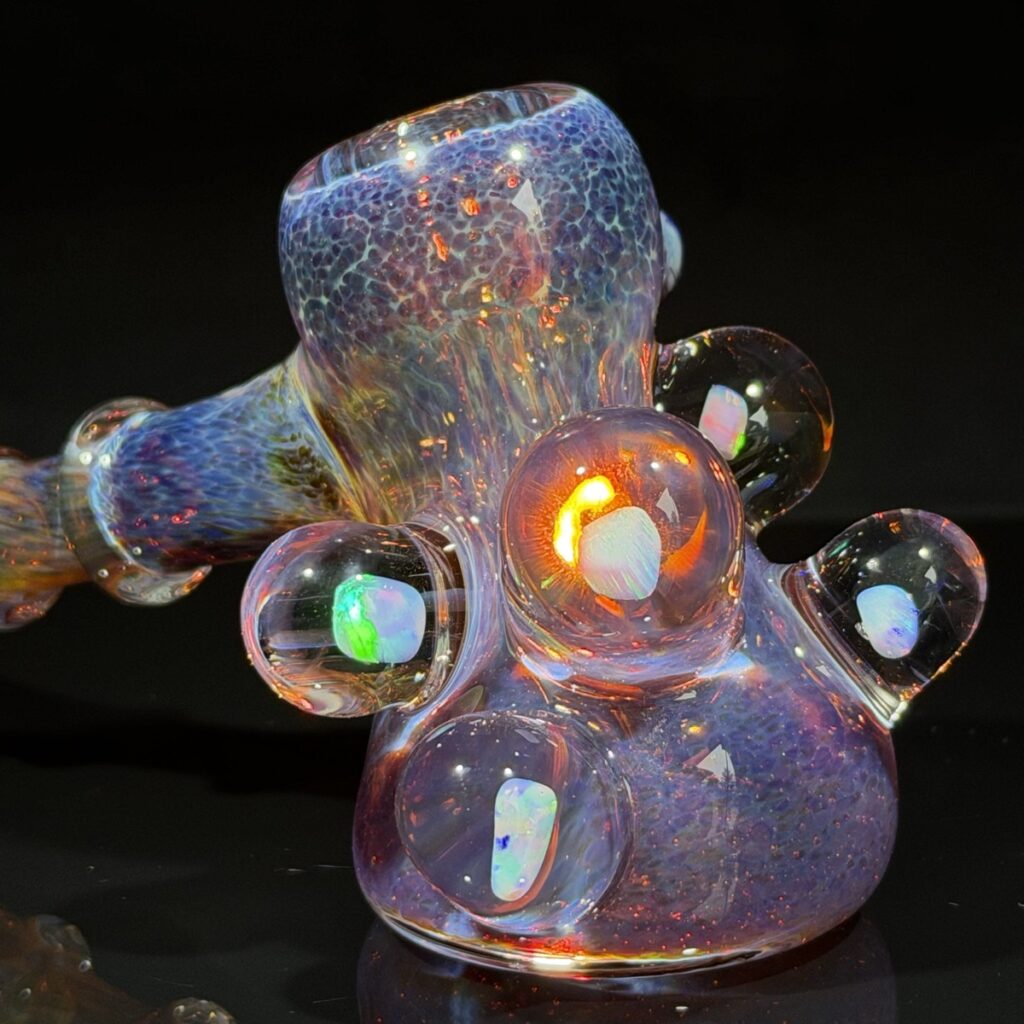
This means the same opal can look dramatically different depending on the lighting, background and angle from which it is viewed.
What Is an Opal Coin?
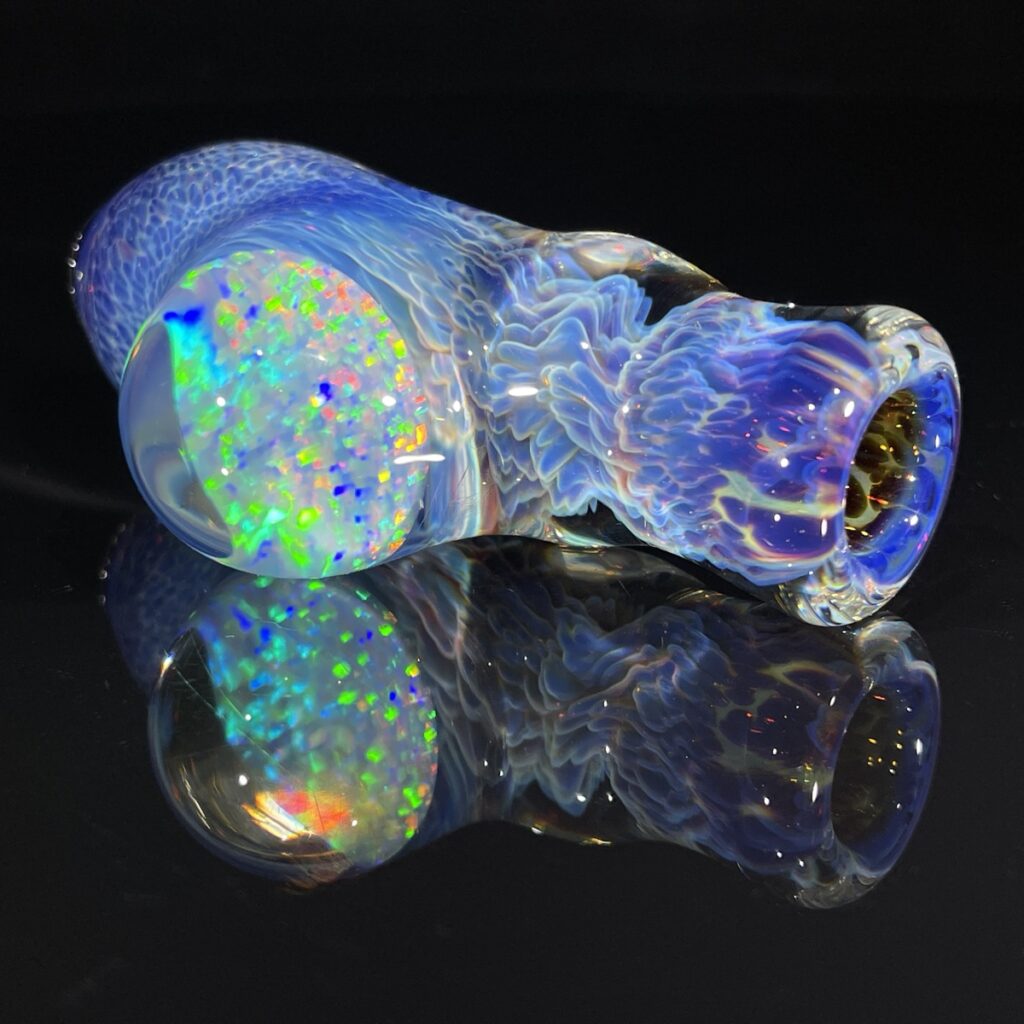
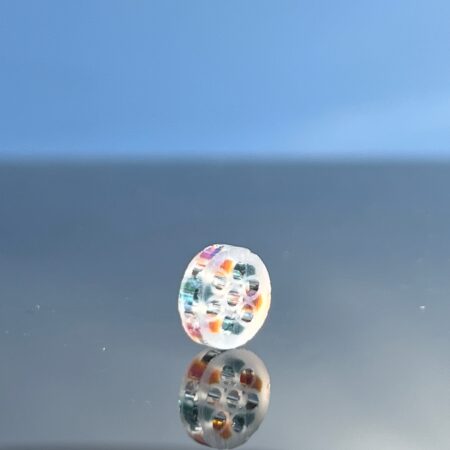
An opal coin is a thin, flat disc sliced from a larger piece of lab-created opal.
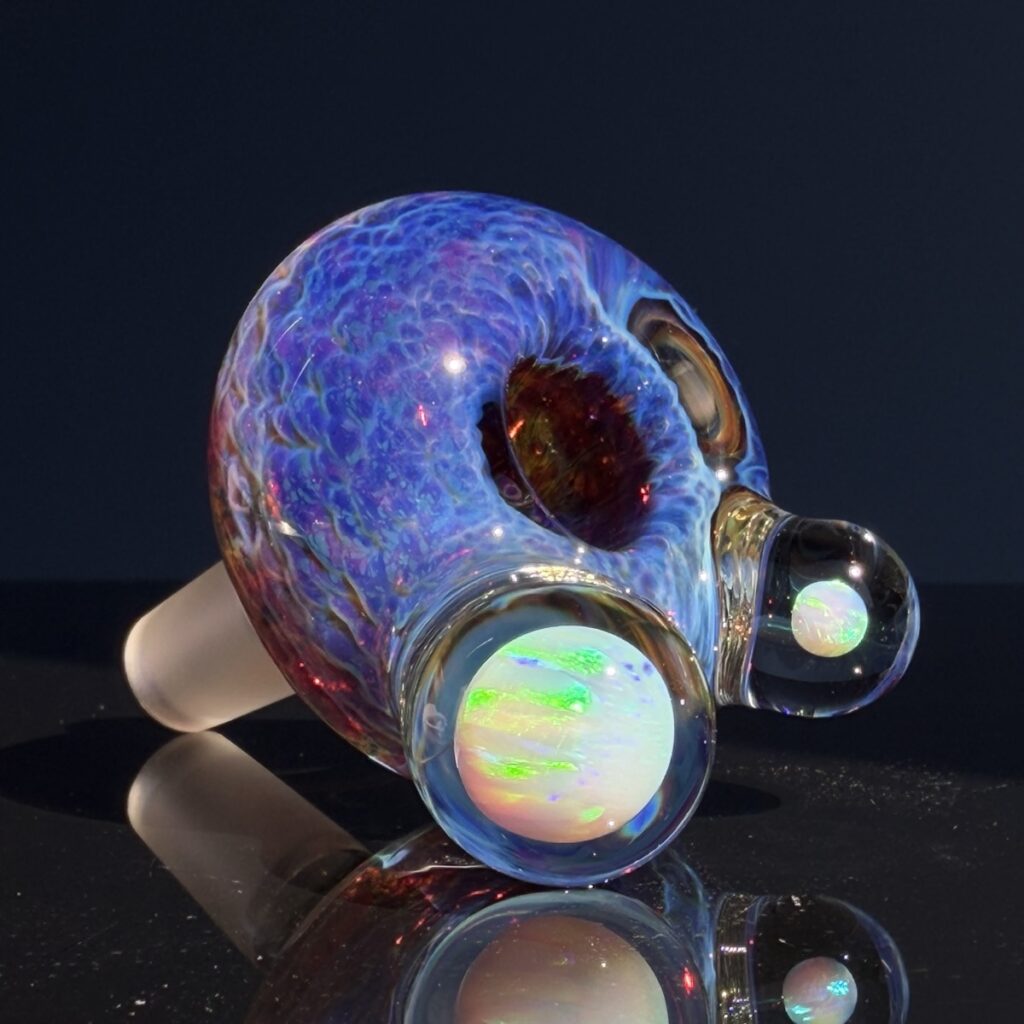
Instead of viewing the opal as a rounded bead or cabochon, the thin wafer provides a broad cross-section through its internal structure. This exposes a wide field of color and allows different areas of the coin to flash as the viewing angle changes.
The coin is polished and then completely encased in clear borosilicate glass. Because the opal is so thin, its outer edge can become difficult to see through the surrounding glass. The colorful silica structure appears to float inside the finished piece without a visible setting or support.
The clear encasement protects the delicate wafer and may also magnify it, making the opal appear larger or deeper than it really is.
Artists can place an opal coin over colored glass, fumed patterns, implosions, vortexes or other decorative backgrounds. These layers add contrast and can create the illusion that the opal is suspended above another design inside the glass.
What Is Crushed Opal?
Instead of using one solid inclusion, a glass artist may work with small pieces known as crushed opal.
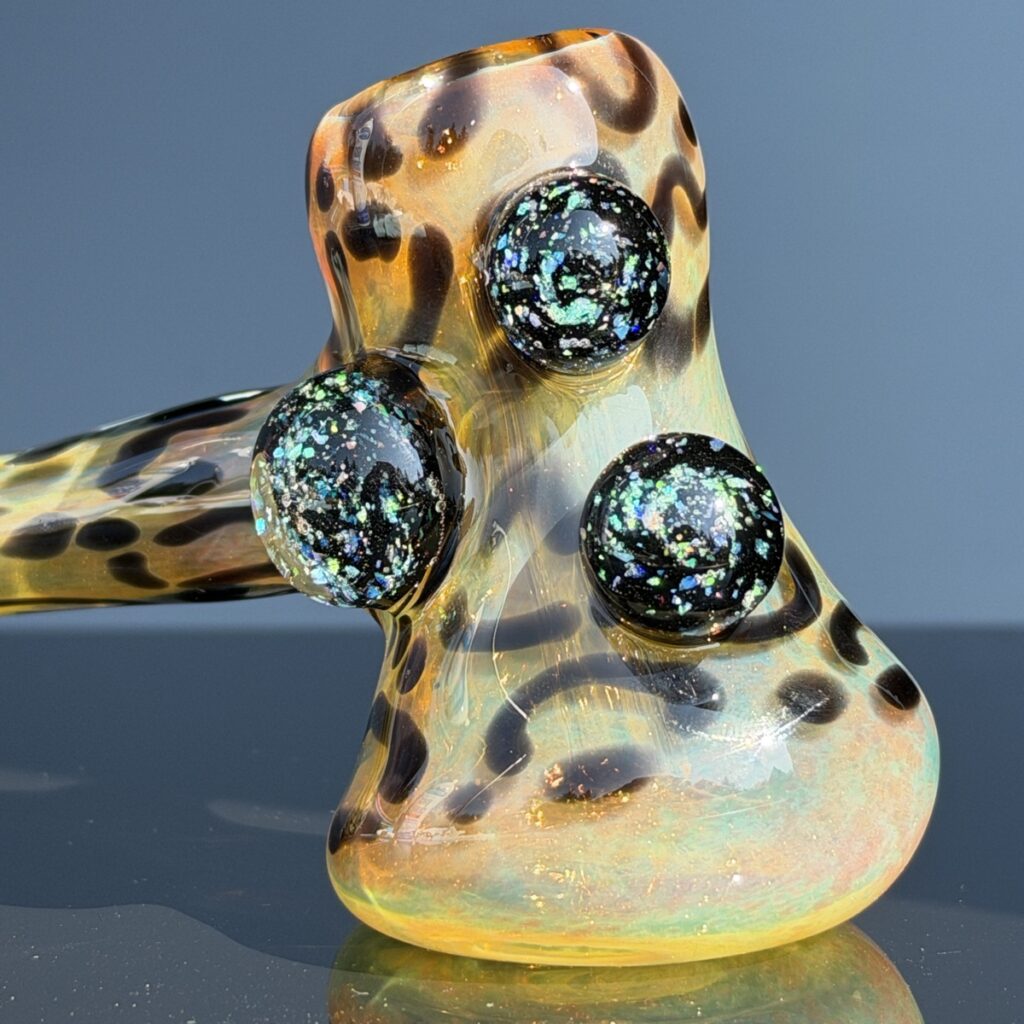
Crushed opal creates many individual flashes of color spread throughout a section of glass. The fragments may be arranged into a stripe, spiral, window or other decorative feature.
A solid opal inclusion or opal coin creates one concentrated focal point. Crushed opal produces a more scattered, glittering effect that changes across the surface as the piece moves.
Because each fragment reflects light from a slightly different position, crushed-opal sections can appear especially active under direct lighting.
Crushed opal provides another benefit, in that it can be used to create parts of the pipe where a solid opal won’t fit. A common example would be a crushed opal reinforced carb, or a crushed opal bridge.
Can an Encased Opal Fall Out?
Only their fire can escape!)
A properly encased opal is completely sealed inside the glass, so it cannot loosen or fall out during normal use. There is no adhesive holding it in place.
Like any inclusion, however, the opal is only as protected as the glass surrounding it. If the pipe is dropped and the encased section breaks, the opal may become exposed or separate with the broken glass.
The opal itself does not improve the airflow or function of a pipe. Its value comes from its appearance, the additional work required to encase it and the skill involved in incorporating it into a finished design.
Small Inclusions With a Big Visual Impact
Opals allow glass artists to place a constantly changing field of color inside an otherwise solid piece.
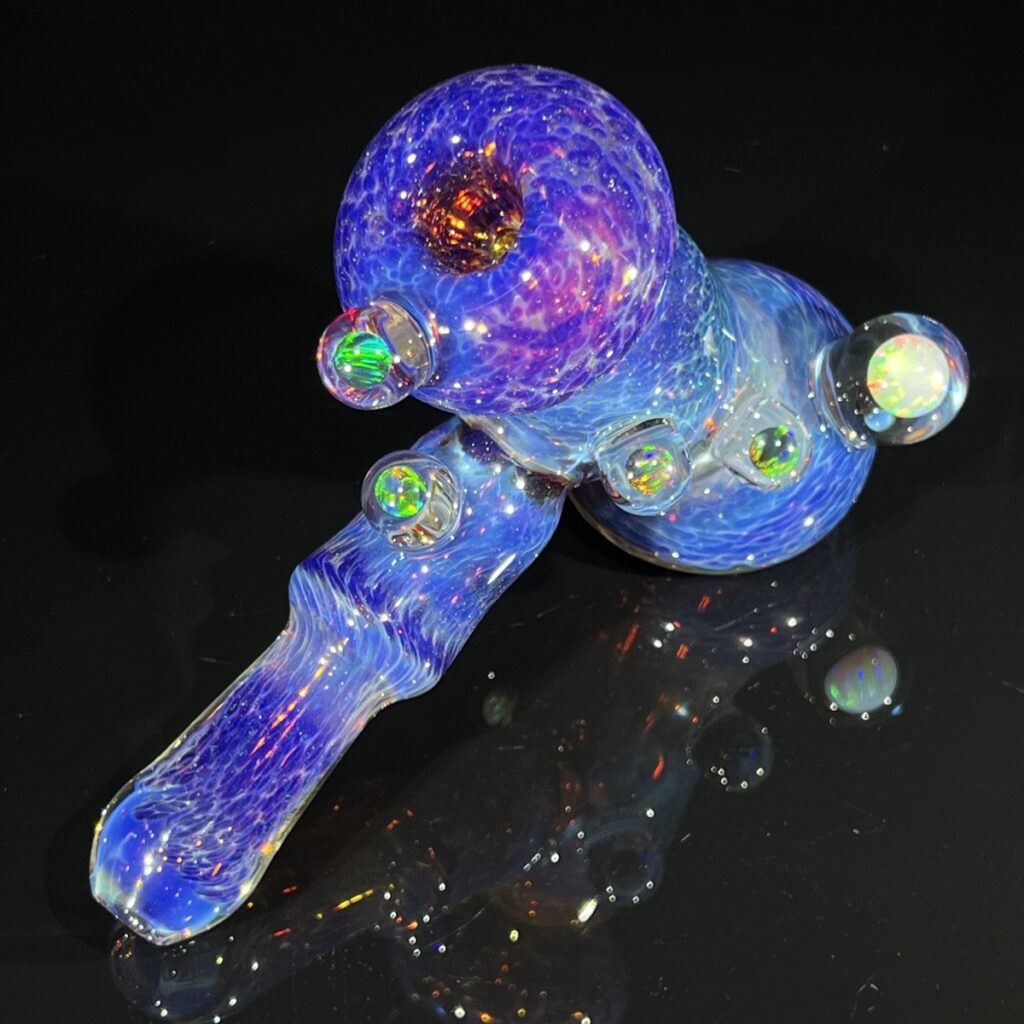
An inclusion that appears green from one direction may suddenly flash blue, orange or red with a slight turn of the wrist. An opal coin can reveal a broad window into the material’s silica structure, while crushed opal spreads smaller flashes throughout the design.
That interaction between the opal, the surrounding glass, the lighting and the artist’s design is what makes every opal piece worth viewing from more than one angle.
Questions About Opals in Functional Glass
Are the opals inside glass pipes real?
Yes, but they are usually lab-grown opals rather than natural gemstones mined from the earth. Lab-grown opals have the same silica-based structure and colorful play-of-color associated with natural opal, but their controlled composition makes them better suited for use in functional glass.
Why don’t glass artists usually use natural opals?
Natural opals contain water and other materials within their silica structure, making them vulnerable to cracking or discoloration under intense heat. Lab-grown opals are more consistent and heat resistant, allowing artists to safely encase them inside borosilicate glass.
How is an opal placed inside a glass pipe?
The artist carefully heats and forms borosilicate glass around the opal, gradually sealing it inside a clear layer of glass. Proper temperature control is essential because uneven heating can damage the inclusion or trap unwanted air around it.
What is an opal coin in glass art?
An opal coin is a thin, flat lab-grown opal inclusion shaped like a small disc. Its broad surface displays a strong field of color, making it especially effective as a focal point inside marbles, pendants, pipes, and other collectible glasswork.
What is crushed opal or cropal?
Crushed opal, sometimes called cropal, consists of small fragments of lab-grown opal arranged throughout the glass. Instead of creating one central image, the fragments produce scattered flashes of color that can resemble glitter, stars, or tiny gemstones.
Can an opal inclusion fall out or wear away?
A properly encased opal is permanently sealed within the surrounding glass and will not rub off or fall out during normal use. However, the piece should still be handled carefully because a severe impact that cracks the surrounding glass could also damage the inclusion.