The Language of Glass: A Guide to Glass Art Terminology
A Quick Note Before We Dive In
This article contains quite a bit of glass art terminology, including some words that might be unfamiliar even to experienced glass enthusiasts. But don’t worry! That’s exactly why we’re writing it.
We’ve recently introduced throughout our product descriptions, and we’re putting them to work here, too. Whenever you see a bold term with a small question mark beside it, give it a click or tap. A short definition will appear without taking you away from what you’re reading.
Go ahead, try it on “interactive glossary popovers” above.
You’ll probably encounter a few unfamiliar words along the way. The definitions are there when you need them, so we can spend more time exploring the stories behind the language.
Why Glass Art Terminology Needs a Little Translating
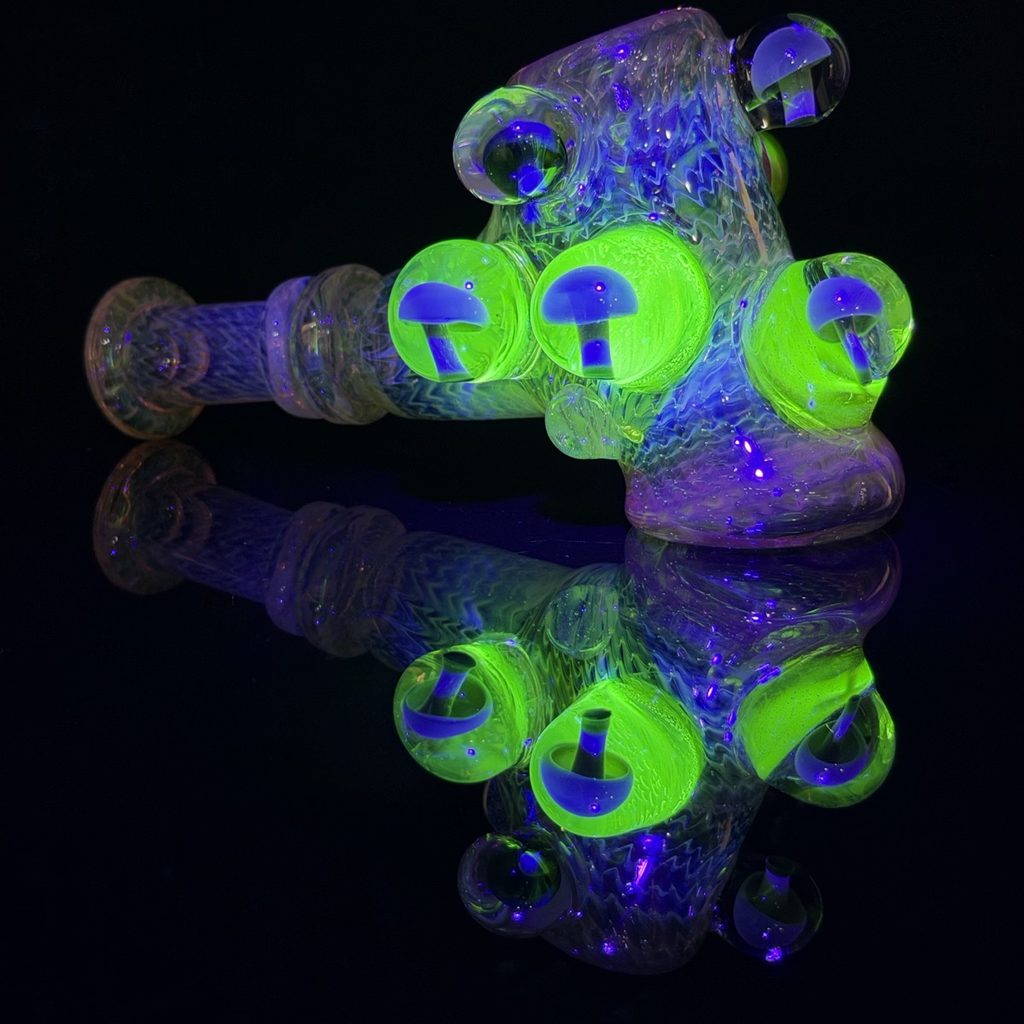
Glassmaking has a language all its own, developed across centuries, countries, and very different communities of craftspeople. At Tako Glass, we’ve used specialized terminology in our product descriptions for years to explain the techniques, materials, and features that make handmade glass interesting. But even with plenty of experience around glass, we sometimes encounter terms we don’t fully understand ourselves. If some of this terminology is unfamiliar to us, how much are our customers encountering for the first time?
We didn’t want to eliminate those words from our descriptions, because they carry valuable information about the artwork, often rooted in generations of craftsmanship. Instead, we wanted to make that knowledge more accessible without expecting customers to research every unfamiliar term. That’s where the glossary came from: a way to answer questions as they arise, including questions you might not have realized you needed to ask!
Where Does Glass Art Terminology Come From?
Glass art terminology didn’t develop in one place or at one time. Some terms originated in traditional European glassmaking, others crossed over from scientific and industrial production, and still others emerged through modern American studio and functional glass culture. The result is a fascinating mixture of historical language, technical vocabulary, and contemporary slang.
Centuries of Italian Glassmaking
Italy, particularly Venice and the island of Murano, has an extraordinary history of decorative glassmaking. Its artisans developed and refined techniques involving colored glass, intricate patterns, and elaborate construction that remain influential today.
Consider . The term belongs to a tradition of patterned glasswork associated with ancient mosaic glass and later revived by Venetian glassmakers. Its linguistic history connects to murra, a word associated with prized vessels in the Roman world, although the precise historical relationship is complicated.
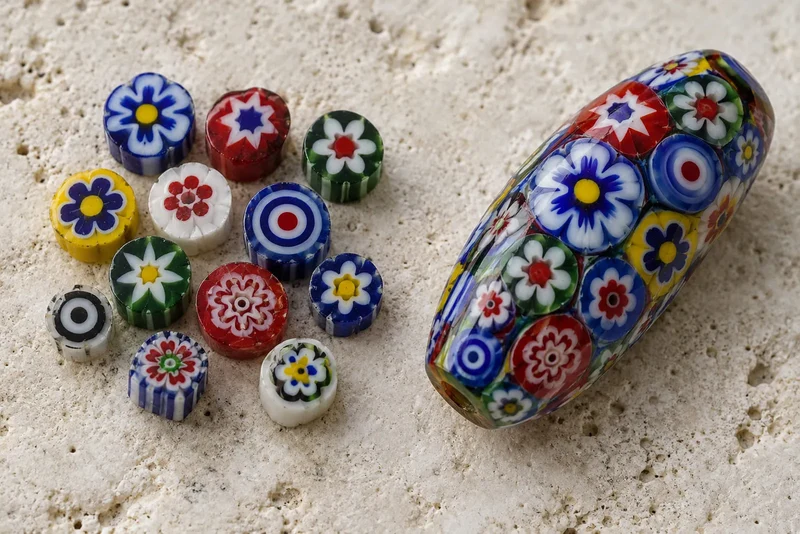
One particularly recognizable form of murrine glasswork is , Italian for “a thousand flowers.” Its name reflects the flower-like designs produced with patterned glass canes. Those tiny floral and star-shaped patterns became a hallmark of Venetian decorative glass, appearing in everything from beads to elaborate vessels.
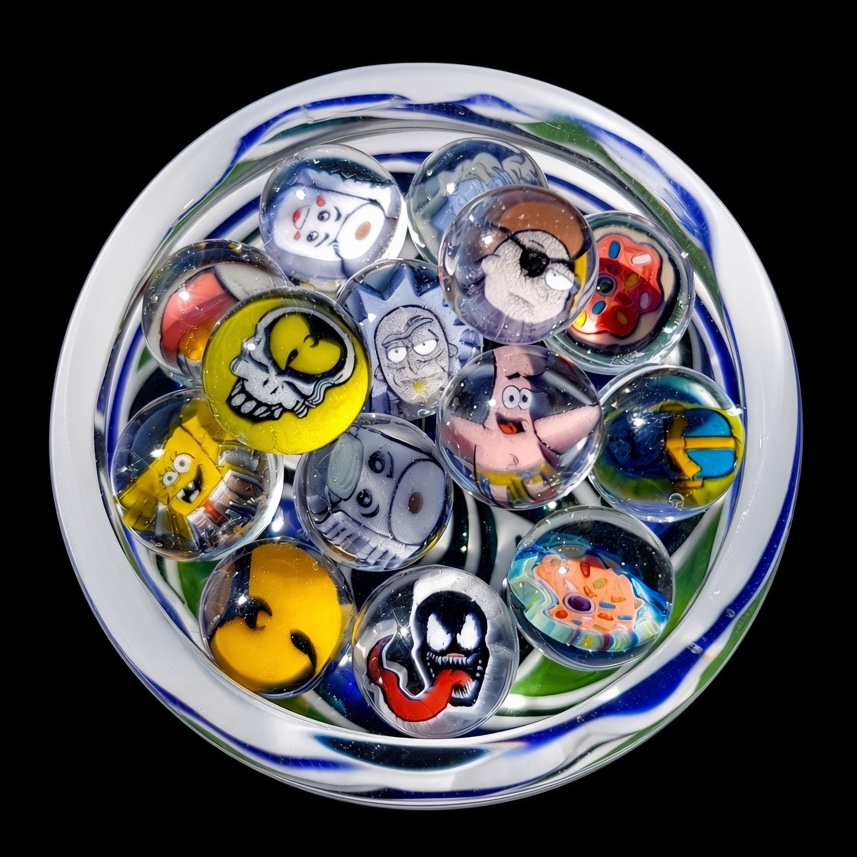
The techniques didn’t stop evolving there. Glass artists expanded patterned cane work into miniature portraits, geometric designs, and remarkably detailed images. That brings us to , the informal shorthand you’ll frequently hear among modern American pipe makers and collectors. Like traditional murrine, millies are small patterned glass slices, but contemporary artists have taken them well beyond millefiori’s traditional floral designs. Today’s millies might feature cartoon characters, recognizable symbols, tiny portraits, or just about anything else an artist can imagine.
It’s a fascinating example of an old glassworking tradition finding new life in American functional glass, complete with its own evolving vocabulary.
The American Glass Revolution
In 1962, Harvey Littleton and Dominick Labino helped launch the American studio glass movement through groundbreaking workshops at the Toledo Museum of Art. Their work helped bring hot glass out of industrial facilities and into smaller studios, opening the medium to independent artists and new forms of experimentation.
Modern American functional glass took another major step forward through Bob Snodgrass, who began working with a torch in the 1970s. His color-changing pipes and experimentation with became influential as he traveled with the Grateful Dead’s touring community, introducing his work to audiences across the country.
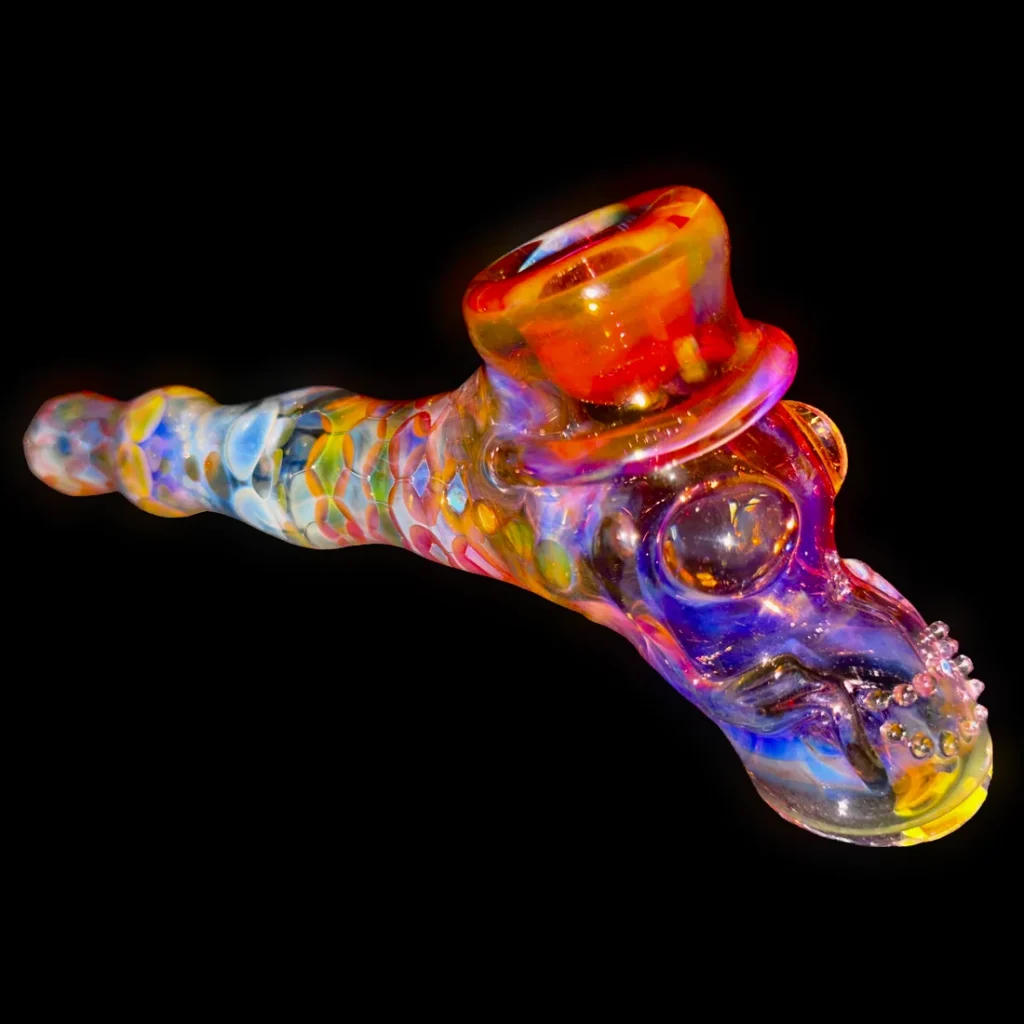
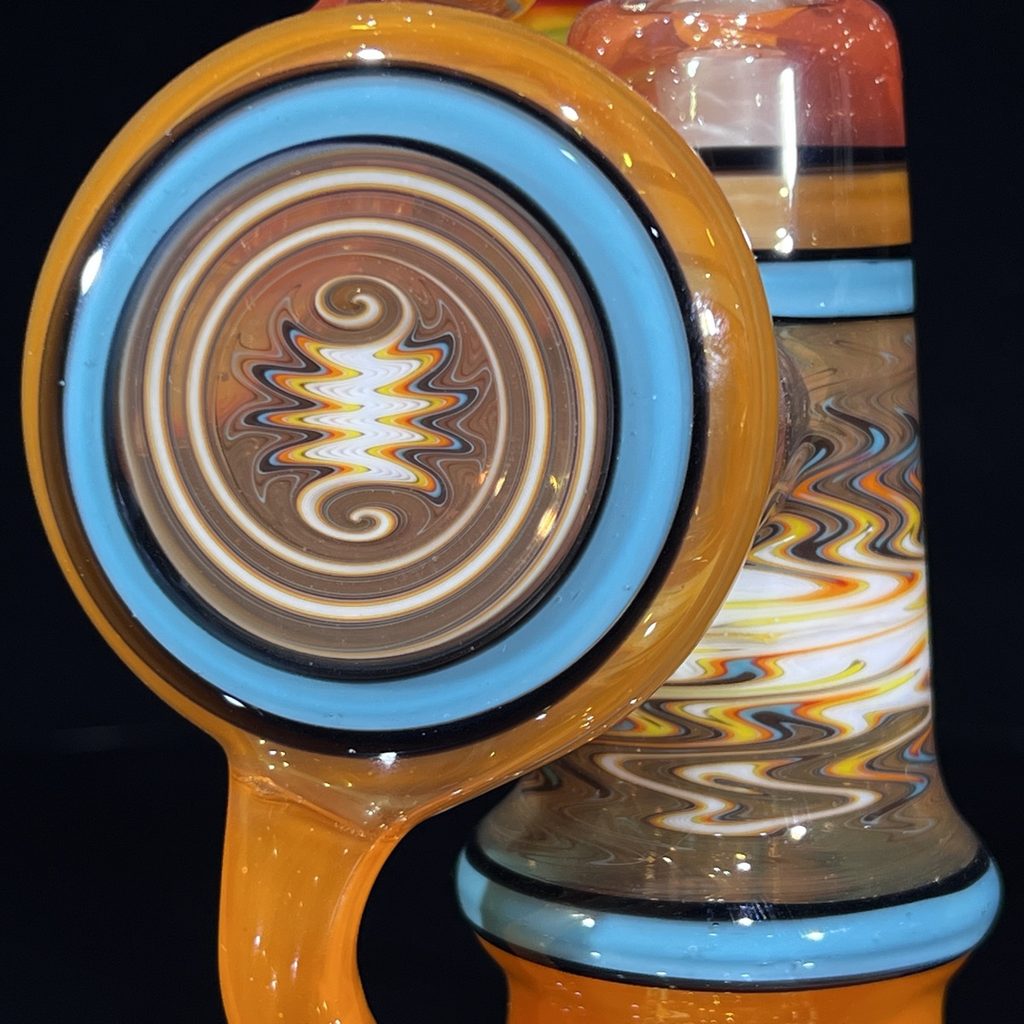
Snodgrass eventually settled in Eugene, Oregon, where he shared techniques with other glassmakers. That growing network of artists helped fuel the American functional glass movement and the culture surrounding what collectors now call , or headies: distinctive, artist-driven functional glass celebrated for its craftsmanship, creativity, and individuality.
As the artwork evolved, so did its vocabulary. Terms like and became familiar ways to describe decorative patterns, while and entered conversations about increasingly inventive water-pipe designs. Some words came from older glassworking traditions; others developed new meanings within the pipe-making community. Together, they formed a language that became second nature to experienced artists and collectors, but could sound completely foreign to newcomers.
Terms Shared Across Glass Industries
Not every unfamiliar term originated in the functional glass community. Pipe makers share materials, tools, and processes with scientific glassworkers, traditional art-glass studios, and industrial manufacturers. Naturally, much of their vocabulary overlaps.
, for example, is used in laboratory equipment, industrial applications, and contemporary pipe-making. The same material can appear in very different settings. is another shared term. Whether the finished object is a scientific vessel, a handmade pipe, a bong, or your run-of-the-mill pint glass, controlled cooling is an important part of producing stable glass. The techniques may differ, but the underlying principle is shared.
The connections become especially apparent when you look at the equipment itself. Take , familiar from scientific laboratory equipment. Standardized glass connections make it possible to assemble and separate different components. Functional glass uses a related approach with removable bowls, downstems, and accessories, although sizes and compatibility conventions can differ between industries.

Then there’s the . In scientific glassware, diffusers help distribute gas through liquids for various laboratory processes. In functional glass, the same general principle appears in designs that distribute airflow through water. The applications are different, but there’s a recognizable connection in the terminology and engineering.
Another shared term is , which appears in decorative glassworking, ceramics, and other material-processing industries. Even , also called flameworking, reflects how the language changes over time. The older name recalls an era when glassworkers used lamps as heat sources. Today’s artists generally use sophisticated torches, but the historical terminology has survived alongside the newer name.
This combination of borrowed vocabulary, industry-specific terminology, and modern slang helps explain why glassmaking has such a complicated language.
What Glass Art Terminology Can Tell You About a Piece
An unfamiliar term in a product description might identify an artistic technique, describe a material, explain a construction method, or point to something that affects how a piece functions.
For example, and describe decorative approaches, while introduce another aspect of glass decoration. By contrast, a belongs to the functional design of a water pipe.
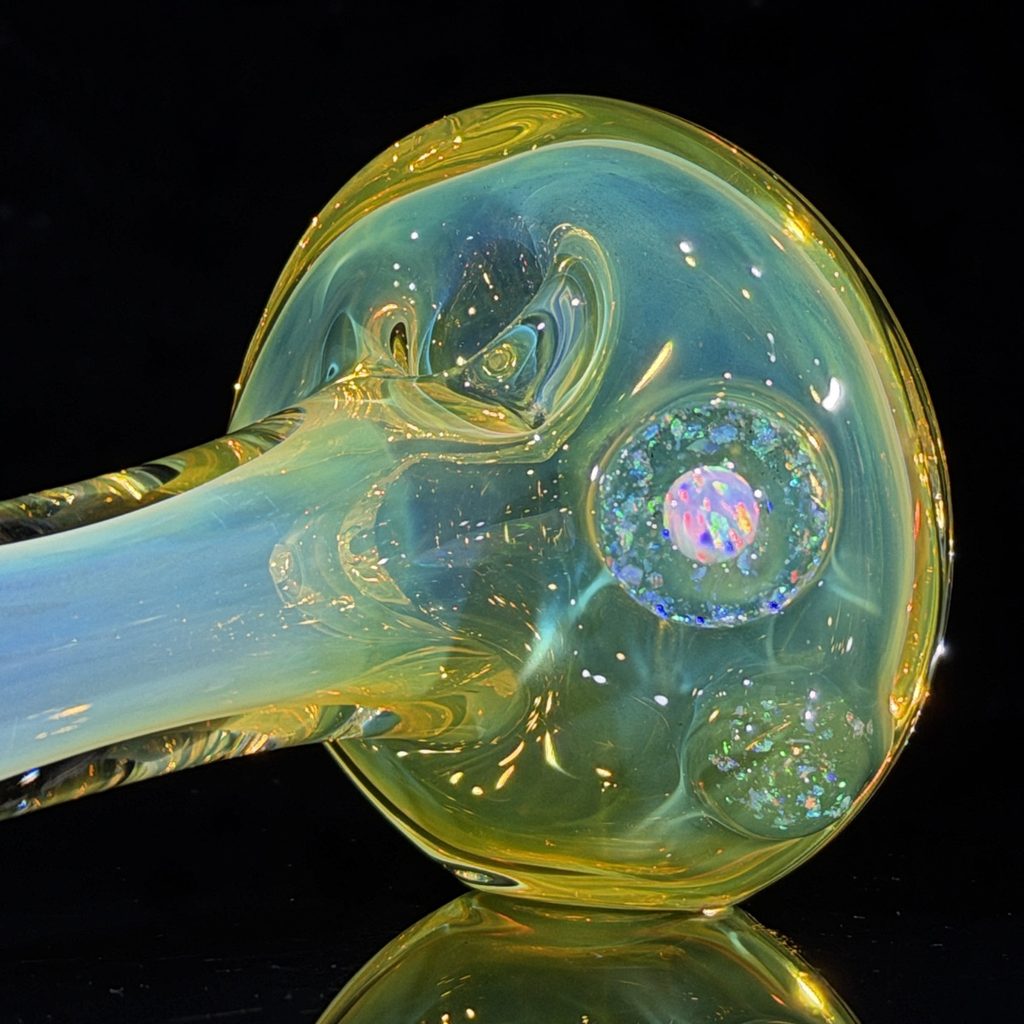
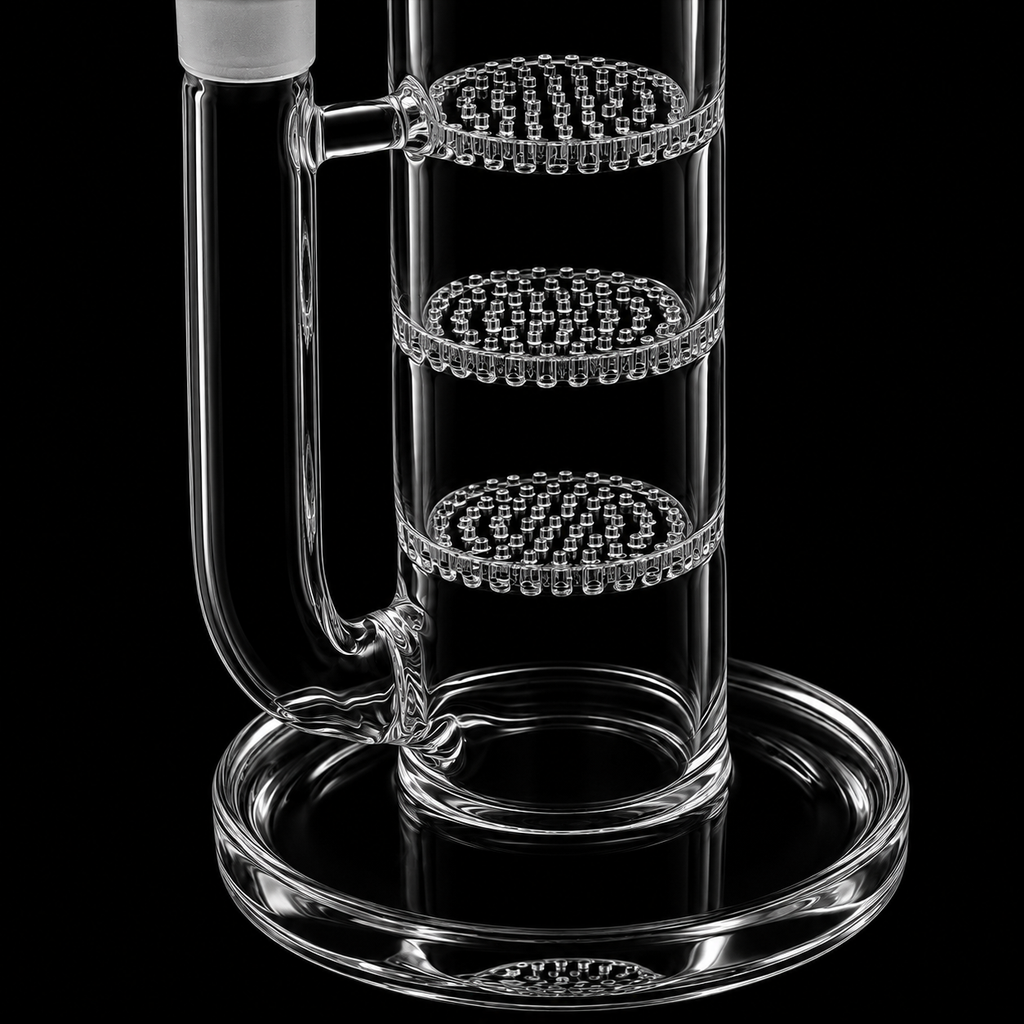
Sometimes those distinctions are surprisingly easy to miss. Take and . The names sound almost interchangeable, but one concerns decorative glasswork while the other describes a functional component. Without understanding that difference, it’s easy to misunderstand what a product description is actually telling you.
That’s why we believe education matters when shopping for handmade glass. You can certainly appreciate a piece without knowing how it was made, but understanding the materials, techniques, and construction adds another layer of appreciation. It also makes comparing different pieces more meaningful.
More Than a Definition: Appreciating the Craft
One of the most rewarding things about handmade glass is discovering how much work goes into details that initially seem simple. An intricate decorative pattern might look like colorful stripes or spirals, but once you recognize techniques like reversals, wig-wags, or , you begin noticing the decisions and craftsmanship behind the finished artwork.
The same applies to construction. A thick handmade pipe, a carefully shaped bowl, or a piece containing multiple elements can involve very different approaches to working glass.
Of course, a particular technique doesn’t automatically make one piece better than another. Artistic quality, craftsmanship, durability, and personal taste involve much more than a list of specialized features. For collectors, understanding glass terminology can become part of the enjoyment. You start recognizing distinctive techniques and appreciating how different artists approach their work.
For newcomers, however, it can feel like everyone around you is speaking a foreign language, and you’re somehow just supposed to understand it all on your own. That’s exactly the gap we’re trying to close.
Why We Added Interactive Glossary Popovers to Tako Glass
The challenge was finding a way to share this knowledge without turning every product description into a glassmaking textbook. Removing technical terms would mean losing useful information, while explaining every one in the main copy would make browsing unnecessarily complicated.
Our interactive glossary gives customers another option: explore a definition when they need it, right where they’re reading. The definitions are reviewed and maintained to help us describe our products accurately and consistently. More importantly, they give customers the opportunity to learn something they might not have thought to ask about.
Better understanding leads to more informed purchasing decisions, and that’s a win for everyone involved.
Keep Exploring, Keep Learning!
Our interactive glossary is a growing resource, and we expect it to become more useful as we continue adding and reviewing terminology. Glass art is constantly evolving. New techniques emerge, older methods find new applications, and artists develop distinctive approaches to familiar materials.
We’re certainly still learning ourselves, and that’s part of what makes working with handmade glass interesting.
The next time you’re browsing Tako Glass and encounter a term you don’t recognize, explore its definition. You might discover a detail about the construction, function, or craftsmanship that changes how you look at the piece.
After all, appreciating glass art shouldn’t require knowing its entire vocabulary before you begin.
Frequently Asked Questions About Glass Art Terminology
What is glass art terminology?
Glass art terminology is the vocabulary used to describe glassmaking materials, techniques, construction methods, decorative patterns, and functional features. It includes traditional glassworking language, scientific terminology, and expressions developed within modern artistic communities.
How do I use the interactive glass glossary on Tako Glass?
Look for a small question-mark indicator beside supported glassworking terms in Tako Glass product descriptions. Click or tap the marked term to open a short definition directly on the page. You can learn what the term means without navigating away from the product you’re viewing.
What’s the difference between murrine, millefiori, and millies?
Murrine is the broader term for patterned cross-sections cut from glass cane. Millefiori, meaning “a thousand flowers,” is a decorative tradition associated with flower-like patterned cane designs. Millie is informal terminology used by contemporary functional glass artists for small patterned slices, including modern images, symbols, and cartoon characters.
Does heady glass mean a pipe is higher quality?
Not necessarily. Heady glass generally refers to distinctive, artist-driven functional glass valued for creative design, craftsmanship, and individuality. The term doesn’t guarantee superior durability, functionality, or construction quality. Consider the individual artist, materials, workmanship, and intended use rather than relying on the label alone.
How can I tell whether a glassworking term describes decoration or function?
Look at what the term refers to. Decorative glassworking terms, such as linework or silver fuming, usually describe appearance or artistic technique. Functional glass terms, such as percolator or recycler, describe how a piece operates. Some features combine both purposes, so the product description and glossary can help clarify their roles.
Is borosilicate glass better than regular glass for handmade pipes?
Borosilicate glass is commonly preferred for handmade functional glass because it resists thermal shock better than typical soda-lime glass. However, material choice alone doesn’t determine quality. Glass thickness, design, workmanship, and proper annealing also influence durability. Borosilicate glass is heat-resistant, not unbreakable.
Can two glass pipes use the same technique but look completely different?
Yes. Glassworking techniques such as fuming, linework, and patterned cane work can produce very different results depending on the artist’s methods, colors, heating process, and design choices. Shared terminology describes the technique, not a fixed appearance. That’s one reason handmade glass can vary so much between individual artists.
What if a glassworking term isn’t included in the Tako Glass glossary?
Not every glassworking term has an interactive definition yet. The Tako Glass glossary is a growing resource, and new terminology can be added as it is reviewed. If a word isn’t marked with a glossary indicator, it may simply not be included in the current collection of supported terms.
Interactive definitions that appear when you select a marked term, explaining unfamiliar words without leaving the page. Like this one. See what we did there?
Patterned cross-sections cut from prepared glass cane, revealing an image or geometric design that can be fused into other glasswork.
Italian for “a thousand flowers,” millefiori refers to decorative glasswork using patterned glass canes or their cross-sectional slices, traditionally featuring flower-like motifs.
A small patterned slice cut from prepared glass cane, with the image or design appearing in cross-section before being fused into or onto another piece.
A technique where vaporized metal, most commonly silver or gold, is deposited onto hot glass to create thin metallic coloration that changes with lighting and surrounding glass.
Collectible, artistically distinctive functional glass emphasizing individual craftsmanship, elaborate techniques, sculptural design, or an artist’s recognizable style.
A linework pattern created by repeatedly changing or reversing striped or spiraled glass, producing a rhythmic zig-zag or chevron-like design.
A linework technique where the direction of a spiral, stripe, or related pattern is deliberately changed, creating repeated directional shifts in the design.
A water-pipe design that continuously moves water between connected chambers through an uptake and return pathway while the piece is being drawn.
A simple water-filtration design where smoke exits directly from the opening of the downstem into the water chamber, creating bubbles without a separate diffuser or percolator attachment.
A heat-resistant glass formulation containing boron oxide, widely used for lampworked art, functional glass, laboratory equipment, and other applications requiring strong thermal resistance.
Controlled cooling of finished glass through a specific temperature range to reduce internal stress and improve long-term stability.
A precision-ground, tapered glass connection designed to fit a matching component, commonly used in laboratory apparatus and related removable glass assemblies.
A component or structure that distributes gas or airflow into multiple streams or bubbles, used in laboratory gas-dispersion equipment and certain water-pipe designs.
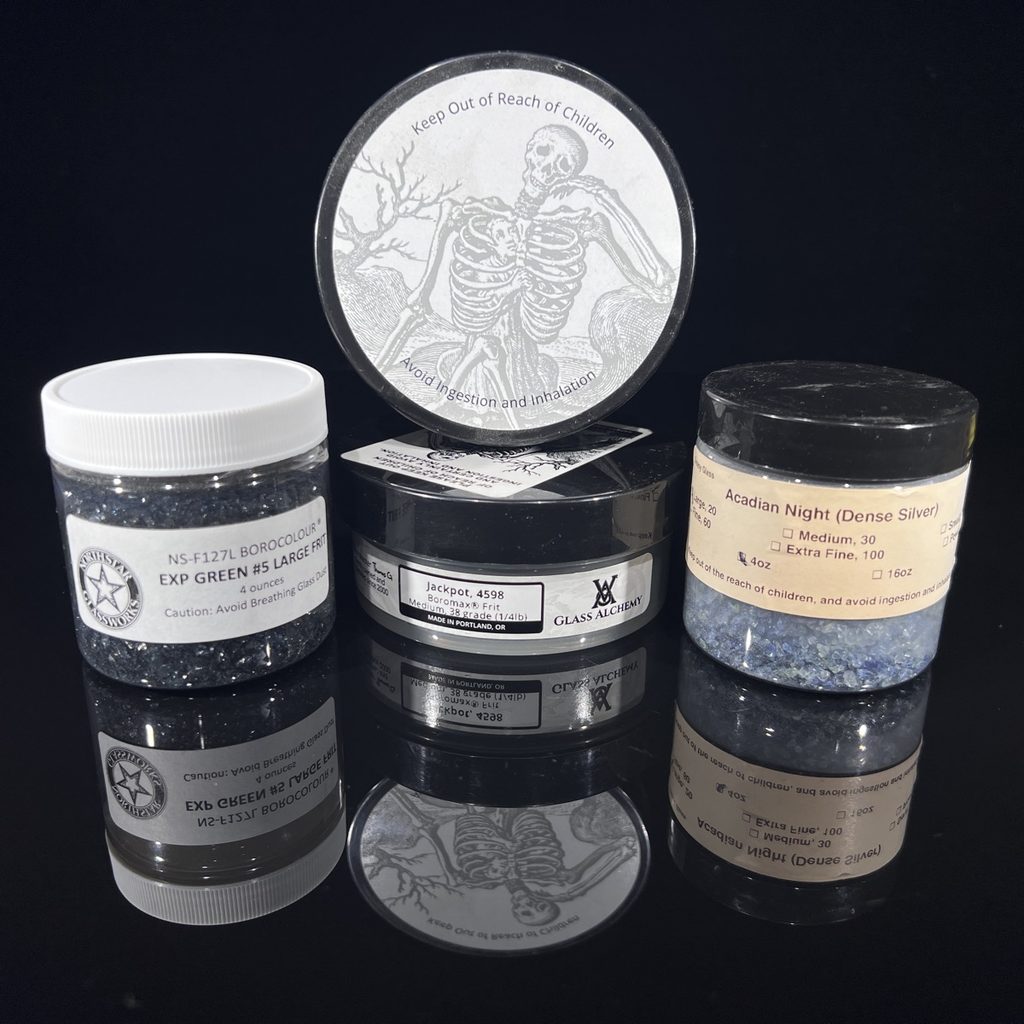
Small crushed or granulated pieces of glass fused onto or into hot glass to create color, texture, patterns, or layered effects.
Forming and shaping glass with concentrated torch or flame heat rather than primarily in a furnace.
Fuming performed with vaporized silver, creating a thin metallic layer on hot glass whose final coloration changes according to application, heat history, and surrounding glass.
Decorative glasswork built from lines of colored glass applied and manipulated into spirals, grids, reversals, geometric patterns, and other designs.
An opal element incorporated into and typically encased within glass as a decorative focal point.
An internal water-filtration structure that divides airflow through holes, slits, or other openings so it passes through water in multiple smaller streams or bubbles.
A decorative glassworking technique using carefully arranged dots of contrasting glass that are melted and manipulated into a repeating, cell-like honeycomb pattern.
A flat percolator disc containing many small holes that divide airflow into numerous bubbles as it passes through water.
A lattice-style linework technique created by crossing sets of spiraling glass lines to form a net-like or diamond-patterned design.
A decorative element, pattern, color, or inclusion sealed beneath an outer layer of glass so it appears suspended or protected within the finished piece.