Left-Handed Glass Pipes: Carb Placement, Sidecars & What Left-Handed Users Should Know
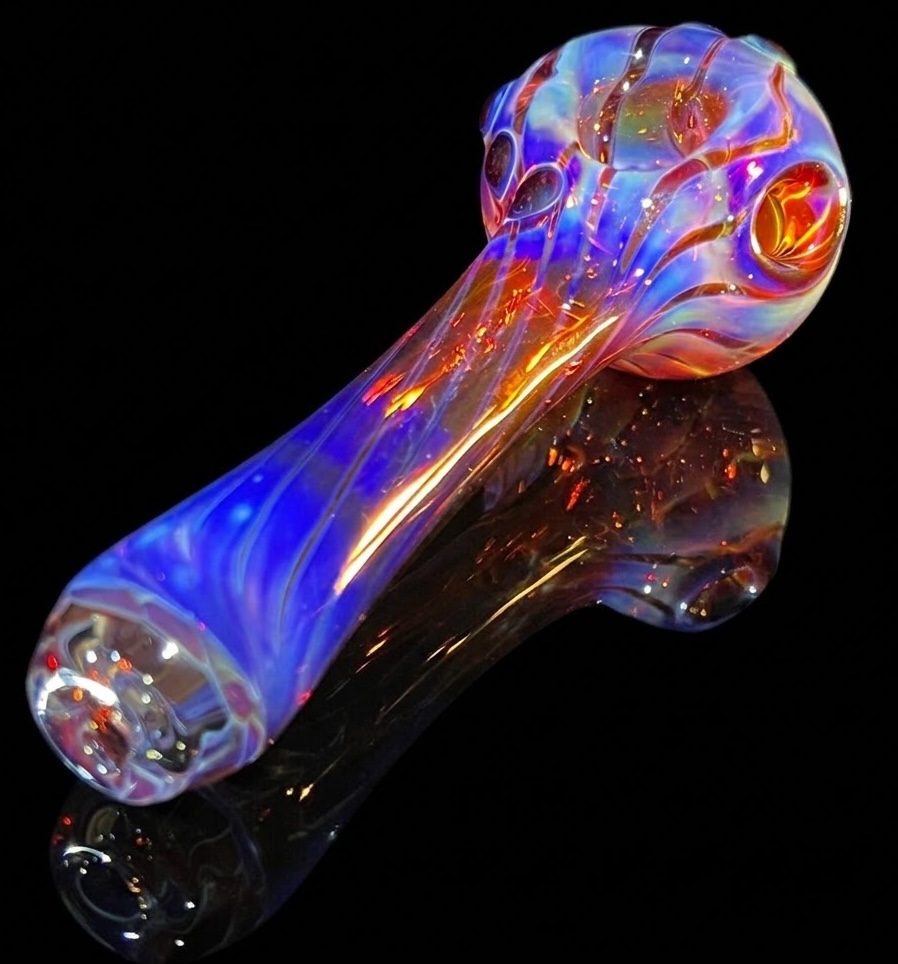
For most people, picking up a glass pipe is straightforward. The mouthpiece is where it should be, the bowl is easy to reach, and the carb falls naturally beneath a finger or thumb. For left-handed users, however, the conventional design of a piece can sometimes make those interactions less intuitive.
The glass industry has historically settled on standard configurations that tend to favor right-handed users. That does not mean every left-handed person needs a specially designed pipe. Conversations among left-handed users show considerable variation in what feels comfortable. Some prefer a right-side carb, while others are perfectly happy with the traditional left-side configuration.
The important thing is understanding how the different elements of a piece affect the way it is held and used.
Why Left-Handed Users May Experience Glass Differently
National Left-Handers Day is observed each year on August 13, providing an opportunity to recognize the roughly one in ten people who prefer using their left hand for everyday tasks. The occasion was established by the Left-Handers Club in 1976 to raise awareness about some of the everyday inconveniences created by a world largely designed for right-handed people.
Glassware is an interesting example because the differences can be subtle. A left-handed person can generally use a conventional pipe, but the placement of a carb, bowl, mouthpiece, or grip can determine whether a particular piece feels natural or awkward.
What Makes a Glass Pipe Left-Handed?
When a glass pipe is described as “left-handed,” it usually means that the piece has been configured to favor a left-handed user. On a conventional spoon pipe, the most obvious difference is usually the location of the carb.
Most spoon pipes have the carb on the left side of the bowl when the pipe is oriented for use. A mirrored version puts the carb on the right, which may be more comfortable for a left-handed user.
There is no universal definition, however. Some people think of a pipe as left- or right-handed based on the hand holding the piece, while others base it on which hand they use for their lighter. Because of this, the physical layout of the glass is more useful than the label. When shopping for a piece described as left-handed, look at where the carb, bowl, mouthpiece, and other functional features actually sit.
Which Side Should the Carb Be On?
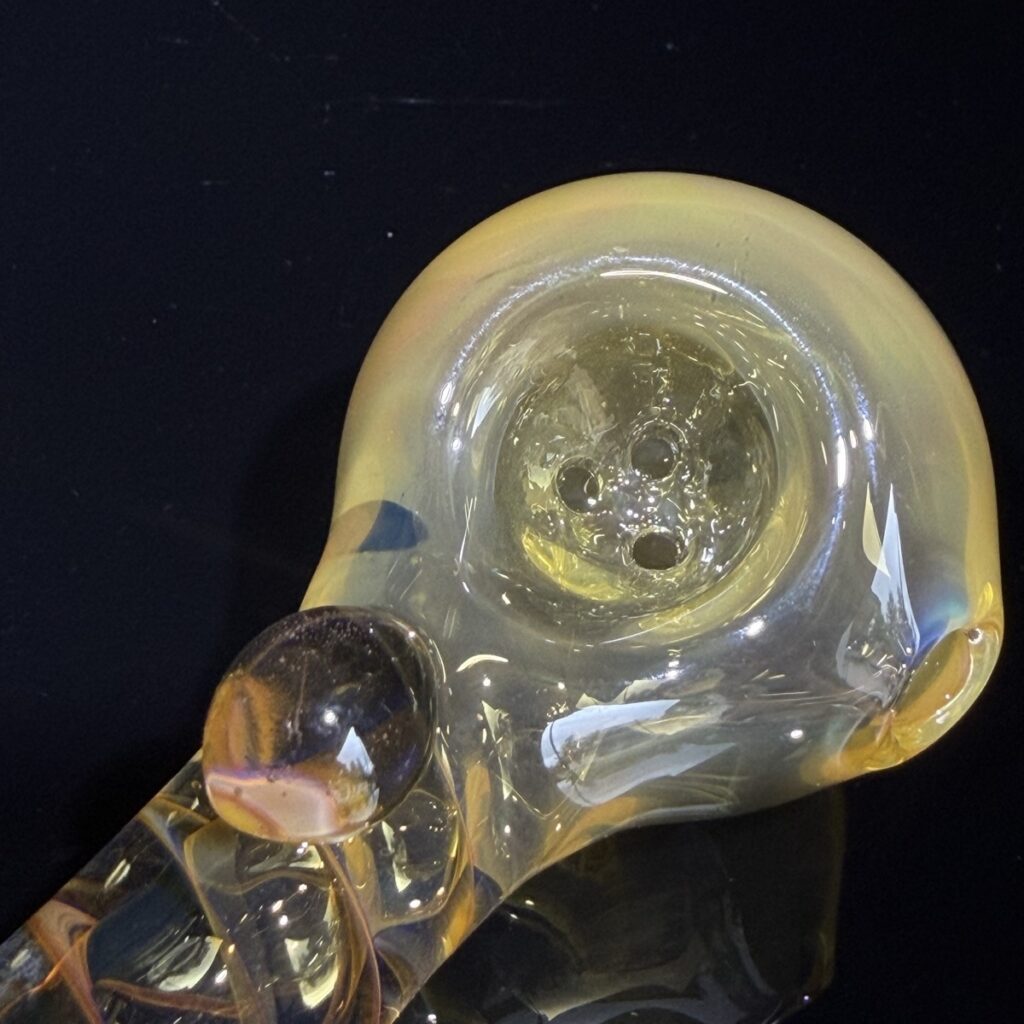
For many left-handed users, a right-side carb is the most obvious choice. If the piece is held in the right hand while the lighter is operated with the left, the right-side carb can be positioned conveniently for the hand holding the pipe.
A left-handed person may also prefer a left-side carb, however. Someone who holds the pipe in their left hand can operate a conventional left-side carb with a thumb or finger while using the right hand for the lighter. Left-handed users have reported being comfortable with both arrangements.
The user’s preferred division of these tasks matters more than handedness alone. Since the lighter and carb generally need to be operated by different hands at the same time, the way someone naturally holds and lights their glass is the best guide to carb placement.
The Carb Isn’t the Only Important Part of a Spoon
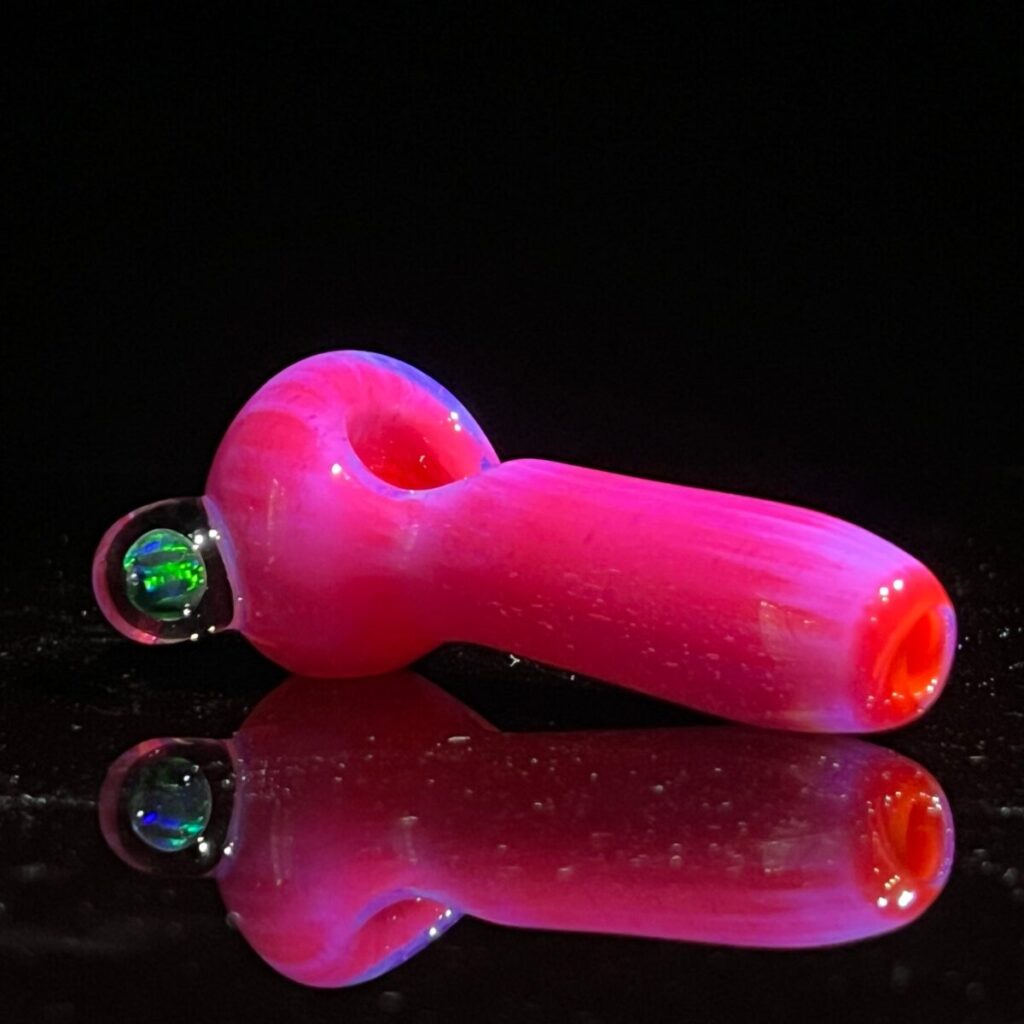
Carb placement gets most of the attention when discussing handedness, but it is not the only feature that affects how a spoon pipe feels in the hand.
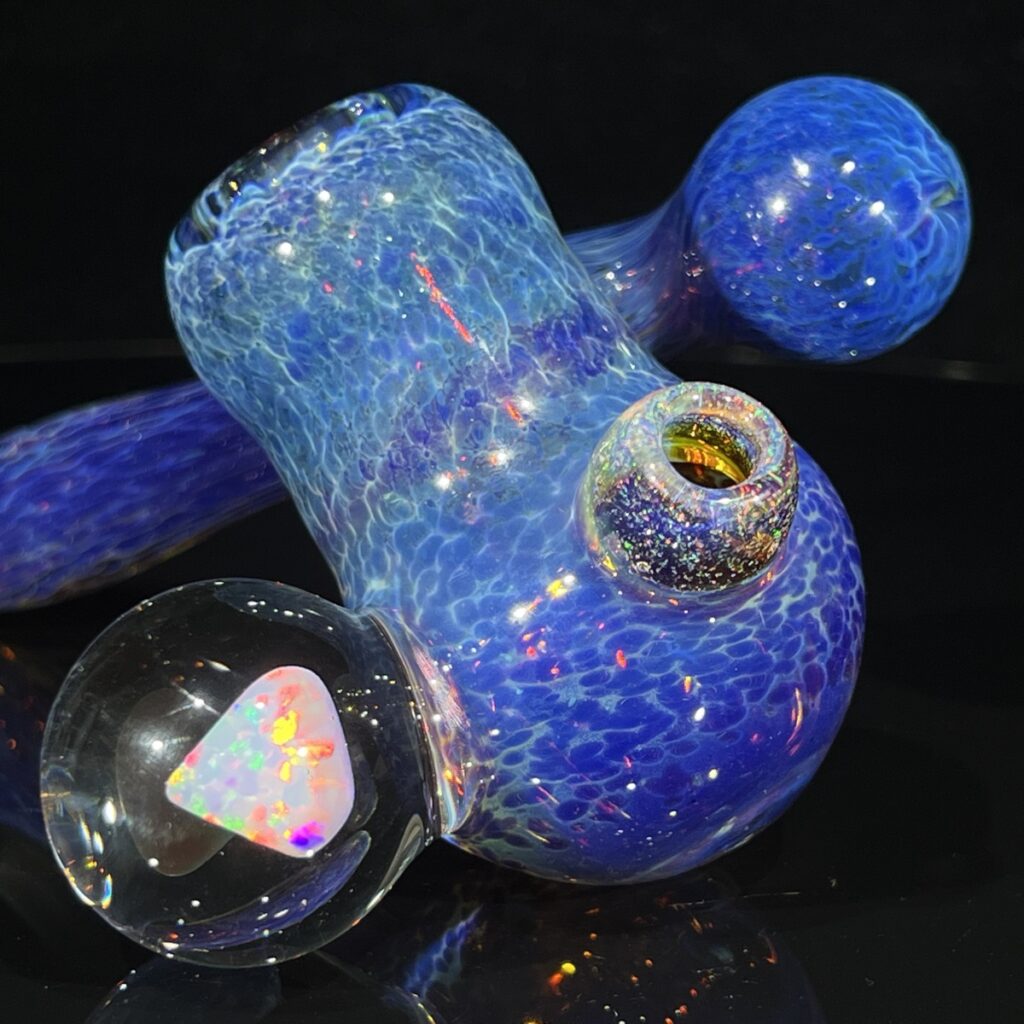
Many spoon pipes have marbles or other sculpted grip features along the body. These can provide natural places for the fingers to rest and help keep the pipe from rotating while it is being held.
That makes their placement particularly important on a mirrored or right-side-carb spoon. Simply moving the carb to the opposite side does not necessarily create an equally comfortable left-handed version if the grip features still favor the original orientation.
A well-designed left-handed spoon should therefore consider the relationship between the carb and the rest of the grip.
Sidecars, Bubblers, and Bowl Orientation
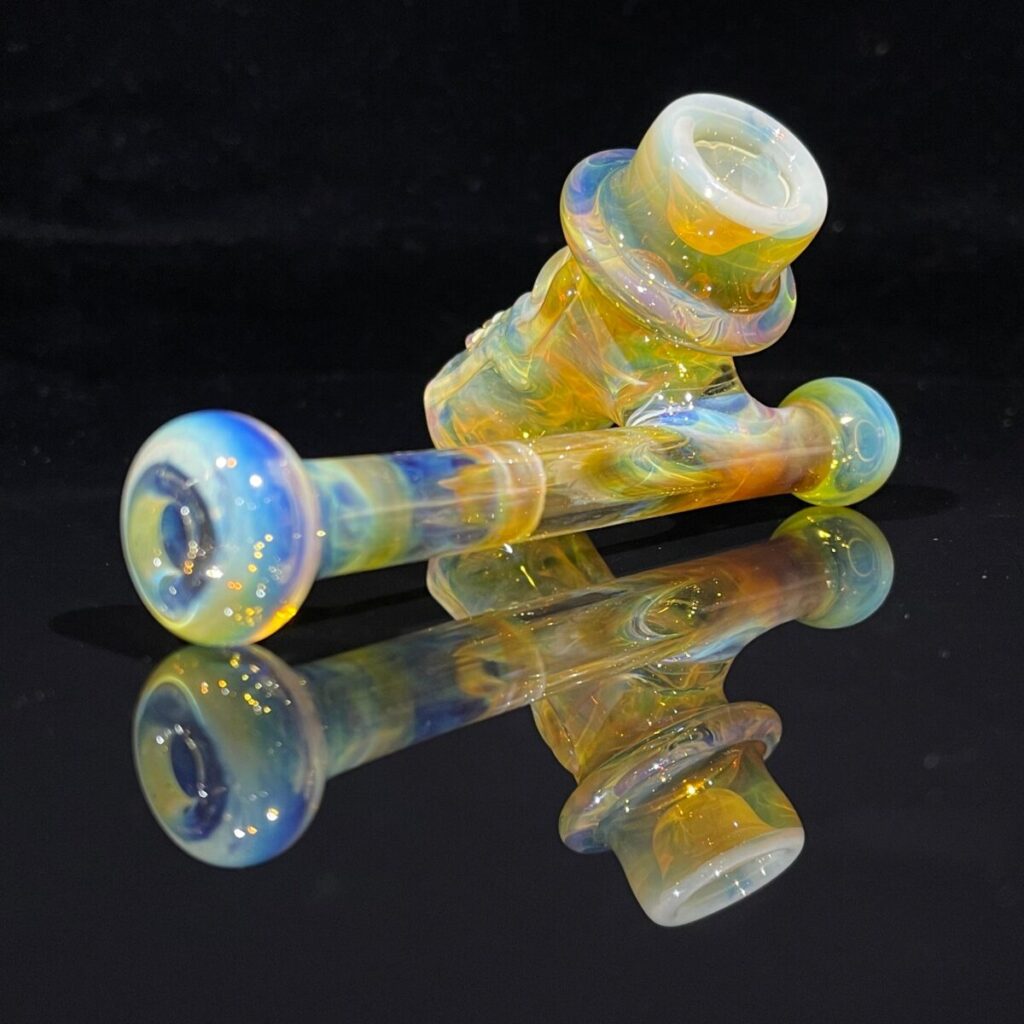
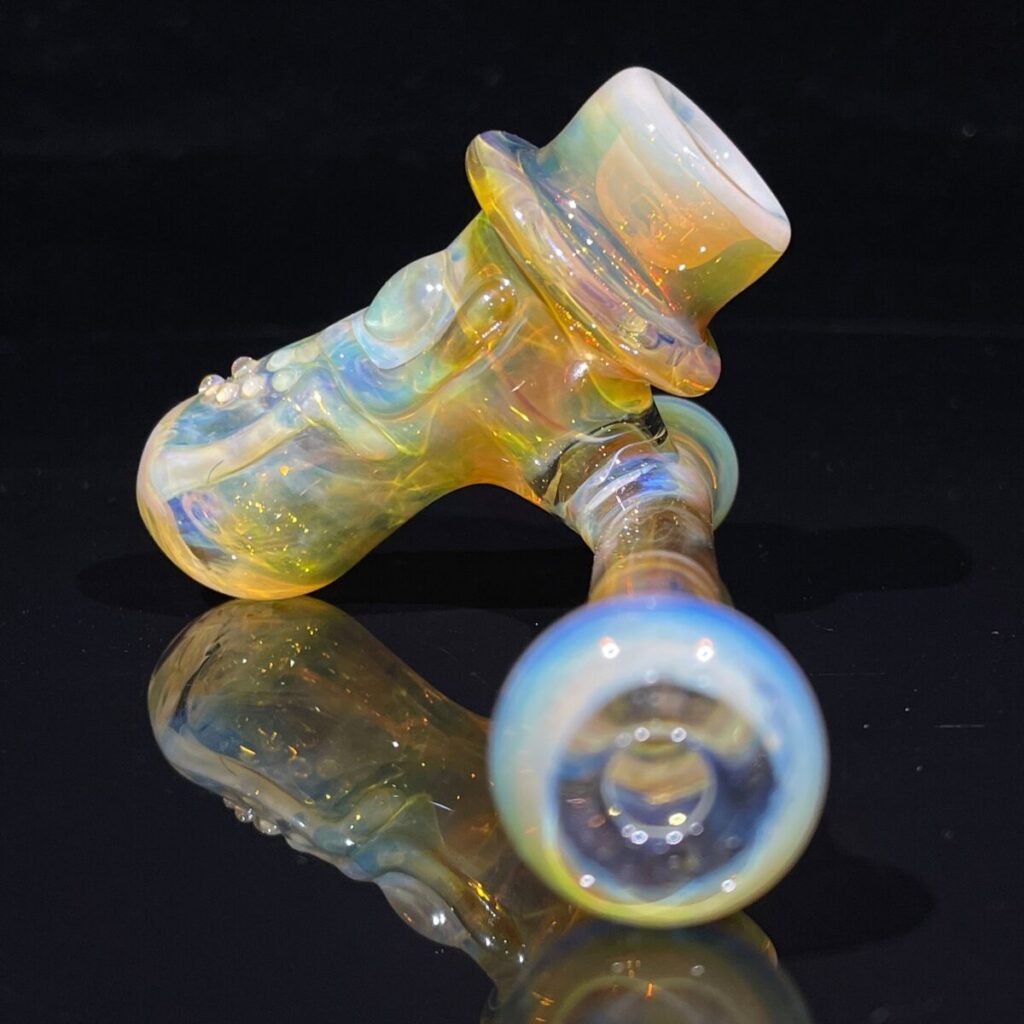
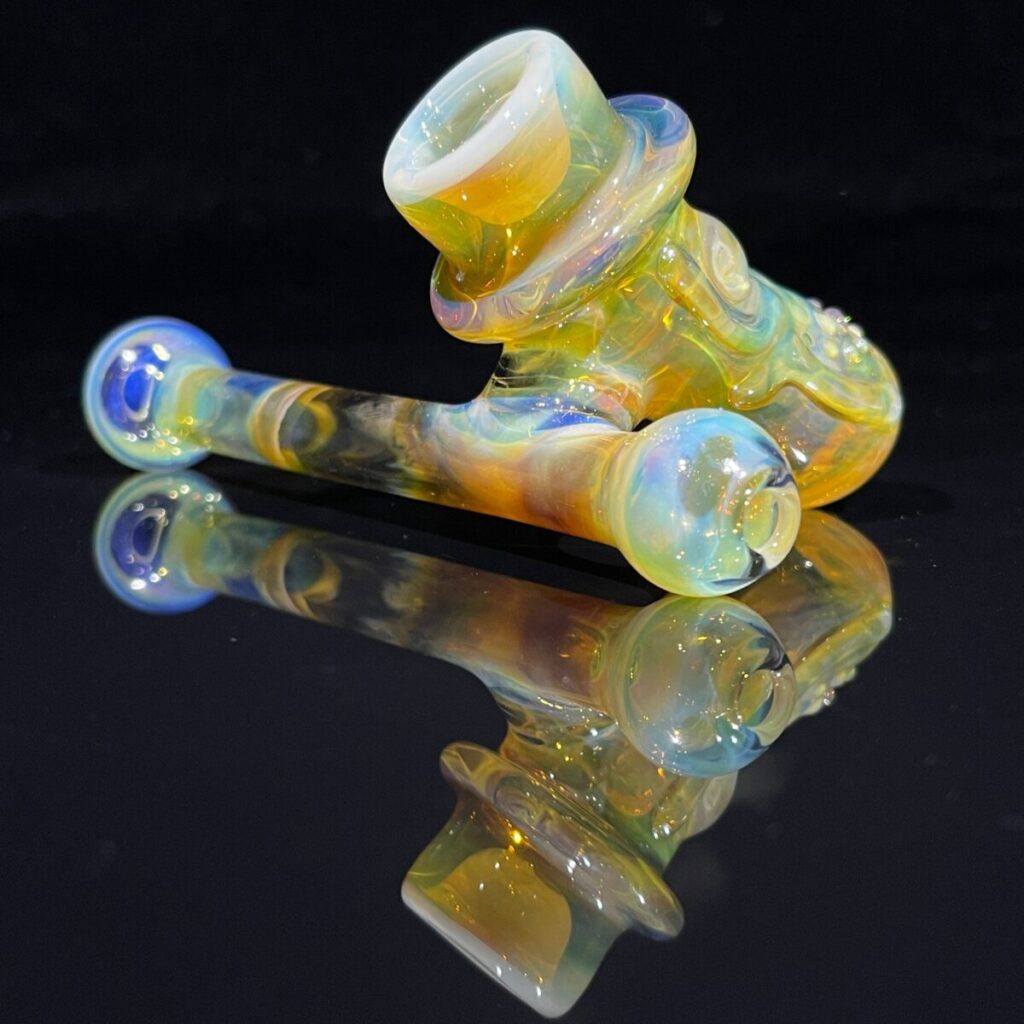
Sidecar-style bubblers and water pipes introduce another consideration because their shapes are inherently directional. With a spoon, rotating the pipe in your hand is usually easy. A sidecar has a mouthpiece, body, joint, bowl, and often a downstem arranged in a specific orientation.
For a left-handed user, the position of the mouthpiece and bowl relative to the body of the piece can be just as important as the carb.
A mirrored sidecar can place the bowl in a more convenient position for the user’s preferred lighter hand while keeping the mouthpiece comfortable. When shopping for one, looking at the piece from the user’s perspective is often more useful than relying on a description that simply calls it “left-handed” or “right-handed.”
The same principle applies to larger bubblers and sculptural pieces. The bowl, mouthpiece, grip, and other components all contribute to the overall ergonomics.
What Is Cornering, and Does Being Left-Handed Affect It?
Cornering means lighting only a portion of the material in a bowl rather than igniting the entire surface. People do this to preserve unused material for later and to allow multiple people to share a bowl without everyone lighting the same area.
Handedness can become relevant when sharing. A left-handed and right-handed person naturally tend to approach opposite sides of the bowl with their lighter hands. If both people are trying to corner the same bowl, each may prefer a different section, and one person’s approach can make the remaining corner less convenient for the other.
This is usually less of an issue when using a piece alone, but it can become noticeable when a group is sharing. The orientation of the bowl and carb can determine which side is easiest to reach, while the shape of the bowl determines how much separation is practical.
Sherlocks and Other Directional Glass
The more sculptural a piece becomes, the more important its orientation can be.
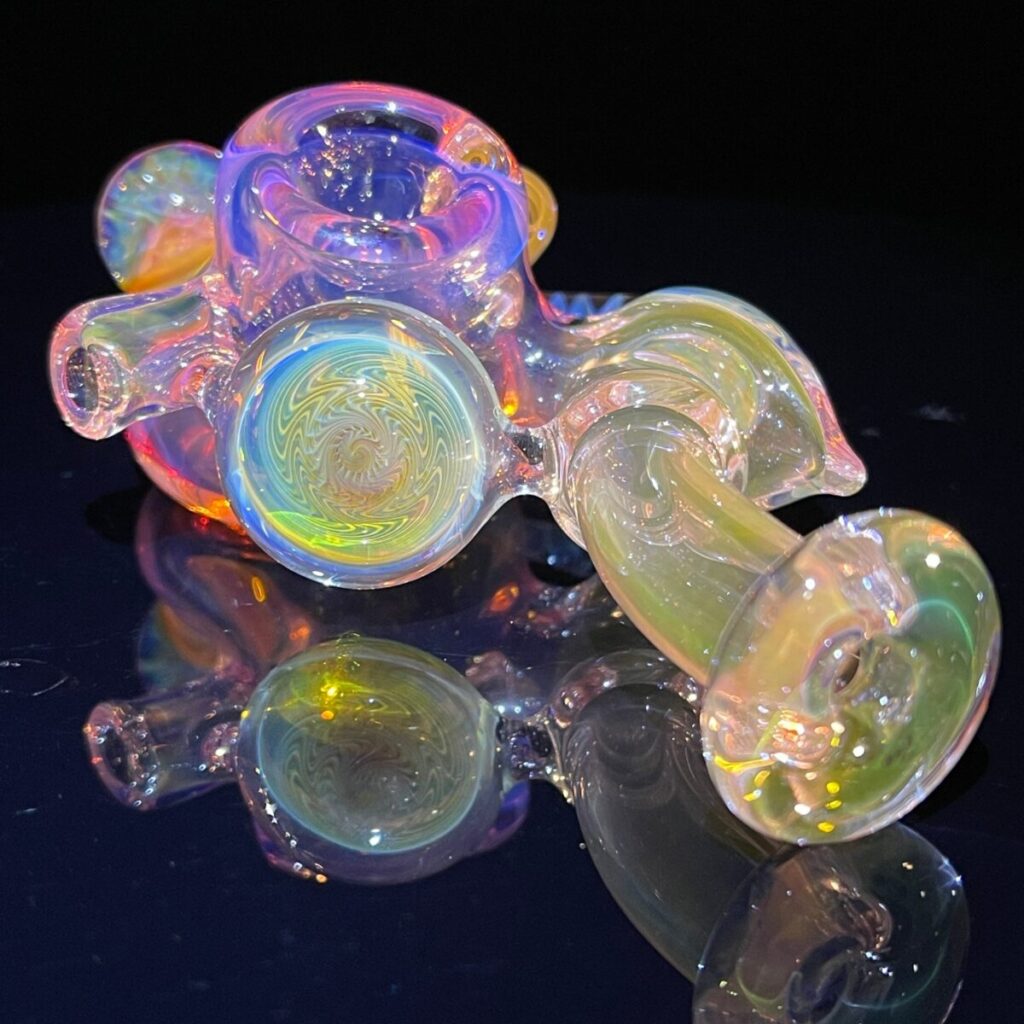
A simple spoon can generally be approached from several directions. A Sherlock, hammer, sidecar, or heavily sculpted pipe may have a much more specific intended orientation. The shape of the mouthpiece, bowl, carb, and grip features can determine how the piece naturally wants to be held.
For that reason, creating a comfortable left-handed version of a highly directional piece may involve more than simply moving the carb. The entire arrangement of the functional and grip features may need to be considered.
What Should Left-Handed Users Look For?
The most useful question isn’t simply “Is this a left-handed pipe?” Instead, consider how the individual features line up with the way you actually use your hands.
For a spoon, check the carb position and the location of the marbles or other grip features. With a bubbler or sidecar, pay attention to the relationship between the bowl, mouthpiece, and body. With a sculptural piece, consider whether its overall shape naturally favors one orientation.
Product photographs can be particularly useful because seeing the glass from several angles tells you more about its ergonomics than a simple “left-handed” or “right-handed” designation.
If you are already comfortable with conventional glass, there may be no reason to seek out a specially configured piece. Many left-handed users have spent years using standard glass without giving carb placement much thought. For others, a mirrored design can make a noticeable difference.
What Would You Like to See From the Glass Industry?
Left-handed people have spent generations adapting to products designed primarily around right-handed users. Glass is no different, but it is also a medium where orientation can be changed relatively easily.
A carb can be mirrored. A sidecar can be built in the opposite orientation. Grip features can be repositioned. Entire pieces can be designed around a particular user’s preferences.
As National Left-Handers Day gives us an opportunity to think about the everyday products that favor one hand over the other, glass is an interesting example of an industry where relatively small design decisions can make a meaningful difference.
What would you like to see from the glass industry when it comes to catering to left-handed users?
Would you like to see more right-side-carb pipes, more left-handed sidecars, better information about orientation, more options for custom pieces, or something else entirely?
Shop our current selection of Left Handed Pipes by browsing the Left Handed category at Tako Glass!
Questions About Left-Handed Glass Pipes
What makes a glass pipe left-handed?
A left-handed glass pipe is designed with the carb positioned for comfortable use when the pipe is held in the left hand. The placement of the carb changes the way the hand naturally wraps around the pipe, making the design more comfortable for left-handed users.
Where is the carb hole located on a left-handed glass pipe?
On a typical left-handed glass pipe, the carb is positioned on the right side of the bowl when viewed from the user’s perspective. This places the carb where the thumb or finger can naturally reach it while the pipe is held in the left hand.
Where is the carb hole located on a right-handed glass pipe?
A typical right-handed glass pipe has the carb positioned on the left side of the bowl when viewed from the user’s perspective. This arrangement is intended to place the carb beneath the thumb or finger when the pipe is held in the right hand.
Why does carb placement matter on a glass pipe?
Carb placement determines how naturally a person can operate the pipe while holding it. When the carb is positioned for the user’s preferred hand, the thumb or finger can reach it without requiring an awkward grip or forcing the user to change how they hold the pipe.
Can left-handed people use right-handed glass pipes?
Yes, but a right-handed glass pipe may feel less natural for someone who normally holds a pipe in their left hand. The pipe can still function normally, but the carb may be positioned on the less convenient side, requiring the user to adjust their grip or use their non-dominant hand.
Are left-handed glass pipes only for left-handed people?
No. Hand preference varies from person to person, and some right-handed users may simply find a left-handed carb arrangement more comfortable. The important consideration is which hand the user prefers to hold the pipe with and where the carb feels most natural to operate.
Why are left-handed glass pipes harder to find?
Most glass pipes are designed around the more common right-handed configuration, so left-handed versions represent a smaller portion of the market. This can make it more difficult for left-handed users to find glass pipes with carb placement specifically designed around their preferred grip.
Can a glass pipe be made with a custom carb placement?
Yes. Custom glass allows the carb to be positioned according to the user’s preferred grip rather than following a standard left-handed or right-handed configuration. Depending on the design and glass artist, the carb can potentially be placed on the left, right, or another location that provides the desired hand position.