Mazet Versus the Machine: The Handmade Shot Glass Revival

A Standout Voice in Contemporary Borosilicate Glass
In the world of contemporary borosilicate glass, Eli Mazet has built a reputation around work that feels instantly recognizable. His pieces are colorful, sculptural, playful, and deeply rooted in the culture of American flame-worked glass. Whether he’s creating intricate marbles, creature sculptures, or the handmade shot glasses he has become especially known for, Mazet’s work carries a sense of personality that collectors connect with immediately.
Based out of Oregon and working through Mazet Studios alongside his family, Eli emerged from one of the most influential regions in the American glass movement. The Pacific Northwest has long been a major center for borosilicate innovation, and Mazet developed his style during the rapid evolution of functional and sculptural lampworking in the late 1990s and early 2000s. Over the years, his work has appeared in galleries, publications, interviews, workshops, and major glass events, helping establish him as one of the standout names in modern American glass art.

The Sculptural Style That Defines Eli Mazet
What separates Eli Mazet from many contemporary glass artists is the way he blends technical skill with humor and movement. His work rarely feels rigid or industrial. Instead, it leans heavily into organic forms, surreal creatures, exaggerated expressions, and bright layered color. Frogs, sea life, monsters, octopus forms, eyeballs, and swirling vortex imagery all appear throughout his catalog, giving his pieces a whimsical identity that collectors immediately recognize.
That sculptural approach became especially important in the work that would eventually make Mazet one of the most recognizable handmade shot glass artists in the country.
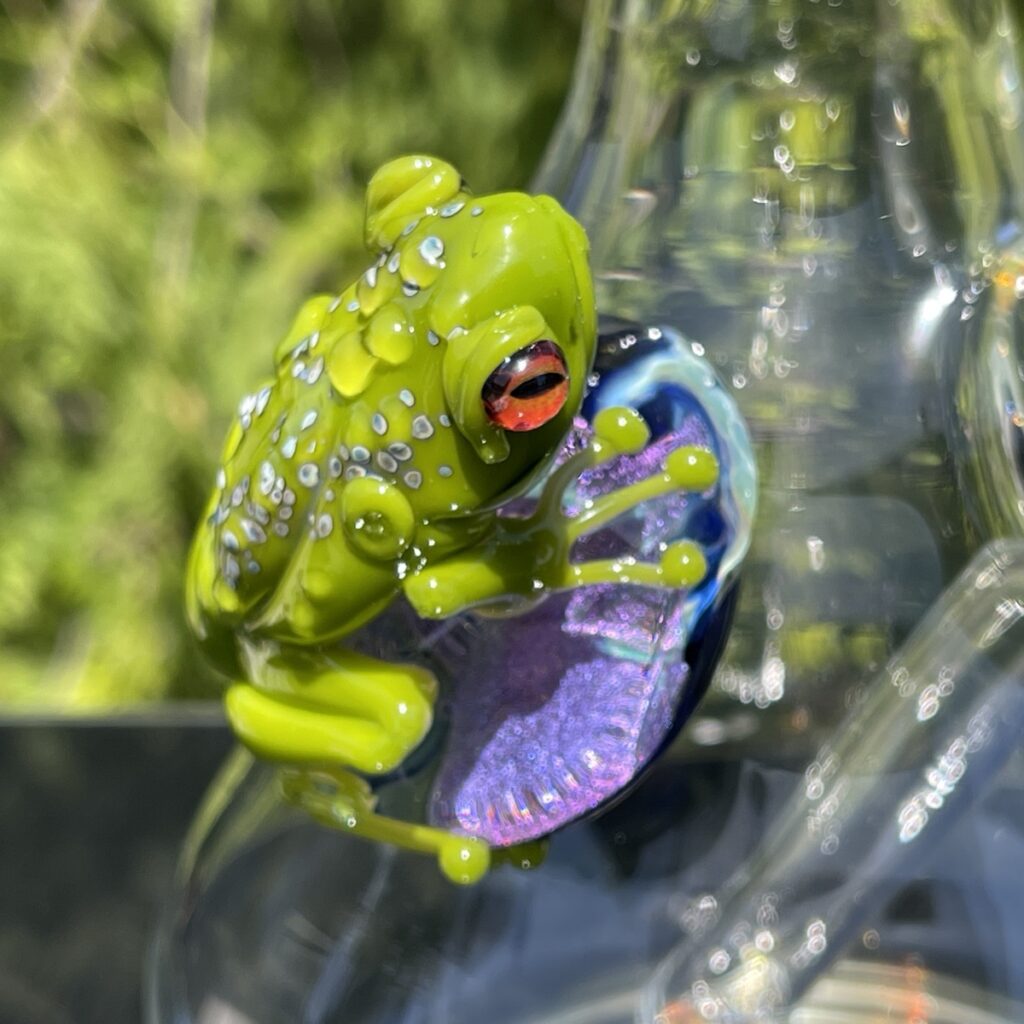
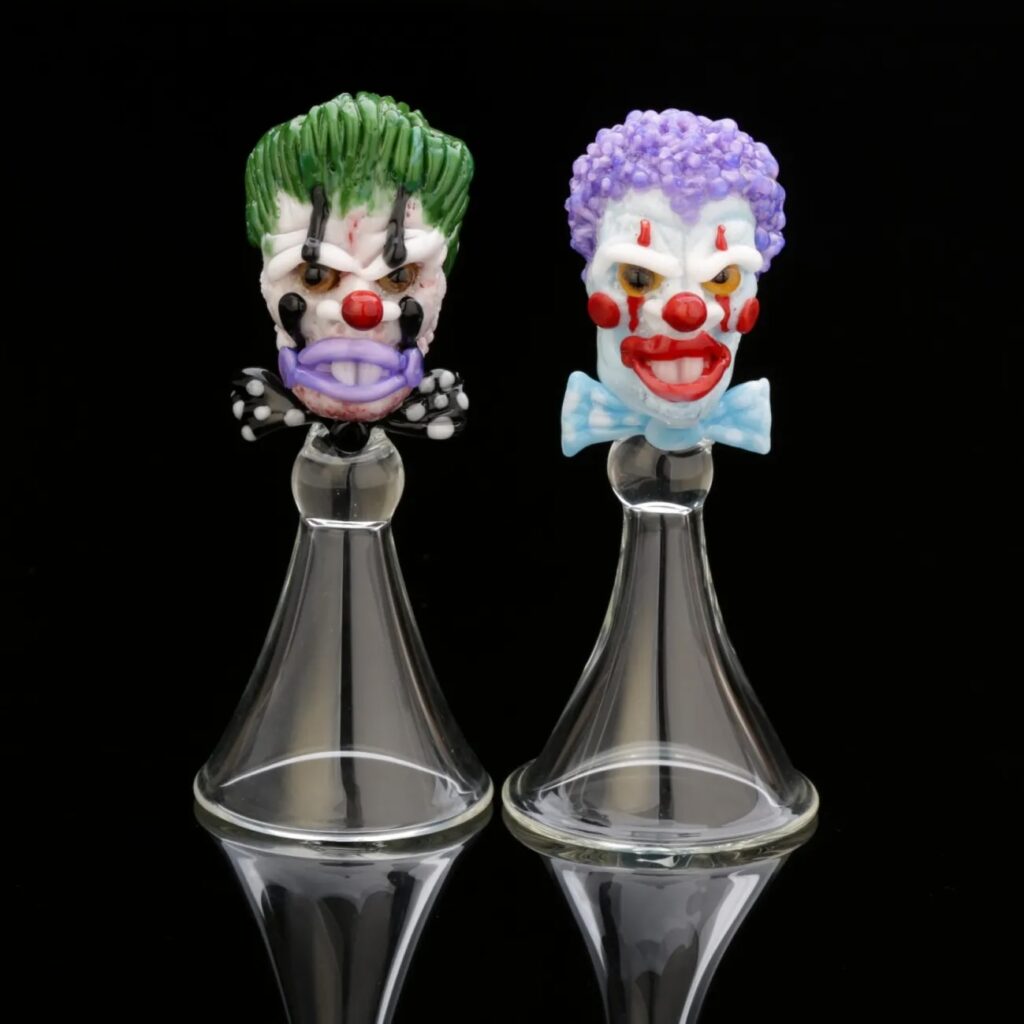
Left: A Mazet frog and dichro mushroom on a Tako beaker bong, part of the Tako X Mazet collection.
Right: Clown sculptures by Mazet, blending his talent for creepy and humorous sculpture.
Eli Mazet and the Revival of the Handmade Shot Glass
While most modern glass artists focused on pipes, pendants, rigs, or marbles, Eli became fascinated with the history of the shot glass itself. Historically, handmade shot glasses were once among the world’s most common collectible glass objects, but industrial manufacturing largely eliminated handcrafted production generations ago. Rather than treating the shot glass as a forgotten novelty, Mazet saw an opportunity to bring it back as a serious contemporary glass art form.
That interest eventually evolved into one of the largest modern handmade shot glass projects ever assembled. Working alongside dozens of contemporary flame-workers and supported by Northstar Glass, Mazet helped organize and document an enormous collection of handcrafted shot glasses that celebrated the creativity and individuality possible within such a small format. The project later became the foundation for his book The Contemporary Shot Glass, followed by The American Shot Glass and the Machine, which explored the disappearance of handmade shot glasses during the rise of industrial glass production.
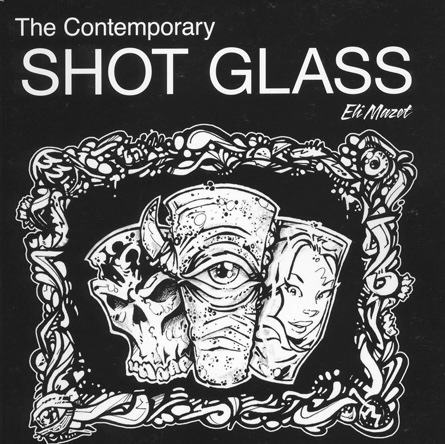

Left: Mazet’s first publication on the revival of the contemporary hand shot glass in America.
Right: Mazet’s deeper dive into the history of the shot glass, and how automation nearly wiped out handmade shot glasses as an art form.
Why Eli Mazet Shot Glasses Are So Collectible
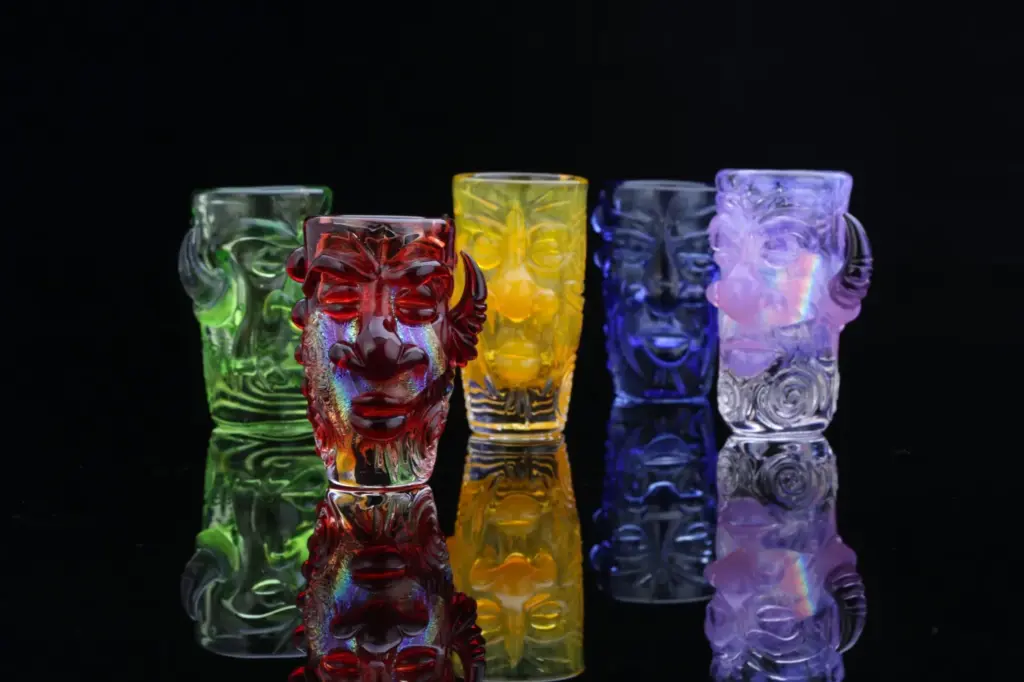
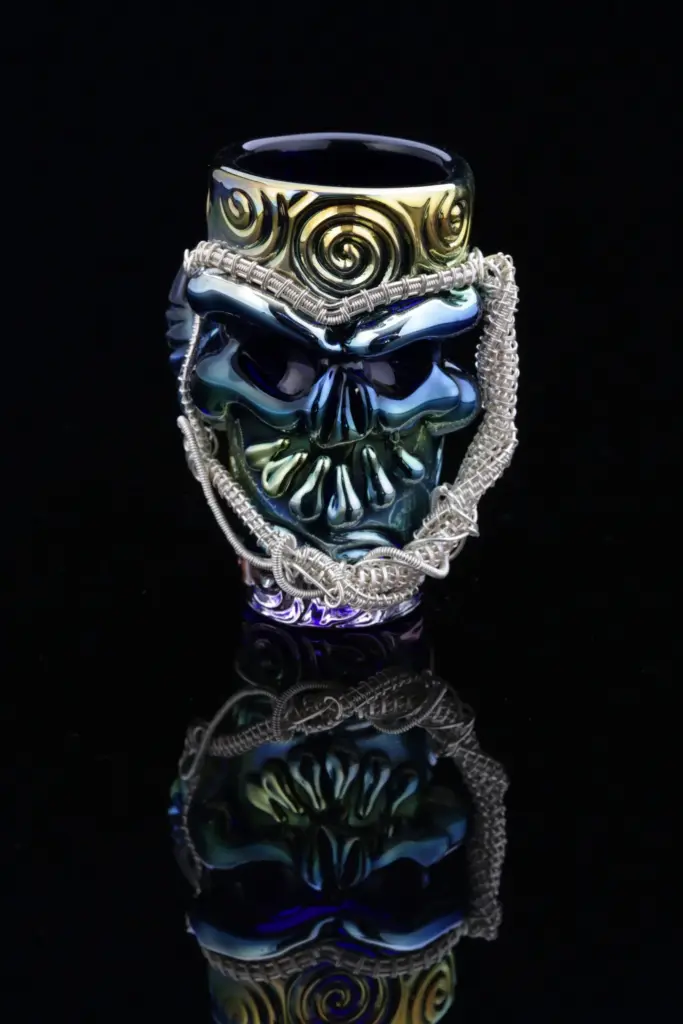
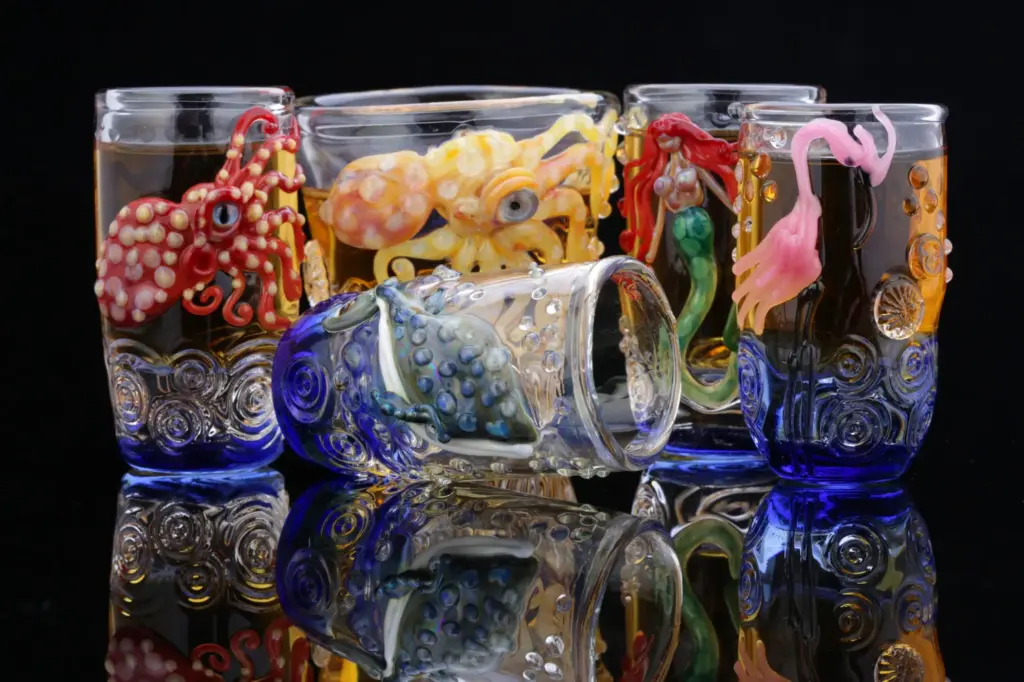
Today, Eli Mazet shot glasses are highly collectible because they blur the line between barware and sculpture. Many feature detailed creature work, layered color, optical depth, and dimensional sculpting that transforms an everyday object into functional glass art. Even smaller pieces often contain an incredible amount of visual detail, with every angle revealing something new inside the glass.
That same artistic language carries over into his marble work as well. Mazet marbles often feature deep vortex effects, aquatic themes, galaxy-style interiors, and sculptural encasements that feel more like miniature worlds than simple decorative spheres. His work consistently emphasizes movement and personality, which helps explain why collectors across both the marble scene and functional glass community continue to seek out his pieces.
Eli Mazet’s Influence on American Glass Culture
Beyond the work itself, Mazet has also played an important role in documenting and preserving contemporary glass culture. He has appeared in interviews with publications and galleries like Talking Out Your Glass and Elev8, participated in major events including Glass Vegas, and continued teaching and demonstrating through workshops and live appearances. His presence on Instagram has also helped newer collectors and artists engage directly with both his process and the broader borosilicate movement.
Part of what makes Eli Mazet such an important figure in American glass is that his work never feels disconnected from the culture surrounding it. His pieces embrace the handmade nature of lampworking instead of hiding it. They feel imaginative, personal, and unmistakably human in a way that mass production never can.
That philosophy is a major reason collectors continue to gravitate toward his work today.
Pipetown USA and the Story of American Glass Culture
Eli Mazet’s passion for preserving contemporary glass culture extends to film as well. In addition to his work as a glass artist, Mazet also served as a writer and executive producer on Pipetown USA, the 2020 documentary exploring the origins of American glass pipe culture in Eugene, Oregon. The film follows the rise of the modern borosilicate movement through interviews with influential artists including Bob Snodgrass, Jerome Baker, and Mike Philpot, among others, whose innovations helped shape the contemporary glass scene that emerged throughout the Pacific Northwest. Filmed on location in Eugene and produced in part through Mazet Studios, the documentary examines both the artistry and the personal struggles behind life as a working glassblower in America.
What began as a smaller regional documentary eventually expanded into a much larger project documenting the history and cultural impact of handmade American glass. According to interviews surrounding the film’s release, Eli Mazet and fellow producer Greg LeFrancis helped push the project beyond its original scope, believing the story of independent glass artists deserved a wider audience. Pipetown USA ultimately screened at 13 film festivals and earned six awards, including recognition at the Silver State Film Festival in Las Vegas as well as multiple cannabis-focused film festivals in Seattle and London. Today, the film stands as one of the most important documentaries ever produced about the American borosilicate glass movement and the artists who helped build it.

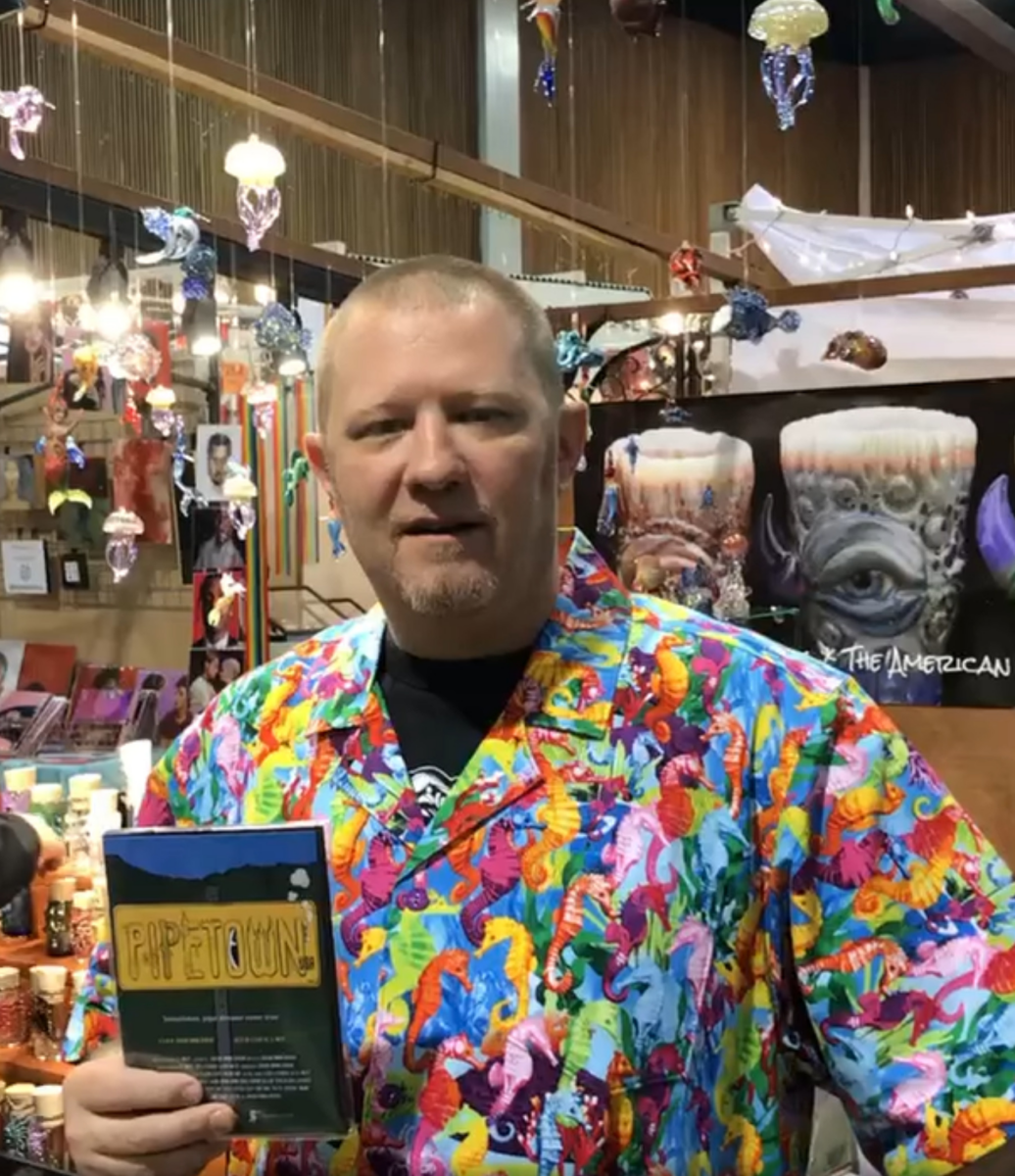
Left: Pipetown USA Cover. Note hint’s of Mazet’s style in the lettering!
Right: Eli Mazet proudly debuting the Pipetown USA DVD release!
Eli Mazet Shot Glasses at Tako Glass
At Tako Glass, we’re excited to be dropping a full collection of Eli Mazet shot glasses that showcase exactly why his work has become so respected within the contemporary glass community. These pieces capture the playful sculptural style, vivid color work, and collectible craftsmanship that have made Mazet one of the defining names in handmade shot glass art.
For longtime collectors and newcomers alike, Eli Mazet’s work represents more than functional glass. It represents a living piece of modern American glass culture.
Questions About Handmade Shot Glasses and Glassblowing
What makes a handmade shot glass different from a factory-made one?
Handmade shot glasses are individually crafted by artists rather than mass-produced on an assembly line. Each piece may feature unique shaping, color placement, tooling marks, or artistic details that give it character and make it one of a kind.
Are handmade shot glasses durable enough for regular use?
Most quality borosilicate shot glasses are designed to be both functional and durable. While any glass can break if dropped, artist-made borosilicate pieces are generally more resistant to thermal shock and everyday use than standard soda-lime glass.
Why are collectors interested in artist-made drinkware?
Handmade drinkware combines utility with craftsmanship. Many collectors enjoy owning functional pieces that showcase an artist’s style, techniques, and creativity while still serving a practical purpose at home or during special occasions.
Do handmade shot glasses hold the same amount as standard shot glasses?
Not always. Because artist-made pieces are crafted individually, capacities can vary. It’s a good idea to check product descriptions or measure a piece if precise volume is important for cocktails or recipes.
Can handmade shot glasses become collectible?
Yes. Pieces from respected artists, limited releases, collaborations, and discontinued designs often become desirable among collectors. Provenance, condition, and artist recognition can all influence long-term collectibility.
How should I care for a handmade glass shot glass?
Hand washing is usually recommended for artist-made glass. Avoid sudden temperature changes, use non-abrasive cleaning materials, and store pieces where they are less likely to be knocked over or chipped.