What Is Coil Potting? How Custom Boro Glass Tubing Is Made
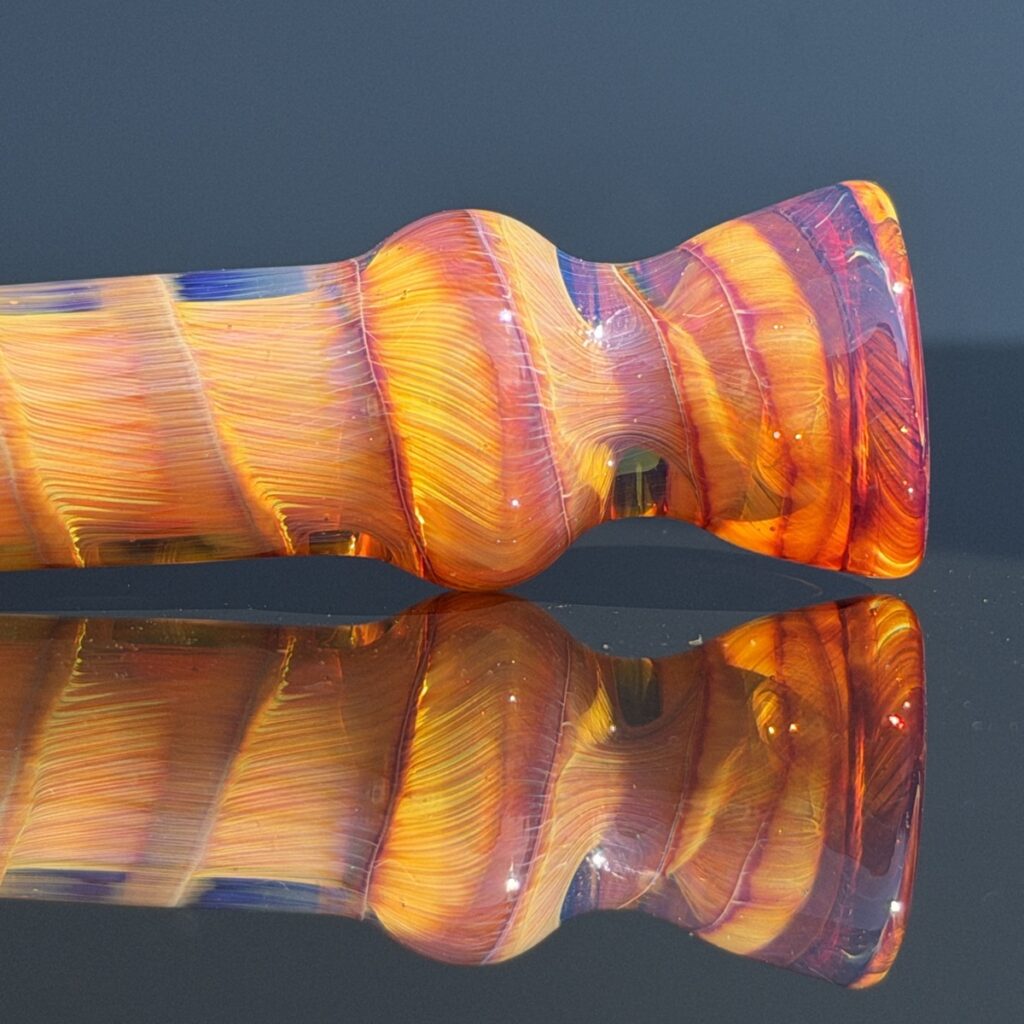
If you’ve ever looked closely at a coil-potted piece, you’ve probably noticed that the color doesn’t look like it’s simply been added to the surface. The pattern is actually built into the glass itself.
Coil potting is a borosilicate glassworking technique used to create custom glass tubing by winding molten glass into successive coils. Artists can incorporate colored rods, pulled strands, cane, and other patterns into the tubing before continuing to heat, stretch, and shape it into a finished glass piece.
The coil pot isn’t a finished pipe. It’s custom-made tubing that gives the artist a very different starting point from ordinary clear or solid color glass tubing.
What Is Coil Potting?
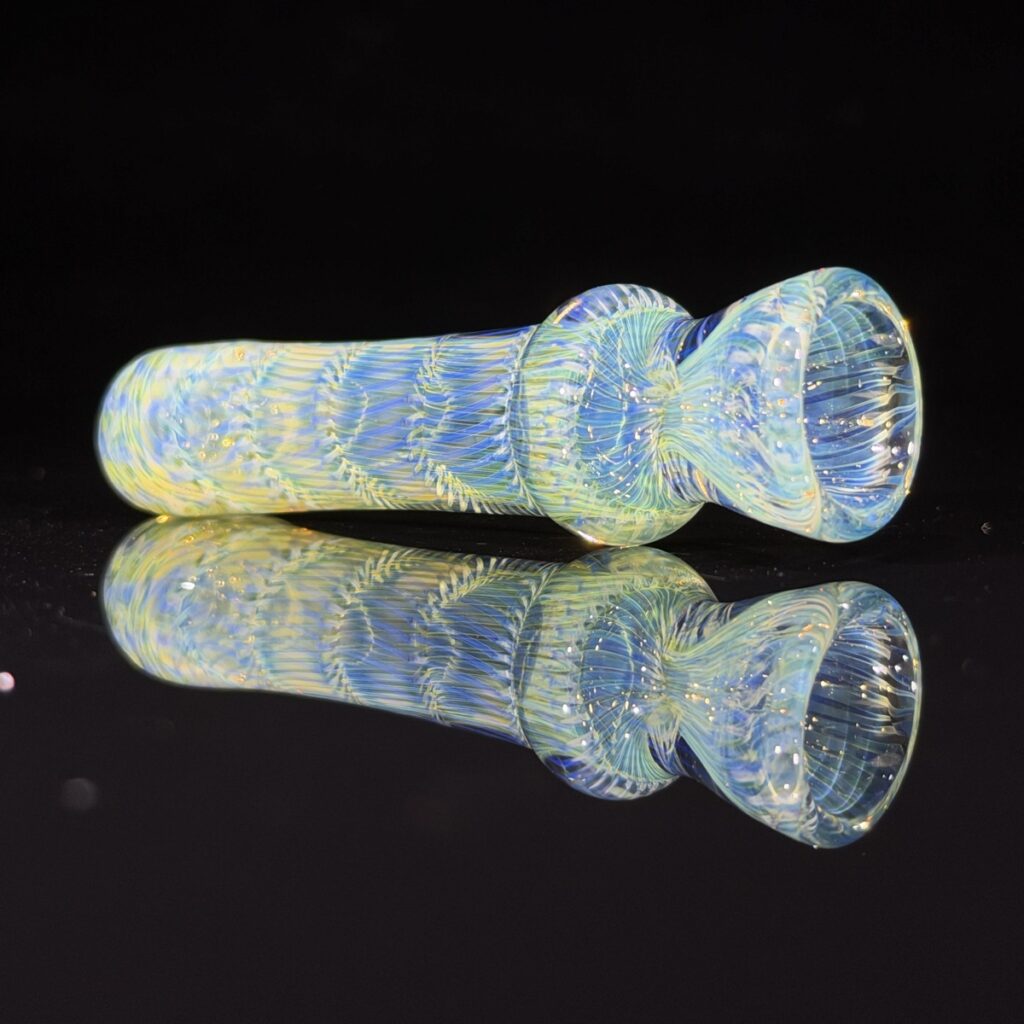
In borosilicate lampwork, coil potting involves building a hollow glass form by wrapping molten glass into successive coils.
This can be done freehand, with the artist controlling the shape as each coil is placed. A mandrel or other form can also be used when the artist wants additional support or control.
The glass used to make the coils can come from pulled strands, glass rods, cane, or other prepared pieces. Each section is placed while the glass is hot enough to fuse with the material around it, gradually creating a continuous tube.
Once the coil pot has been made, the artist can continue working the tubing just as they would other borosilicate glass. It can be heated, stretched, bent, shaped, and blown as the piece takes its final form.
Why Make Your Own Glass Tube?
Most of the time, a lampworker starts with a piece of manufactured clear tubing. Color can then be worked onto the outside of that tube, or incorporated onto the inside for inside-out work. Both approaches can produce elaborate patterns while leaving the basic tubing itself relatively uniform.
Coil potting starts earlier in the process: the artist makes the tubing itself from colored and patterned glass.
In surface work, the decoration sits on the outside of the tubing. In inside-out work, it is incorporated on the inside surface. With coil potting, the colored glass becomes part of the wall of the tube itself.
That difference is easy to see in a finished piece. The colors aren’t simply sitting on the inside or outside of the glass. They run through the structural glass, becoming part of the tubing that the artist will later shape into the finished piece.
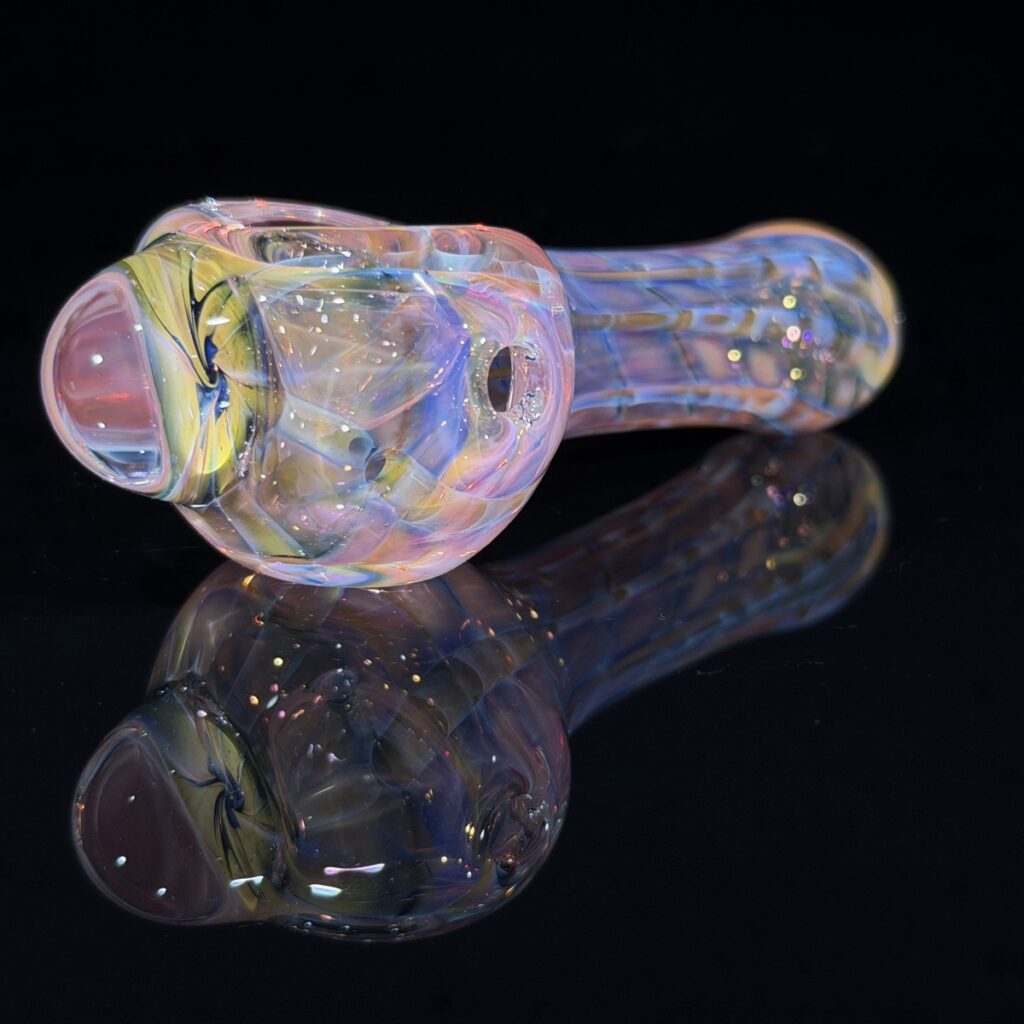
How Does Coil Potting Work?
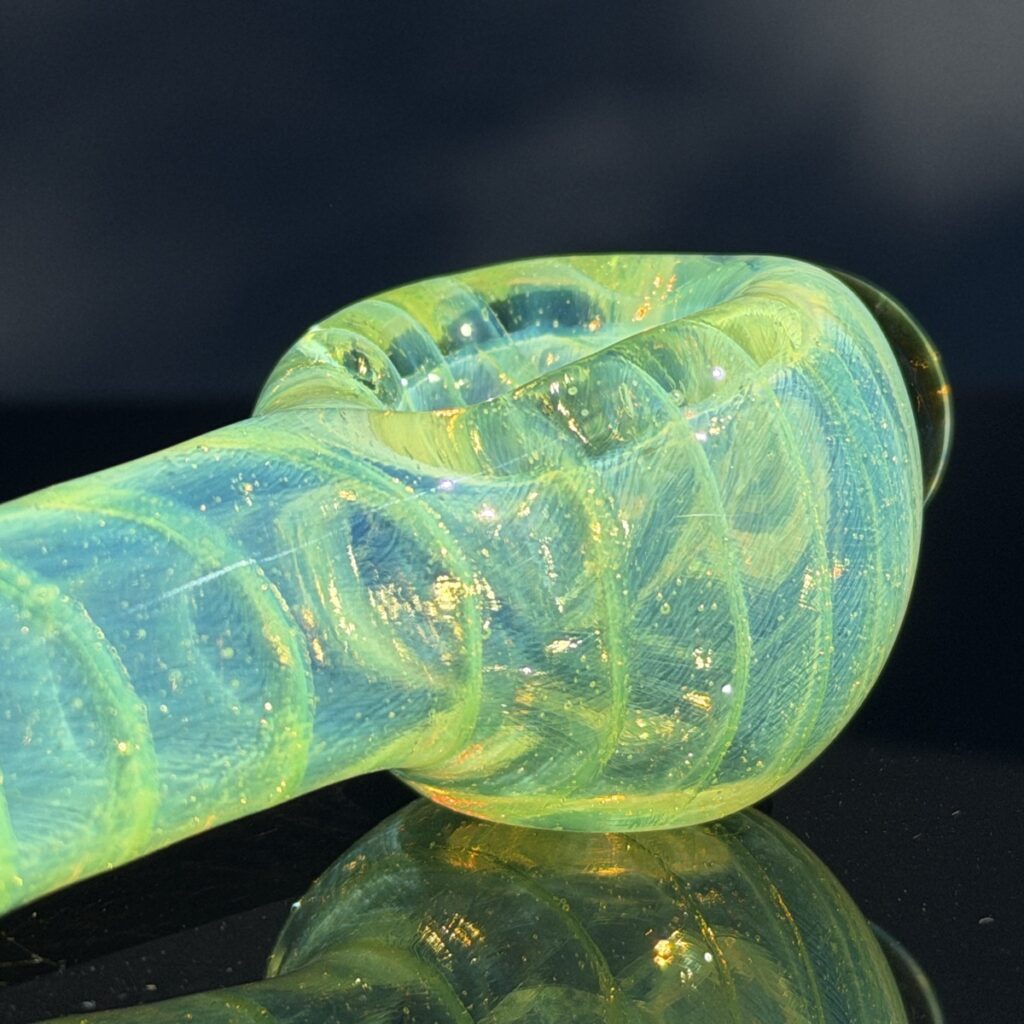
An artist builds the tube by placing successive coils of molten borosilicate glass. The coils can be made from pulled strands, glass rods, cane, or other prepared pieces, depending on the pattern and the amount of glass needed.
The artist can change the color, thickness, spacing, and placement of each coil to build different designs. Some coil pots use a few colors in simple repeating layers, while others combine multiple colors and more complicated patterns.
The finished coil pot may look quite different from the piece of glass the artist started with. Once the tubing is heated and stretched, the spacing and proportions of the pattern change along with it.
Spirals of Spirals: Using Twisted Cane
One particularly interesting technique is incorporating twisted cane into a coil pot.
A cane is a length of glass containing a pattern that runs through its length. When that cane is twisted, its internal pattern can form spirals.
When a twisted cane is then used to build a coil pot, you can end up with a spiral made from another spiral.
As the custom tubing is stretched and shaped, those patterns can become even more complex. A design that starts as a relatively compact pattern can spread out and change shape as the glass is worked.
The pattern isn’t being painted onto a finished tube. It’s being built into the glass as the tube is made.
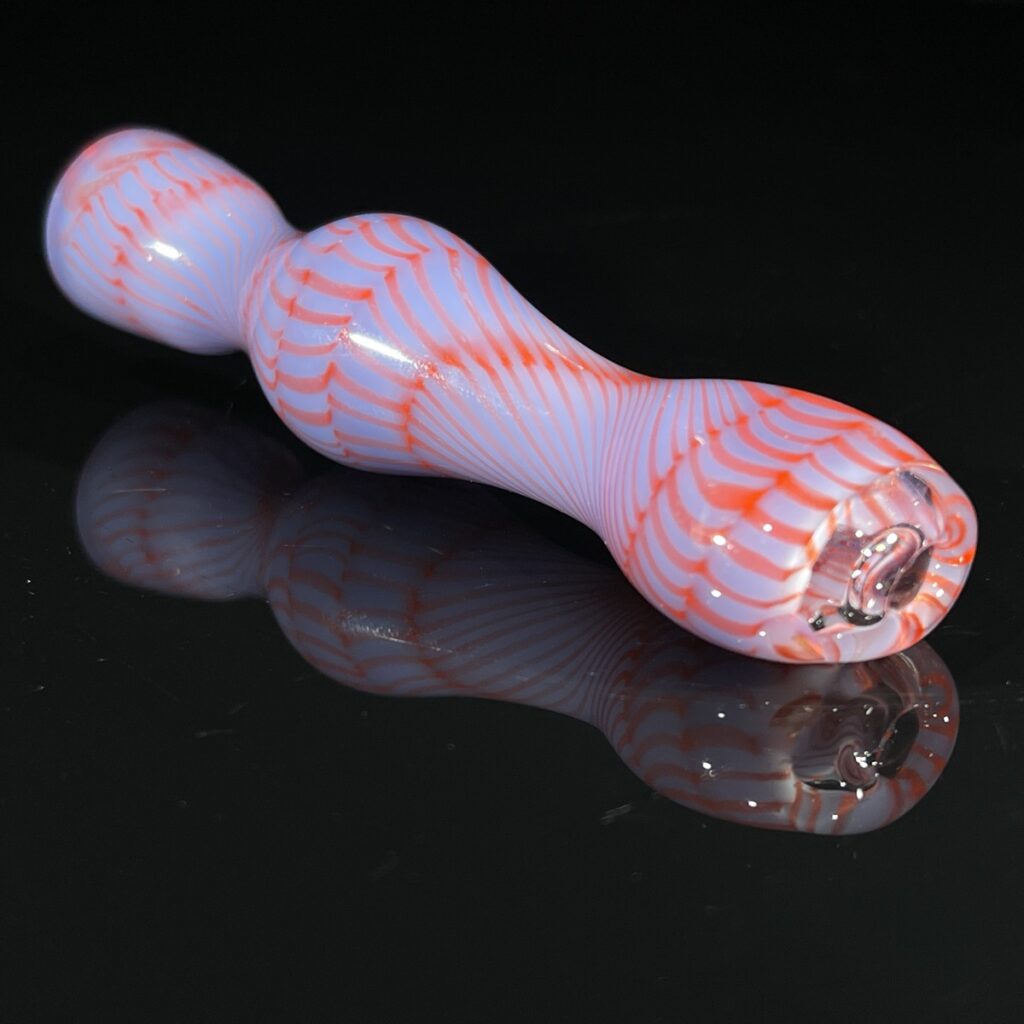
How Stretching Changes the Pattern
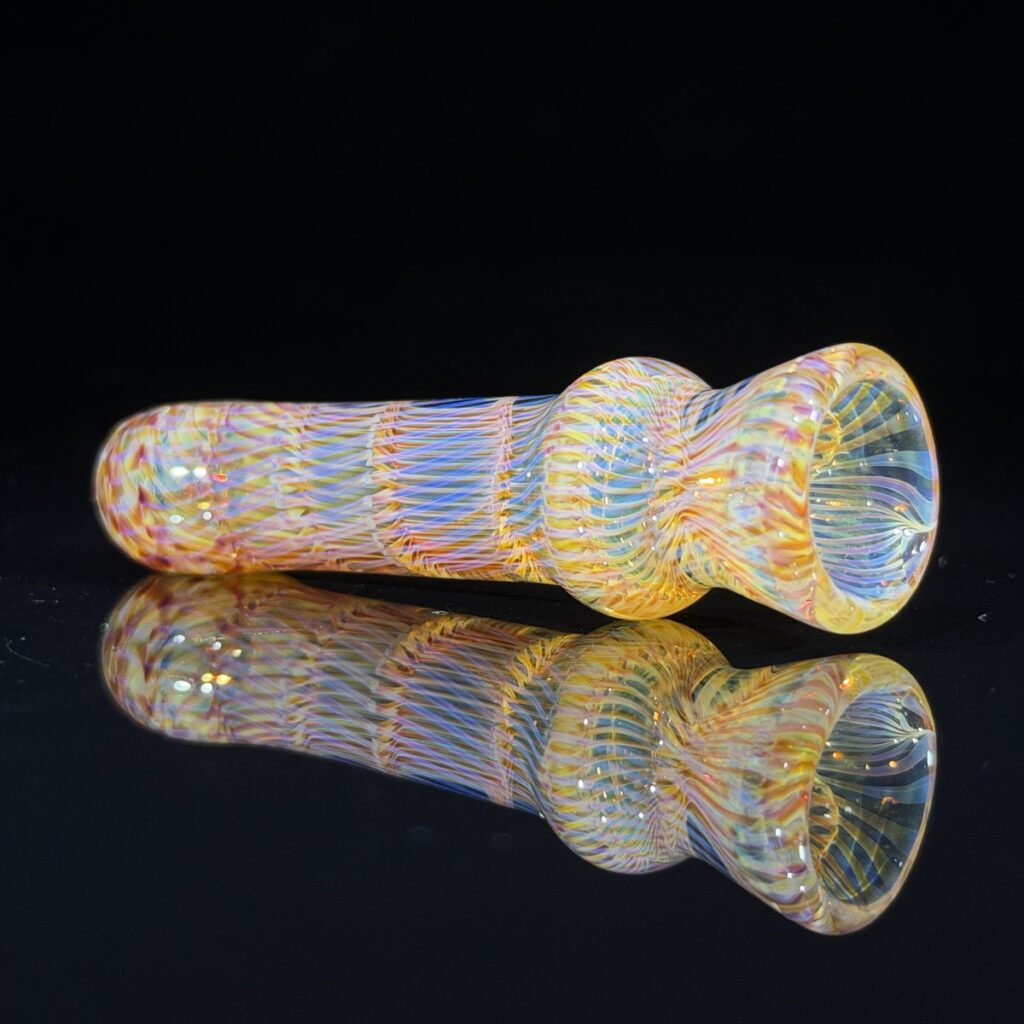
The coil pot is not necessarily the final size or shape of the tubing.
After the custom tube has been created, the artist can heat and stretch it to change its dimensions. Since the pattern is part of the glass itself, stretching the tubing also changes the pattern.
A compact design can become elongated, spirals can spread apart, and different layers can become more or less pronounced depending on how the artist works the glass.
That’s why two pieces made from similar coil patterns can end up looking very different. How far the artist stretches and shapes the tubing changes the spacing and proportions of the pattern.
Coil Potting Is the Beginning, Not the Finished Piece
A completed coil pot is only the beginning of the process.
Once the custom tubing has been made, the artist can work it using many of the same techniques used with conventional borosilicate tubing. It can be heated, stretched, bent, shaped, and blown to create the final form.
That means the pattern you see in a finished coil-potted piece has gone through several stages. The artist first builds the pattern into the tubing, then changes that pattern while shaping the tubing into the final piece.
The finished glass is therefore a combination of the original coil work and everything that happens to it afterward.
Why Coil-Potted Glass Looks Different
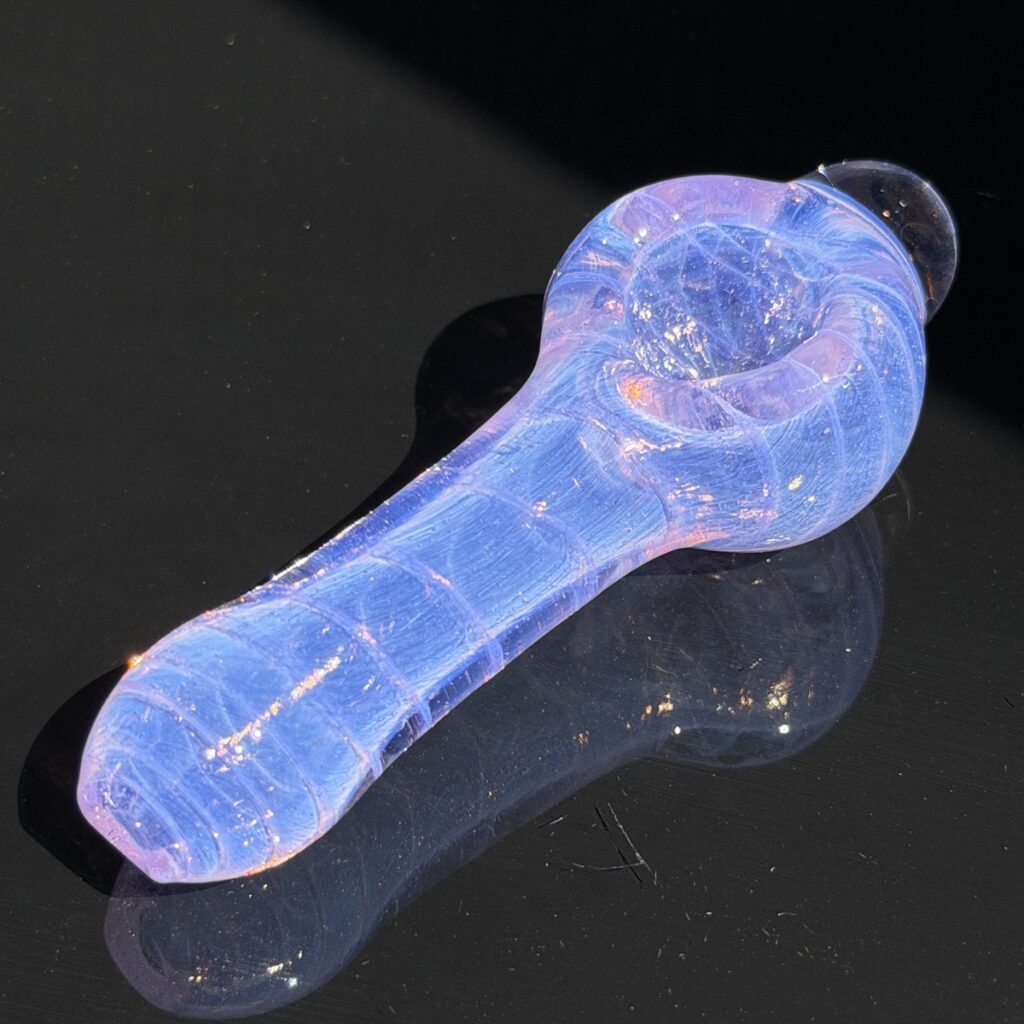
When you look at a coil-potted piece, you’re not just looking at a pattern applied to a tube. You’re looking at a tube that was built from the pattern itself.
The coils, colors, cane, and other glass used to construct the tubing remain part of the finished piece. Stretching and shaping can change their proportions, but the design is still running through the glass rather than simply sitting on its surface.
That’s what makes coil potting such an interesting technique in borosilicate lampwork: the artist gets to design the material before turning that material into the final piece.
There are so many different techniques in glass blowing, but if your collection is missing a fine example of the coil potting method, then consider browsing out collection of coil potted pieces!
Questions About Coil Potting in Glass
What is coil potting in glass?
Coil potting is a borosilicate glassworking technique used to create custom glass tubing by building up successive coils of molten glass. Artists can use colored rods, pulled strands, cane, and other glass to create patterns within the structure of the tubing before shaping it into a finished piece.
How does coil potting work?
A glass artist builds a hollow tube by wrapping successive coils of molten borosilicate glass. The coils are fused together as they are placed, creating custom tubing that can later be heated, stretched, bent, shaped, and blown like other borosilicate glass tubing.
How is coil potting different from surface and inside-out glasswork?
Surface work applies color or decoration to the outside of existing glass tubing, while inside-out work incorporates decoration onto the inside surface. Coil potting builds the tubing from colored and patterned glass, making the design part of the structural glass wall itself.
What is coil potting used for?
Coil potting is used to create custom patterned glass tubing for pipes, bubblers, rigs, sculptures, and other borosilicate glass artwork. It allows artists to build color and pattern into the tubing before shaping it into the finished piece.
Can twisted cane be used in coil potting?
Yes. Twisted cane can be incorporated into a coil pot to create complex internal patterns. Because the cane already contains a twisted pattern, using it in a coil can produce layered effects such as spirals within larger spirals.
Is a coil pot a finished glass pipe?
No. A coil pot is generally custom glass tubing that is still a starting point in the pipe-making process. After the coil pot is created, the artist can continue heating, stretching, bending, shaping, and blowing the tubing to form the finished piece.