Why Tako Glass Thinks Millstone Herb Grinders Are the Best Value
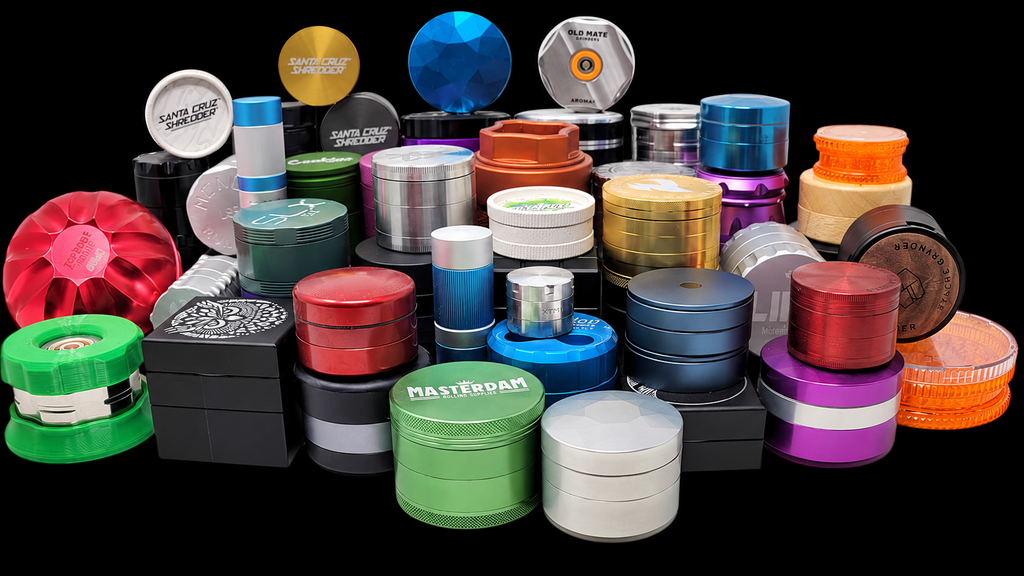
A Better Grinder Makes a Bigger Difference Than You Think
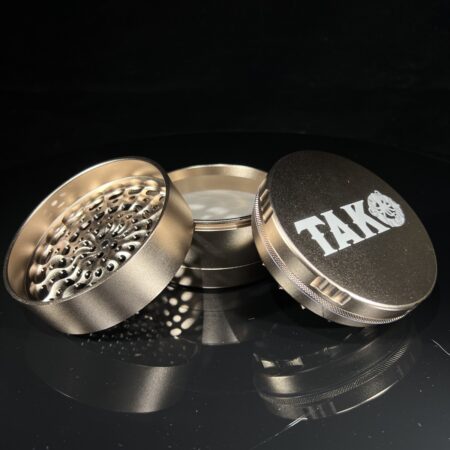
A good herb grinder is one of those accessories you might not think much about until you’ve used a really good one. Most people are familiar with traditional grinders packed with sharp metal teeth, but millstone herb grinders take a different approach. Instead of relying on rows of protruding teeth, they use specially shaped grinding plates to break down flower. It’s a design we’ve become particularly fond of at Tako Glass, and after using these grinders ourselves, we think they deserve a lot more attention.
We’ve stocked plenty of accessories over the years, ranging from inexpensive basics to premium gear. Our goal isn’t necessarily to carry the most expensive version of everything. We’re interested in products that work well, offer useful features, and make sense for what customers are paying. When something provides a lot of value at an affordable price, we pay attention!
Our five-piece millstone grinders check those boxes. They’re also a good example of why a thoughtful design can matter more than a premium price tag. More on those later!
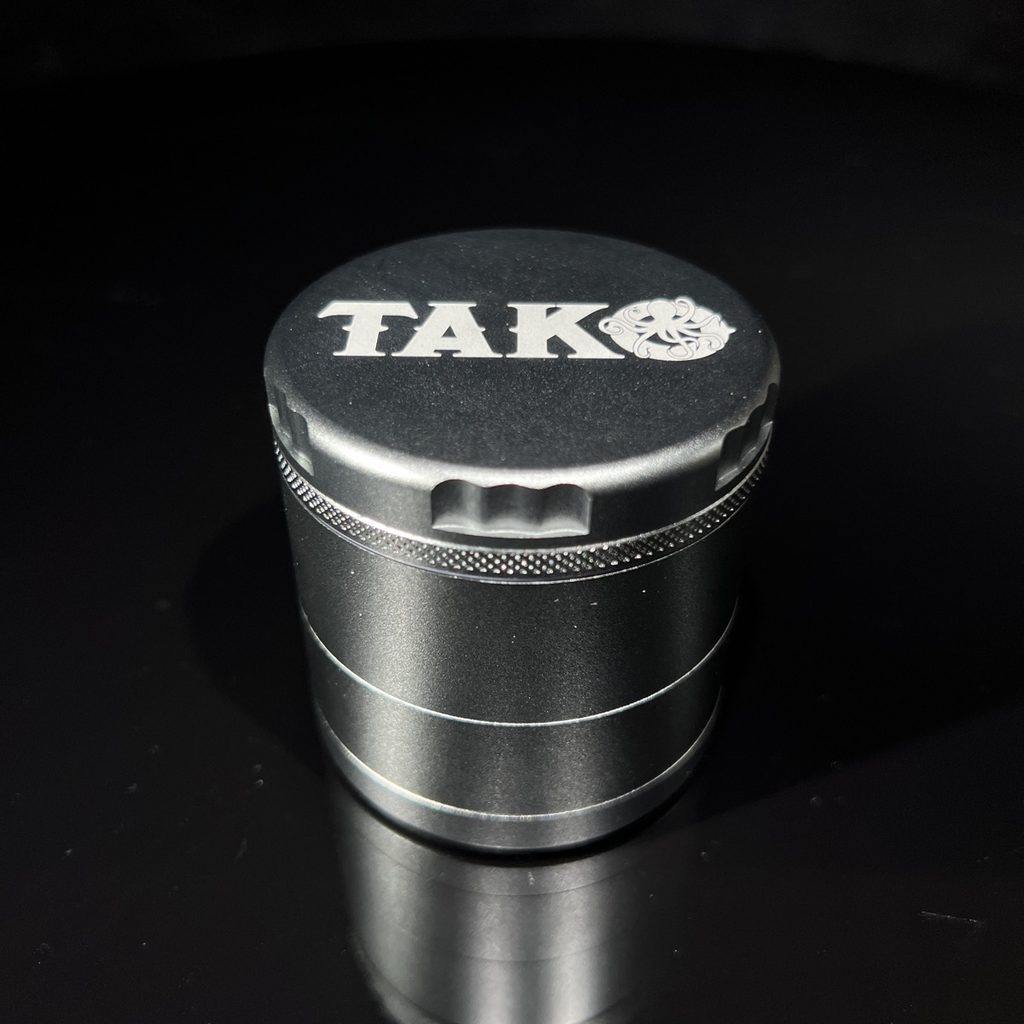
Millstone Herb Grinders vs. Traditional Toothed Grinders
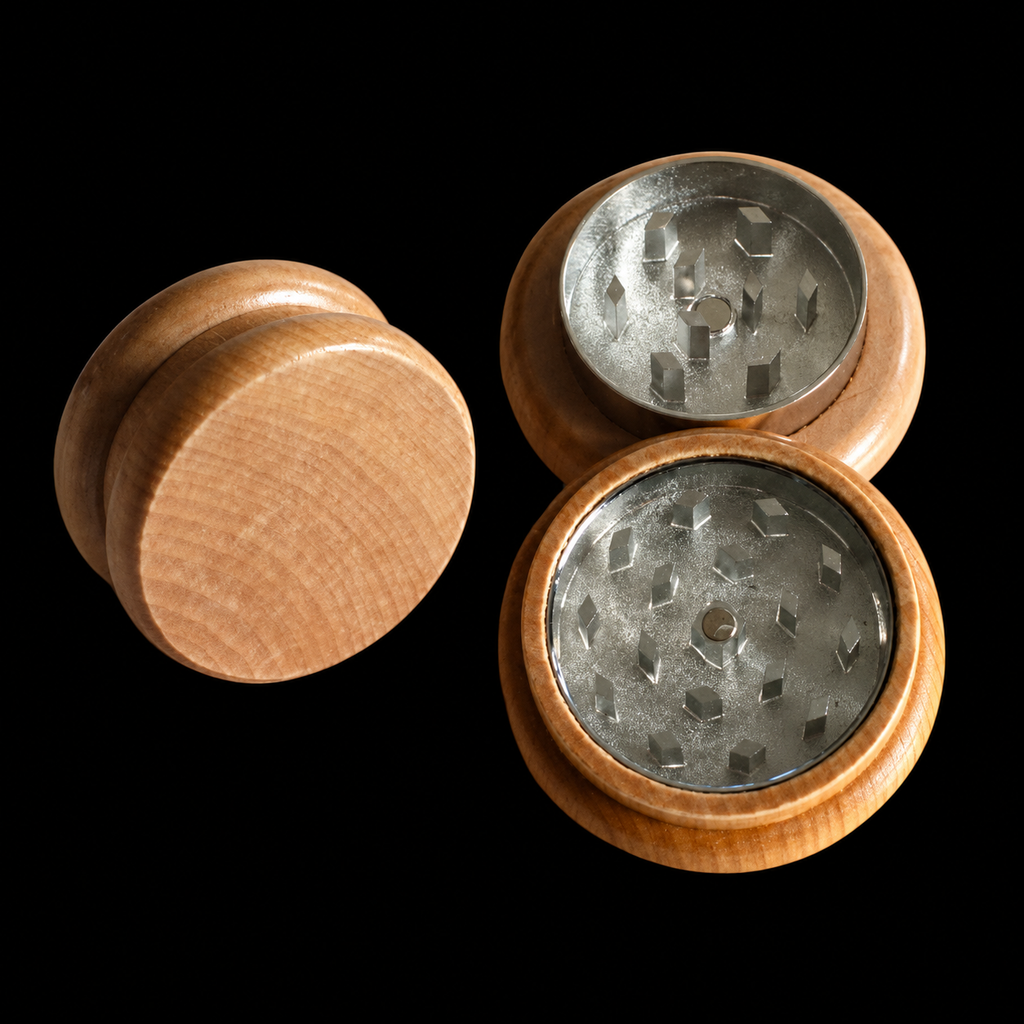
Most conventional herb grinders work in roughly the same way. Two sets of interlocking teeth rotate past one another, catching and breaking apart flower as you twist the lid.
The teeth can take several forms. Diamond-shaped teeth are common, while others use pyramids, pegs, or more elaborate cutting patterns. The quality of the machining, spacing between teeth, and size of the openings beneath them all influence the grind. In the case of multipart grinders, the size of the holes separating the grinding chamber from the flower collection chamber can also have a big impact.
A well-made toothed grinder can do an excellent job, but problems can develop with poorly designed teeth, sticky flower, or accumulated residue. Material gets packed between the teeth, grinding becomes harder, and eventually the whole thing needs a good cleaning.
What Makes a Millstone Grinder Different?
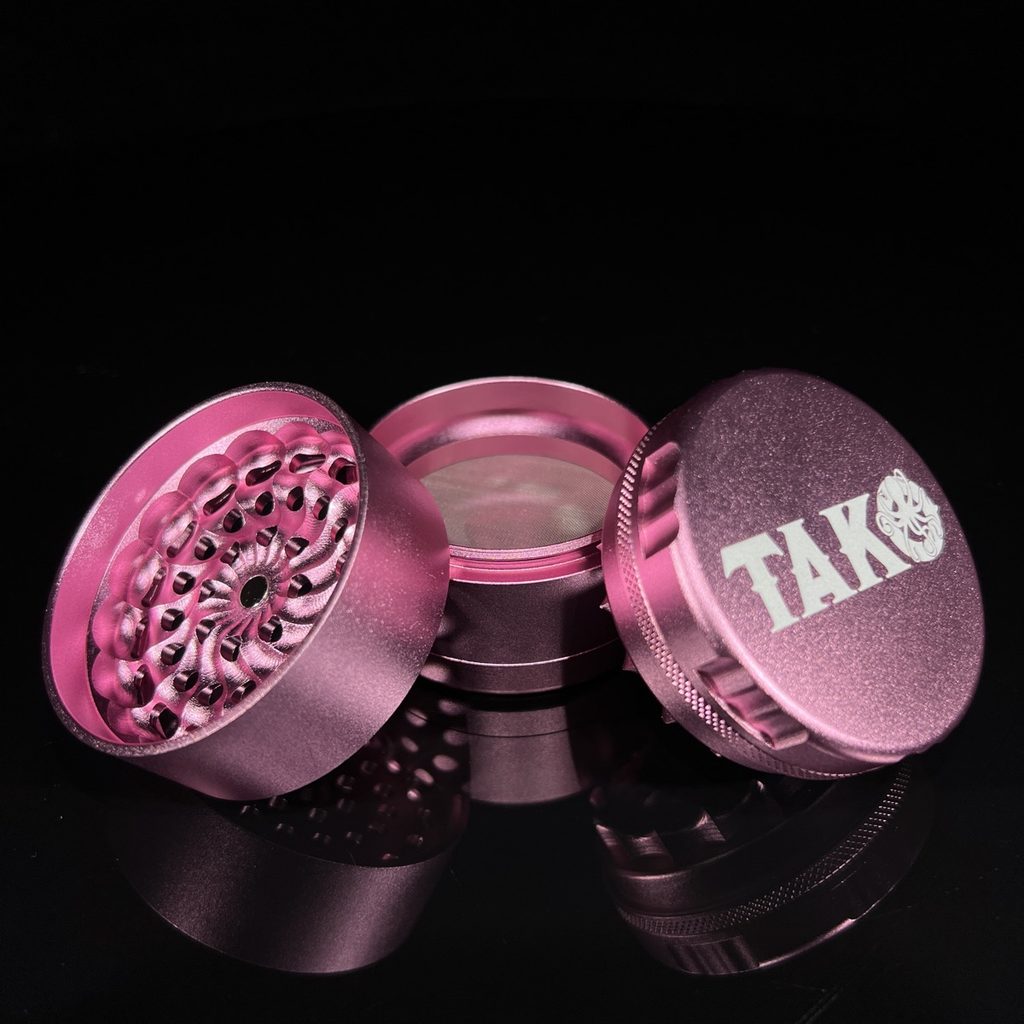
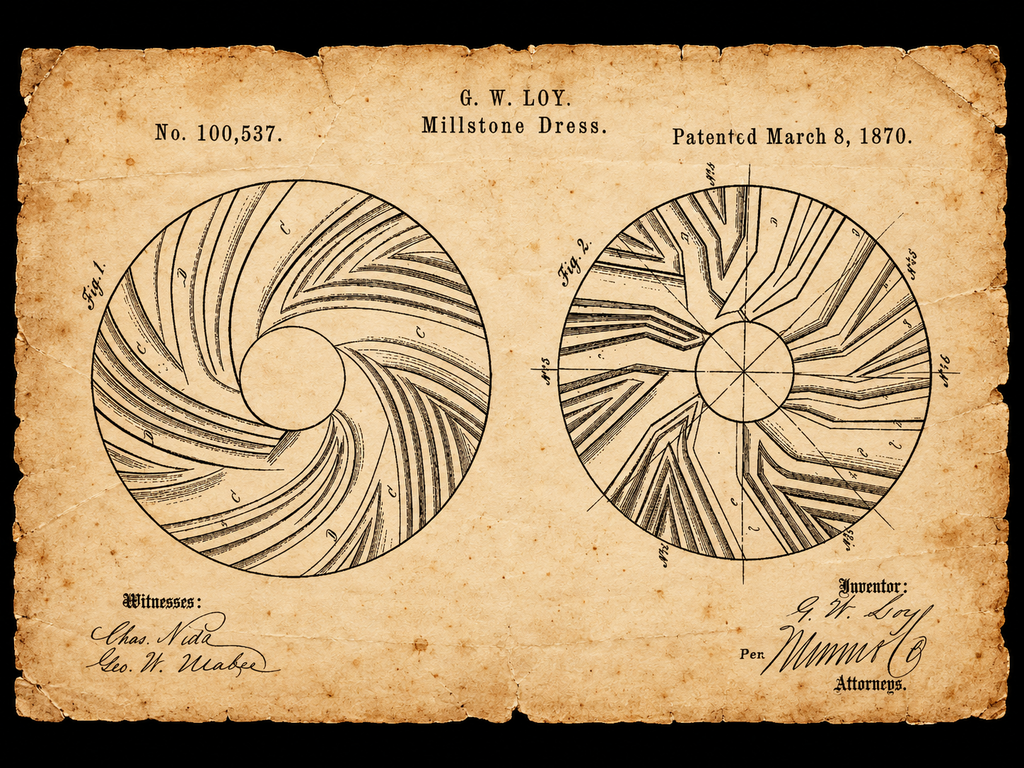
Millstone-style grinders replace those upright teeth with two textured plates covered in carefully arranged ridges and grooves.
As the plates rotate against one another, the intersecting surfaces create a grinding and shearing action. Flower moves through the patterned surfaces rather than getting caught between rows of pointed teeth.
That changes how the grinder feels in use. Without tall teeth for material to become wedged between, the grinding motion can feel smoother, particularly when working through larger amounts of flower.
One of our staff members uses a Tako millstone grinder daily and reports that it’s easier on the hands and stays noticeably cleaner than their previous toothed grinder. It’s the kind of everyday improvement that doesn’t always stand out in a product description but becomes obvious after regular use.
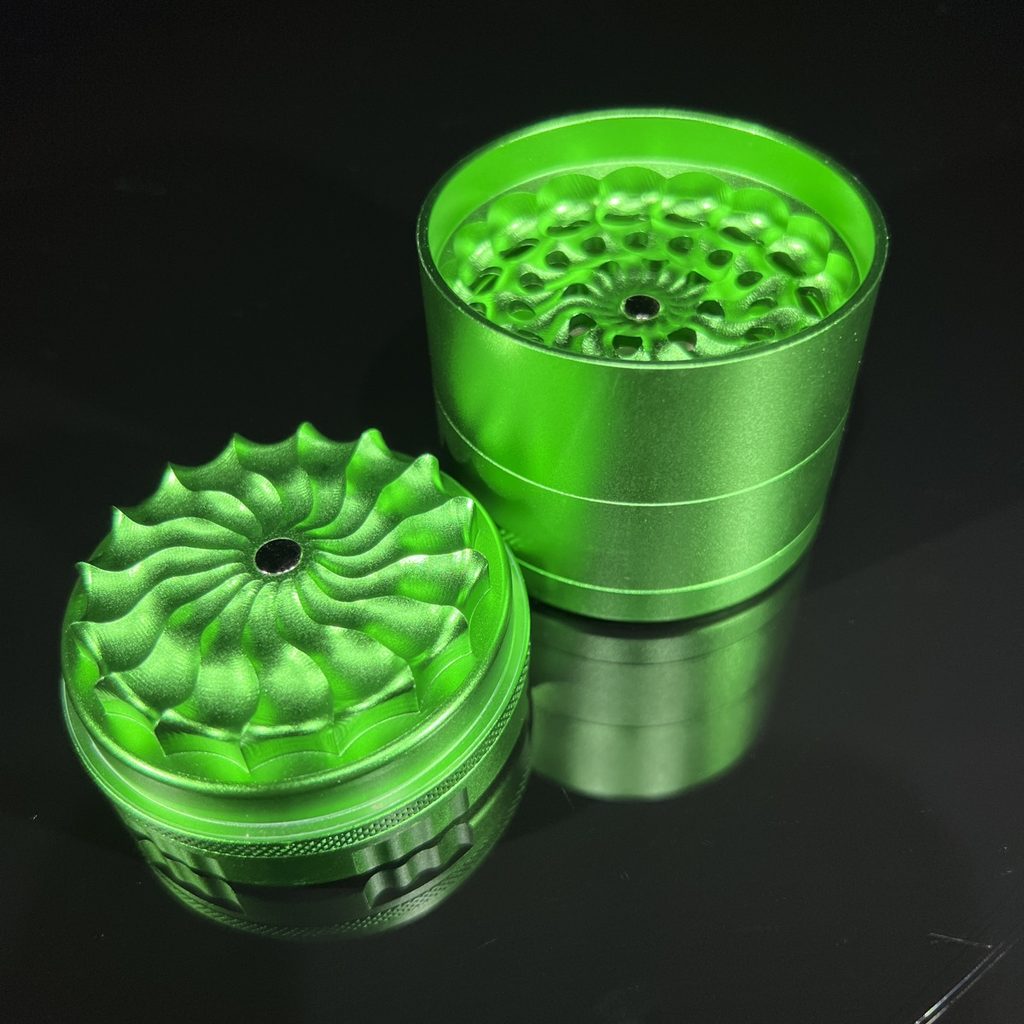
Toothless doesn’t mean maintenance-free, of course. Sticky resin can still accumulate on the plates and around moving parts. But having fewer protruding surfaces to pick clean can make routine upkeep considerably less frustrating. Even a millstone grinder will need to be cleaned eventually, but in our testing, we’ve had millstone grinders go a year or more under heavy daily use without binding or requiring a cleaning. In our experience, even premium toothed grinders have needed attention sooner.
Why We Like the Five-Piece Design

The grinding mechanism is only half the story. One of the reasons our millstone herb grinders stand out is how much functionality they’ve managed to pack into a single accessory.
Most people have seen traditional two-piece, three-piece, and four-piece grinders, with some premium models offering even more chambers and customization.
A two-piece grinder is the simplest arrangement: a lid and a grinding chamber. A three-piece grinder adds a compartment below the grinding mechanism to collect prepared flower. A four-piece grinder typically adds a fine screen and a separate bottom compartment for collecting kief, the resin-rich particles that separate from flower during grinding.
Our five-piece millstone grinders build on that arrangement by incorporating an additional storage compartment into the lid.
All together, our millstone grinders give you:
- A dedicated compartment for storing unground flower.
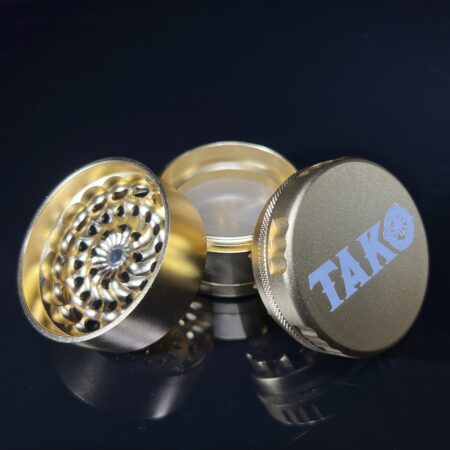
- A spacious grinding chamber with toothless millstone-style plates.
- A separate compartment for collecting ground flower.
- A fine screen that allows smaller particles to sift through.
- A bottom chamber for collecting kief.
Having that extra storage space is surprisingly convenient. You can keep whole flower and prepared flower in the same unit without needing another container every time you sit down to use it. It’s not a small compartment either. In testing, we were able to fit 10 grams of popcorn-sized buds in the lid of the 4-inch XL Millstone Grinder, or around 7 grams of larger, top-shelf flower. Actual capacity will vary depending on the flower.
The removable sections also provide access to the different chambers for cleaning. There are more components to manage than with a basic grinder, but you get a much more versatile accessory in return. Nothing compares to being able to grab a single accessory and know you’ll have plenty of ground flower, whole flower, and kief on the go or right at your fingertips in your usual session spot!
Cheap, Midrange, and Premium Grinders: What Are You Actually Paying For?
Herb grinders can cost less than ten dollars or well over a hundred. That price difference sometimes reflects better materials, tighter machining tolerances, and more sophisticated construction. Sometimes it reflects branding or features that not every customer needs.
At the inexpensive end, you’ll find basic plastic grinders, simple cast-metal models, and lightweight two-piece designs. These can get the job done, particularly for occasional use. Depending on construction quality, the tradeoffs may include rough-fitting components, limited storage, difficult-to-clean grinding chambers, or materials that wear more quickly.
Move into the midrange and you’ll generally start seeing more substantial metal construction, improved alignment, comfortable grips, and additional collection chambers. These are practical improvements that can make a grinder more pleasant to use regularly.

Premium grinders can offer impressive machining, specialty materials, interchangeable grinding plates, sophisticated closure systems, and extensive warranties. For someone who values those details, the additional expense may be worthwhile.
But there’s a difference between paying for premium construction and getting the most useful features for your money.
That’s where our millstone models get interesting.
The standard 2-inch Tako Glass millstone grinder is regularly priced at $35, while the oversized 4-inch XL versionis $60.
For those prices, you’re getting a complete five-piece setup, an unusual toothless grinding mechanism, separate storage compartments, and kief collection. That’s a compelling package when some established premium four-piece grinders cost considerably more.
What impresses us most is the amount of practical functionality these grinders deliver without demanding premium-brand pricing. It’s why we consider them some of the strongest values in our accessory collection. Our customers seem to agree as well, because our millstone grinder line quickly became one of our best sellers!
Do Herb Grinder Materials Matter?
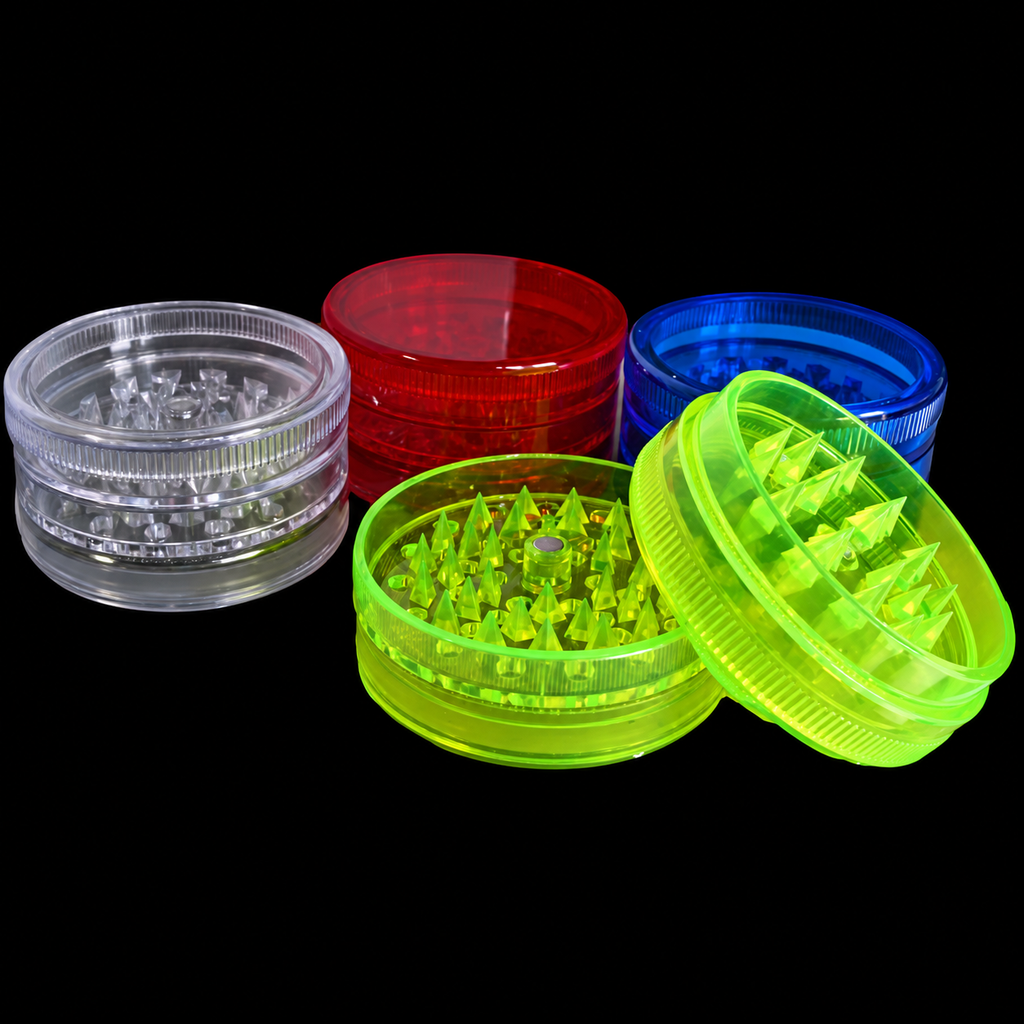
Absolutely, although material alone won’t tell you whether a grinder is any good.
Plastic and acrylic grinders are inexpensive and lightweight, but construction quality and wear resistance vary. Wooden grinders have their own appeal, particularly for people who enjoy natural materials, though cleaning them can be more complicated.
One concern with plastic grinders is surface wear. Friction and abrasion can cause some plastics to shed tiny particles That doesn’t establish how much material any particular herb grinder releases or the health effects of that exposure, but it’s a reasonable reason to pay attention to material quality and visible wear.
Metal grinders offer a wider range of possibilities. Aluminum is popular because it combines relatively low weight with durability and can be machined into precise shapes. Stainless steel is another option, generally heavier and often more expensive. Cast metal alloys can also work well, although the quality of the casting, surface finish, and fit between components matters considerably.
It’s worth looking beyond whatever impressive-sounding material appears on the packaging.
Does the grinder turn comfortably? Do the pieces fit together properly? Can you reach the areas where residue collects? Is there enough room to prepare the amount of flower you normally use?
Those practical details often have more influence on everyday ownership than the material label alone.
For our millstone grinders, the toothless plate design, versatile chamber layout, and ample capacity are the main reasons we recommend them.
Choosing Between Our 2-Inch and 4-Inch Millstone Grinders
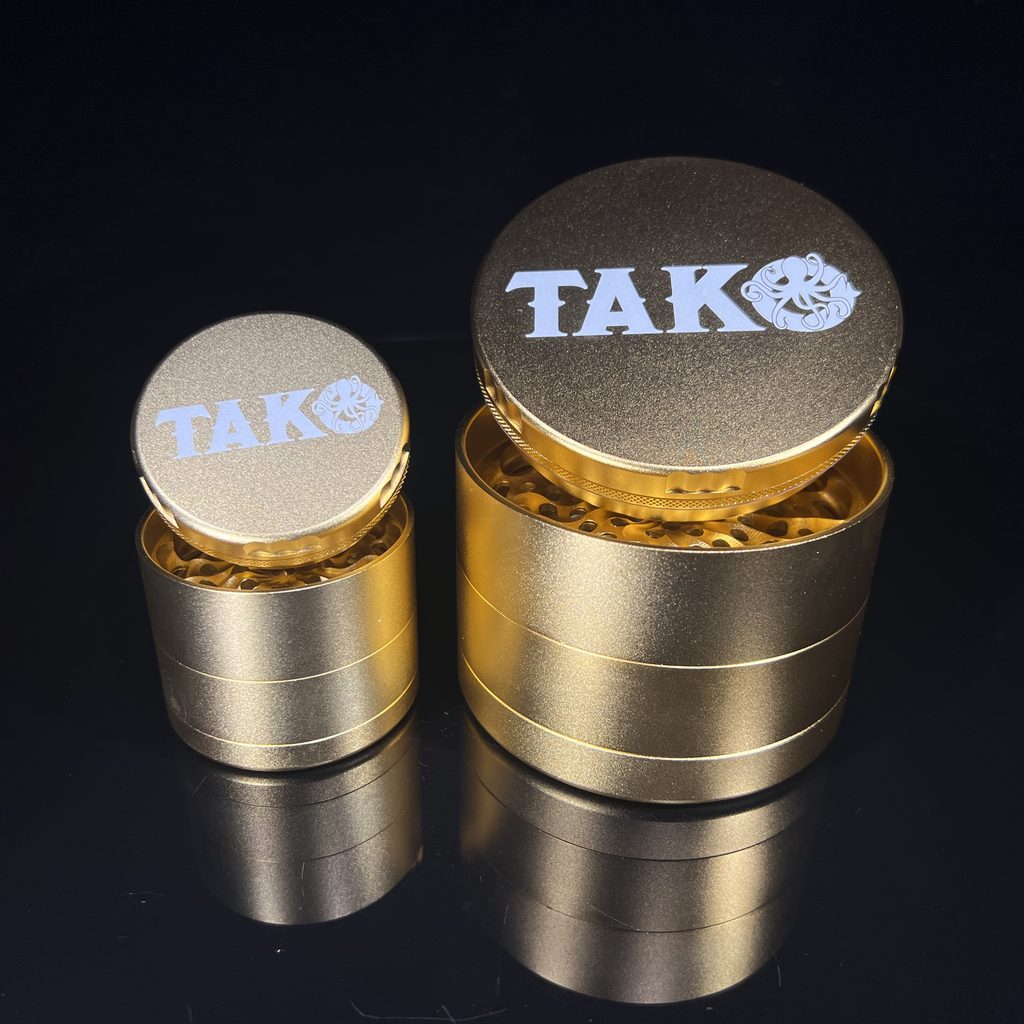
Both versions use the same general five-piece arrangement, so the real decision comes down to size and how much flower you typically prepare.
Plus, less maintenance time means more smoking time, and that’s a very good thing!
The 2-Inch Millstone Grinder
The 2-inch model is our everyday recommendation. It’s substantial enough to handle a useful amount of flower without occupying too much space, making it suitable for regular home use or taking along when needed.
At $35, it’s also an approachable way to try a millstone-style grinder without committing to a much more expensive premium accessory.
The 4-Inch XL Millstone Grinder
The 4-inch version is a different proposition. That extra diameter provides considerably more grinding surface area and room to work with larger amounts of flower.
In one of our tests, the XL Millstone Grinder processed 3.5 grams of flower in a matter of seconds, with only three or four turns of the grinding plates. Less twisting and faster material preparation can be particularly useful for people with limited hand strength or dexterity, including medical cannabis patients who find smaller grinders difficult to operate. The effort required will still depend on the flower and the user’s grip.
The XL is particularly appealing if you prepare material in batches, share a setup with friends, or simply prefer a larger grinder that’s easier to get a substantial grip on.
It isn’t quite as convenient to carry around, and smaller hands may find the broader diameter less comfortable. But for a grinder that primarily lives at home, the additional capacity can be a real advantage.
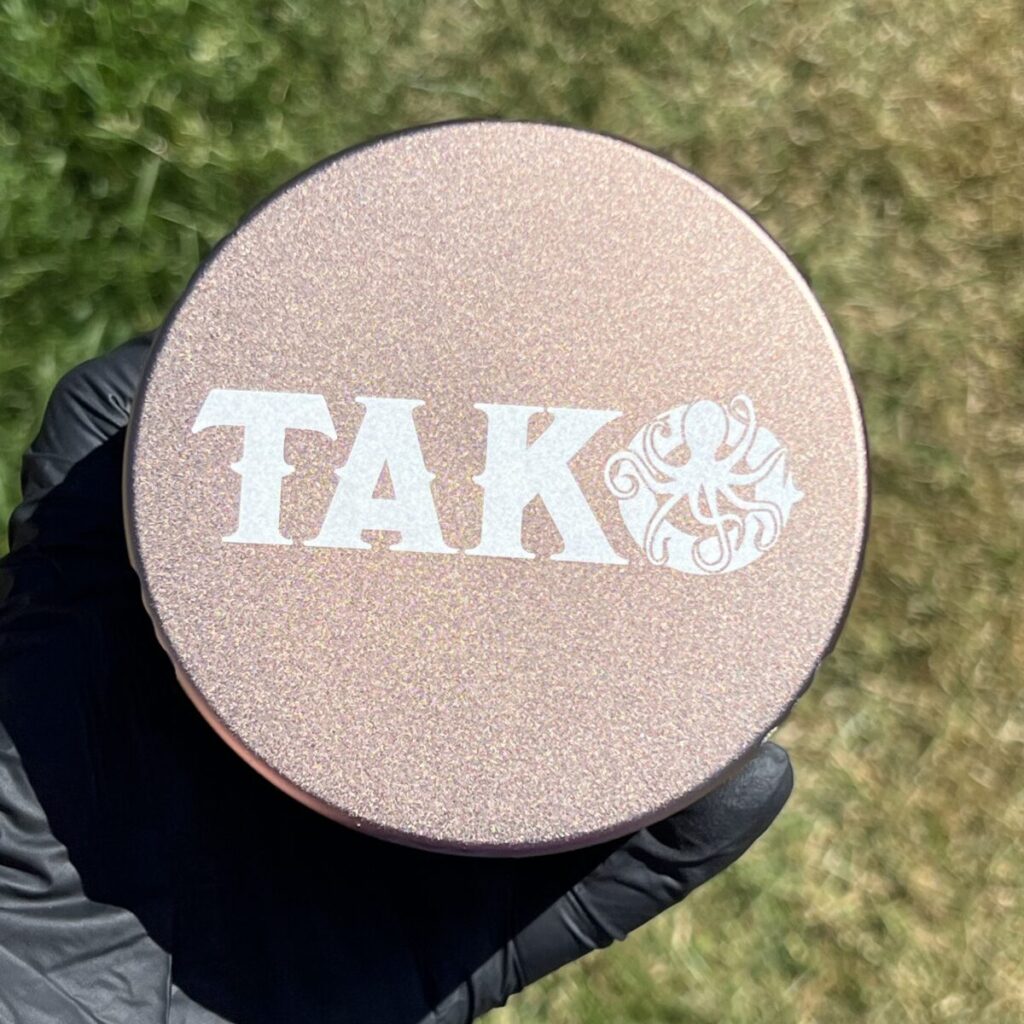
Both sizes are available in several colors, so you can choose the version that suits your setup!
Why Tako Glass Recommends Millstone Herb Grinders
We spend a lot of time talking about functional glass, airflow, craftsmanship, and the small design choices that make an accessory more enjoyable to use. Grinders deserve that same attention.
And our enthusiasm for millstone grinders isn’t just talk. We used to offer Tako Glass–logoed grinders with conventional teeth. We’ve since switched exclusively to toothless millstone-style designs because we genuinely believe they deliver a superior grind. We liked the difference enough to stop offering our previous grinder design altogether.
That decision says more about our confidence in these grinders than any marketing slogan could.
A good grinder should do its job reliably, feel comfortable in your hands, and be reasonably easy to maintain. The millstone design offers a different grinding experience from traditional toothed models, while the five-piece construction provides useful storage and collection features without pushing the price into premium territory.
If you’re happy with your current grinder, there’s no reason to replace it simply because something different exists. But if you’re tired of fighting clogged teeth, limited capacity, or awkward storage, a millstone-style grinder is absolutely worth considering.
We’ve already made the switch ourselves, and we think there’s a good chance you’ll appreciate the difference too.
Millstone Herb Grinder FAQs
Are toothless millstone grinders better than toothed grinders?
Toothless millstone grinders use ridged grinding plates instead of traditional interlocking teeth. This can reduce the material that gets trapped around protruding teeth and make regular cleaning easier. Tako Glass prefers millstone-style grinders based on our own experience, although results still depend on the grinder’s construction, the flower, and how the grinder is used.
What’s the difference between a four-piece and five-piece herb grinder?
A typical four-piece herb grinder includes a grinding chamber, ground-flower collection chamber, kief screen, and kief collection compartment. Tako Glass’s five-piece millstone grinders add a separate storage compartment inside the lid, allowing you to carry whole flower and prepared flower in one accessory. Other manufacturers may count or arrange grinder sections differently.
Can a toothless herb grinder handle sticky flower?
Yes, a toothless herb grinder can process sticky flower, although very resinous or moist material may still accumulate on the grinding plates. Millstone designs avoid the tall interlocking teeth found in conventional grinders, but no grinder is completely resistant to buildup. Avoid overpacking the chamber or forcing the plates if they become difficult to turn.
Can you use a millstone grinder for wax or concentrates?
Millstone herb grinders are intended primarily for preparing dried flower, not sticky waxes, oils, or other concentrates. Concentrates may adhere to the grinding plates, screen, and collection chambers, making the grinder difficult to use and clean. Use equipment specifically intended for those materials instead.
Is kief the same as pollen in a herb grinder?
The term “pollen screen” is commonly used for a grinder’s fine collection screen, but the material collected beneath it is generally called kief, not actual plant pollen. Kief contains separated cannabis trichomes along with varying amounts of fine plant material. The screen allows smaller particles to pass into the bottom chamber, where they can be collected separately.
How should you clean a five-piece millstone grinder?
Start by emptying the grinder and gently removing loose residue with a soft, dry brush. Pay attention to the grinding plates, threads, and fine collection screen. Avoid sharp tools or aggressive scrubbing that could damage the screen or surface finish. For stubborn buildup, follow cleaning instructions suitable for the grinder’s particular materials and finish, and let all components dry completely before reassembly.
Can you store whole flower in the lid of a five-piece grinder?
Yes. Tako Glass’s five-piece millstone grinders include a separate lid compartment specifically suited to carrying unground flower. This is convenient for everyday use and short-term storage. However, the grinder lid should not automatically be assumed to provide an airtight or humidity-controlled seal. For longer-term preservation, a suitable airtight storage container is generally a better choice.
How do you know when a millstone herb grinder needs cleaning?
Common signs include increasing resistance when turning the plates, visible resin buildup, sticking threads, or a kief screen that has become clogged with fine material. Tako Glass has experienced long periods of daily use without needing to clean its millstone grinders, but cleaning frequency varies with flower moisture, resin content, and how often the grinder is used.