How to Remove a Stuck Downstem or Bong Bowl
Read on for safe tips and tricks to get you out of a sticky situatiuon!
Before You Pull Harder, Check the Joint
Ground-glass joints use matching tapered surfaces to create a snug connection without threads or a rubber seal. That close fit also leaves little room for residue or grit between the surfaces.
Resin can become sticky during use and firm up as the glass cools. With a stuck downstem or stuck bong bowl, brown buildup may be visible between the frosted surfaces. Even a joint that looks fairly clean can stick.
To remove a stuck downstem or bong bowl, first inspect the glass, clean the connection, and try gentle hand pressure. Gradual warming with water may help an intact joint that remains stuck. If the glass is chipped, cracked, or broken, skip warming and follow the damaged-component advice below. Never force the connection apart.
A slide—also called a bong bowl or bowl piece—can stick in either a fixed or removable downstem. The same cleaning, gentle handling, and gradual warming apply to both. Work on the connection between the stuck slide and its receiving socket.
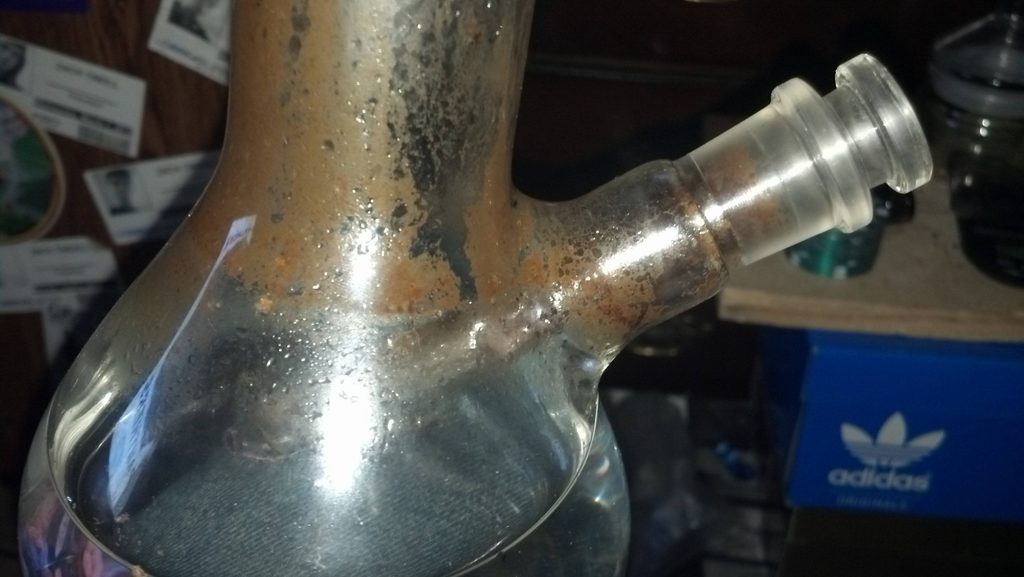
Keep your joints clean, dry and gently twist when inserting the dowstem to secure it with using excess force!
Why Do Downstems and Bowls Get Stuck?
Moisture between freshly washed parts can also contribute to sticking. If you have ever cleaned a piece, put it back together wet, and later struggled to separate it, you know the frustration. Let the mating surfaces dry before assembly.
Pushing a bowl or downstem firmly into its socket can wedge the tapered surfaces together. A light seat is generally enough; the connection should not require force toassemble.
How to Remove a Stuck Downstem or Bowl
Inspect and Support the Glass
Let the piece return to room temperature and inspect the receiving joint in good light. Look for cracks or chipped edges. If you find damage, stop applying force.
Work over a padded surface, away from the counter’s edge. Wear safety glasses and suitable protective gloves; thin disposable gloves offer little protection from broken glass. Keep the work area clear so a released component has somewhere safe to land.
Support the bong and grip close to the stuck connection. For a stuck slide, hold the receiving socket steady and gently turn and withdraw the bowl in line with it. Support a removable downstem separately; do not twist a fixed downstem. Use the same gentle movement for a stuck downstem, without sideways bending or increased force.
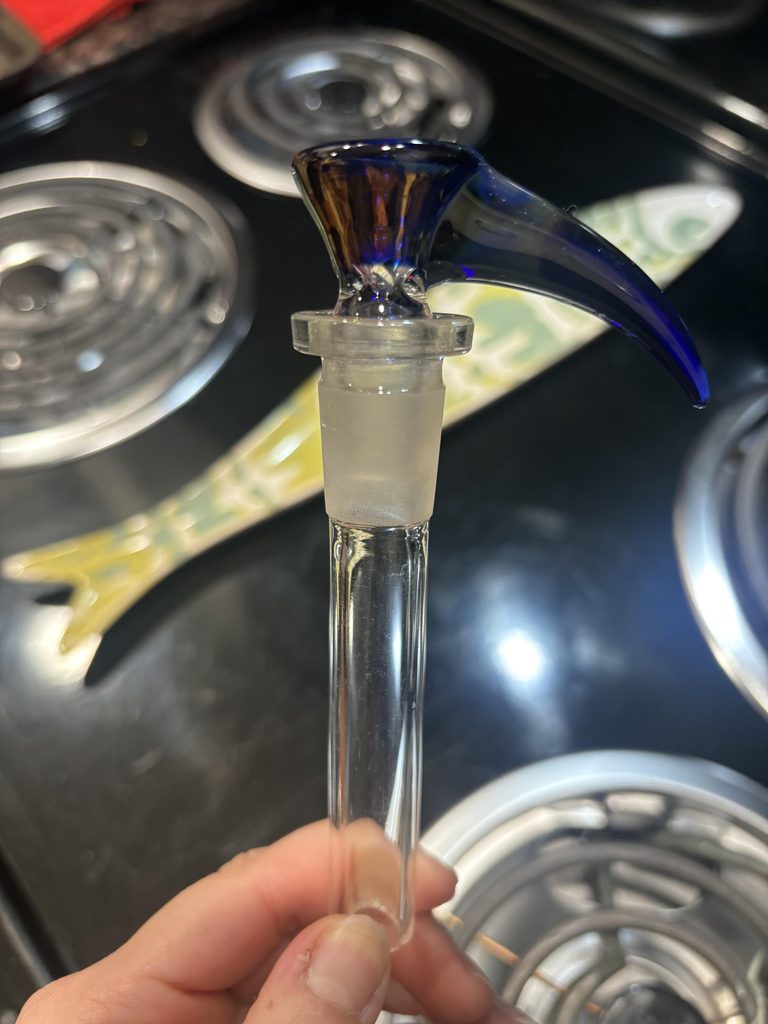
Watch both connections when removing a bowl from a removable downstem. We have had a previously stuck downstem unexpectedly release while pulling the bowl, leaving both parts connected in hand. Support the piece and allow room for either joint to release.
Clean a Stuck Downstem or Slide Before Trying Again
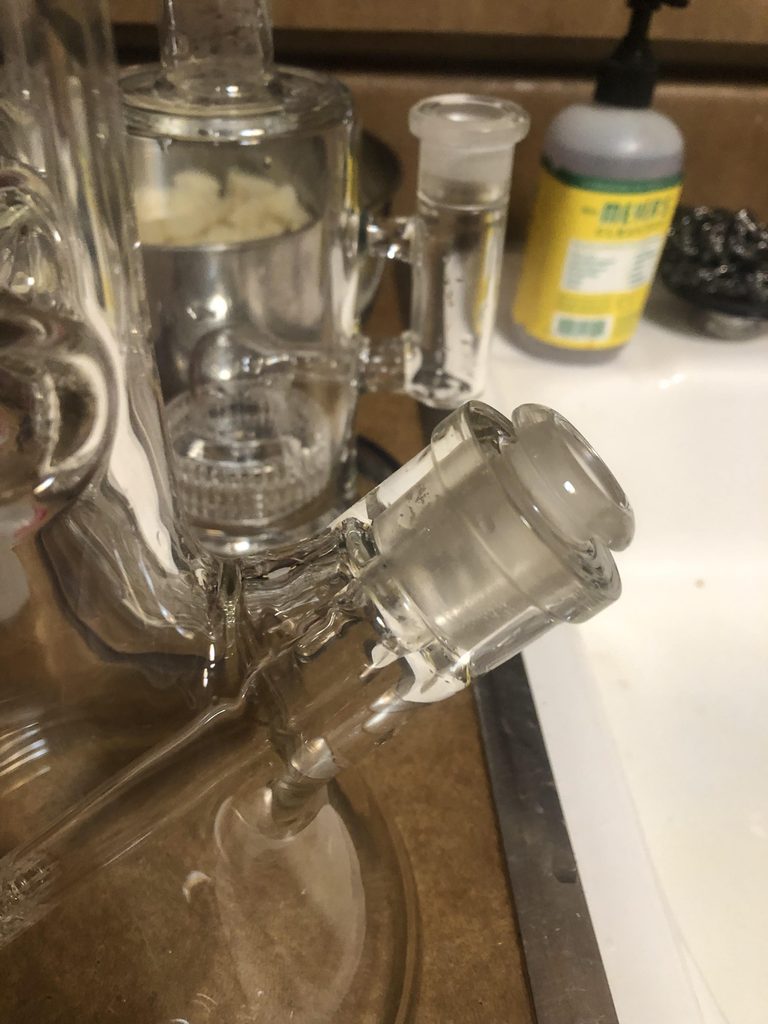
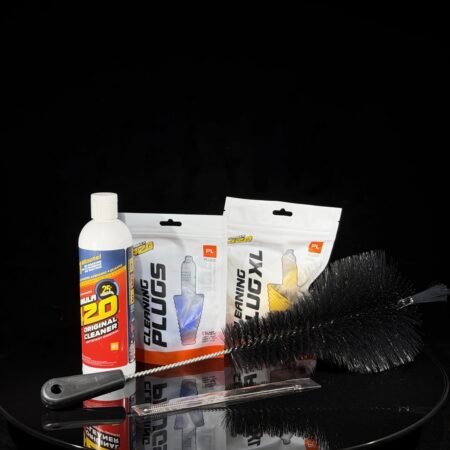
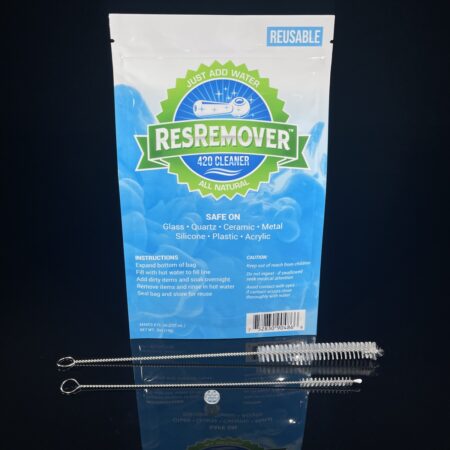
For a stuck slide or downstem, choose a glass cleaner appropriate for your piece and follow its directions. Give it time to reach the affected joint instead of repeatedly pulling at the connection.
Position the piece securely so the cleaner contacts the stuck connection where the design allows. Keep the soaking container stable and prevent the glass from rolling or falling.
A cleaning cycle may loosen enough buildup for the joint to separate with gentle handling. Hardened residue may need more than one cleaning; our guide to tough resin buildup covers that problem in greater detail. Remove the cleaner, rinse thoroughly, and dry the outside surfaces before trying again. Cleaning can help with residue. It cannot correct a damaged or badly wedged connection.
Can Gently Warming a Stuck Downstem or Bowl Joint Help?
Gentle warming can sometimes help release an intact ground-glass connection. Warming the outer socket produces slight expansion that may ease the fit. Laboratory-glass manufacturer DWK includes warming the outer socket under running tap water in its guidance for seized glass joints, provided temperature use is appropriate and no volatile substances are present.
Start with undamaged, room-temperature glass and gradually introduce comfortably warm water around the receiving socket. For a bowl stuck in a downstem, this is the socket surrounding the bowl’s joint. Support the piece, keep openings unobstructed, and dry the outside where you grip before gently testing the connection again.
Never use boiling water or abrupt hot/cold changes. Rinse away cleaners according to their instructions before warming. If gentle warming does not help, stop rather than increasing the temperature; there is no universal heating time that guarantees release.
Lubricants and Joint Wax: Different Products, Different Purposes
Instructions for scientific glassware sometimes recommend lubricating seized connections. For example, SUNY Geneseo’s glassware guidance describes joint grease and dilute glycerin solutions. Those are laboratory procedures, not evidence that the same products are suitable for smoking glass.
For home removal, we recommend cleaning, gentle handling, and gradual warming with water instead of an improvised lubricant. Household oils, automotive sprays, and laboratory greases can leave substances you do not want in the smoke path. “Food-grade” does not establish suitability for heating or inhalation.
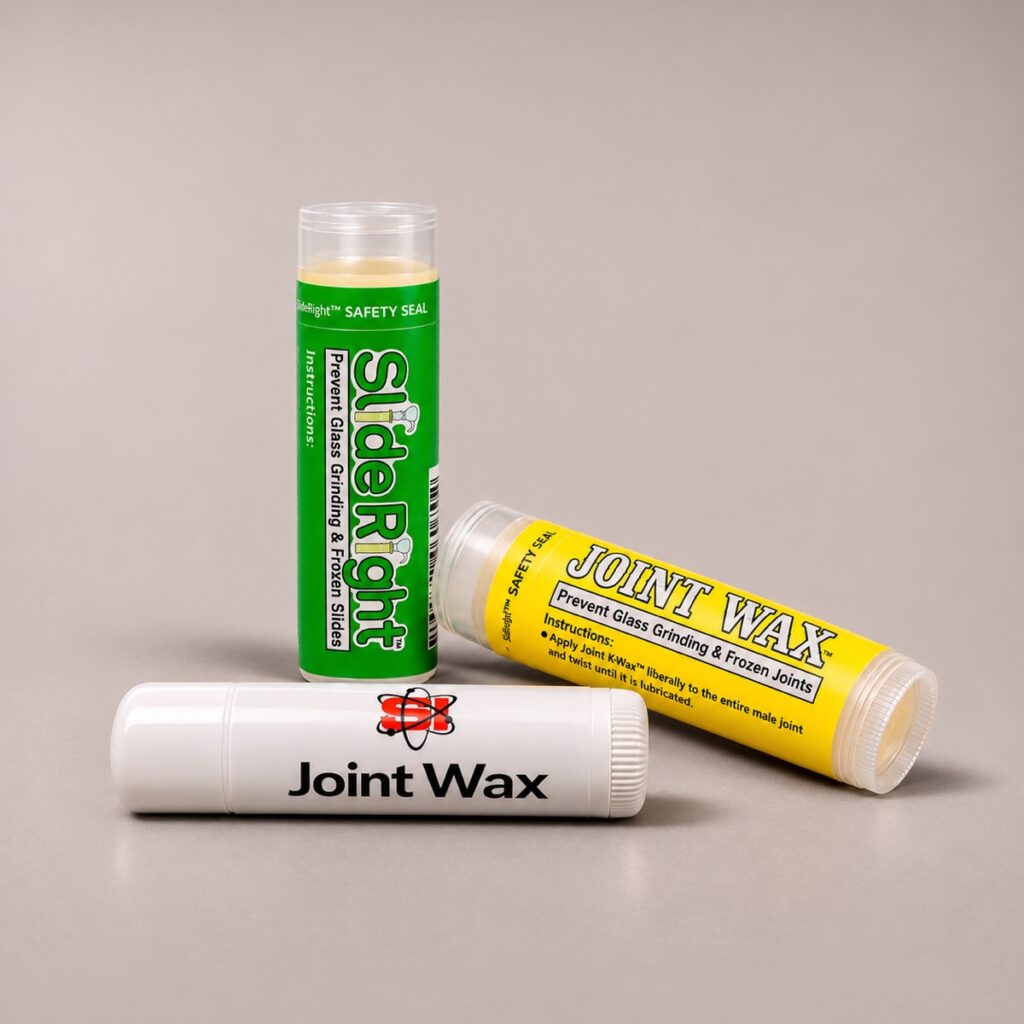
Purpose-made glass-joint waxes are sold to help prevent sticking. A thin lubricating layer between the mating surfaces is intended to make later separation easier. That preventative role does not establish that wax will penetrate an already seized connection or that every formulation is suitable for your piece.
If your glass manufacturer recommends joint wax, follow its product and application instructions. Use it sparingly on the specified mating surfaces and keep excess material out of the opening. Do not substitute candle wax, scented wax, lip balm, or another household product simply because it feels similar.
After adding anything other than water during cleaning or removal, thoroughly clean and rinse the glass before reuse. This includes products marketed for glass use: follow their removal instructions, and do not mix cleaning products.
Appropriate glass cleaners are intended to be removed through their specified cleaning and rinsing process. Potentially hazardous products may leave residues that ordinary cleaning cannot reliably address. Cleaning afterward does not make an unsuitable product an appropriate choice.
When a Stuck Downstem Is Already Broken Inside the Joint
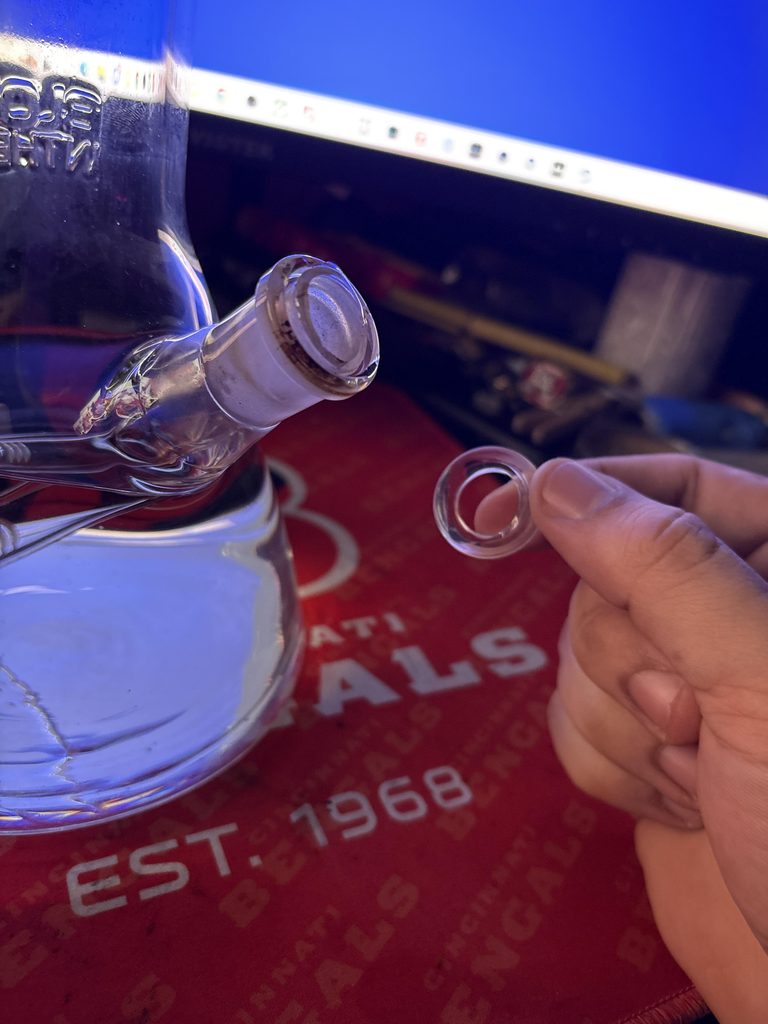
A downstem or slide broken flush with—or below—the receiving socket offers little to grip. The remaining edge can cut you or break further under pressure. The following precautions apply to a broken bong bowl as well as a broken downstem.
In our experience, a damaged downstem has come free after multiple cleanings, even when the break left no exposed section to pull on. Cleaning apparently loosened the buildup enough for the joint to separate easily. Patience let the cleaner work without forcing a tool into the broken opening.
Do not put fingers or tools into the broken opening, try to crush the remaining glass, or heat the damaged assembly. Chips and cracks weaken glass; the University of Vermont’s glassware safety guidance calls for removing defective glass from service and warns against heating damaged glassware.
If the broken, stuck downstem remains inaccessible, send clear photographs to the original maker or a repair artist experienced with borosilicate water pipes. Ask whether extraction is realistic and whether the receiving joint appears salvageable before arranging service.
If you are able to remove a broken or damaged component, inspect and thoroughly clean the entire piece. Fragments may have entered the chamber or lodged around internal structures. Removing the largest piece or giving the bong a quick rinse does not establish that every shard is gone. If you cannot inspect or clear the affected areas confidently, have the piece assessed before reuse.
Methods to Avoid, Even If You Find Them Online
Some online removal guides escalate to aggressive techniques that can cost you the receiving joint as well as the downstem. Just because you find a method online, doesn’t mean you should attempt it! There are plenty of sources for bad information, especially when it comes to ‘clever tricks’ and some of these methods are unsafe and may cause you more trouble than you already have. We reccomeind that you avoid these approaches:
- Torches and direct flame: concentrated heating can cause thermal shock and break the glass. An open flame can also ignite flammable cleaners or soaking agents in or around the piece.
- Freezer-to-hot-water tricks: abrupt temperature changes introduce another source of stress.
- Pliers, screwdrivers, and improvised levers: these concentrate force on small areas and can chip or fracture the glass.
- Striking the joint: a tap that works on one piece may damage another, particularly if hidden flaws are present.
- Glue-on extraction handles: these introduce contamination and still require pulling against a damaged component.
- Deliberately breaking the lodged stem: further breakage can damage the socket and spread shards through the piece.
- Household or automotive chemicals: products intended for machinery, adhesives, or general household cleaning may leave unsuitable residues inside smoking glass.
Is Professional Removal or Repair Worth It?
For a stuck downstem or slide, distinguish extraction from repair. Successful removal may leave the bong intact. Replacing a cracked joint or rebuilding a section changes the piece. Ask which outcome is likely before committing.
With inexpensive glass, labor and shipping may exceed replacement cost. Get an estimate that accounts for both, and ask what happens if removal fails. A quote can make the decision straightforward when market value is your main concern.
For collectible glass, restoring function does not necessarily restore pre-damage condition or resale value. Visible repairs or altered construction may make the piece less desirable to buyers. Ask what will change rather than assuming a successful repair returns it to its original value.
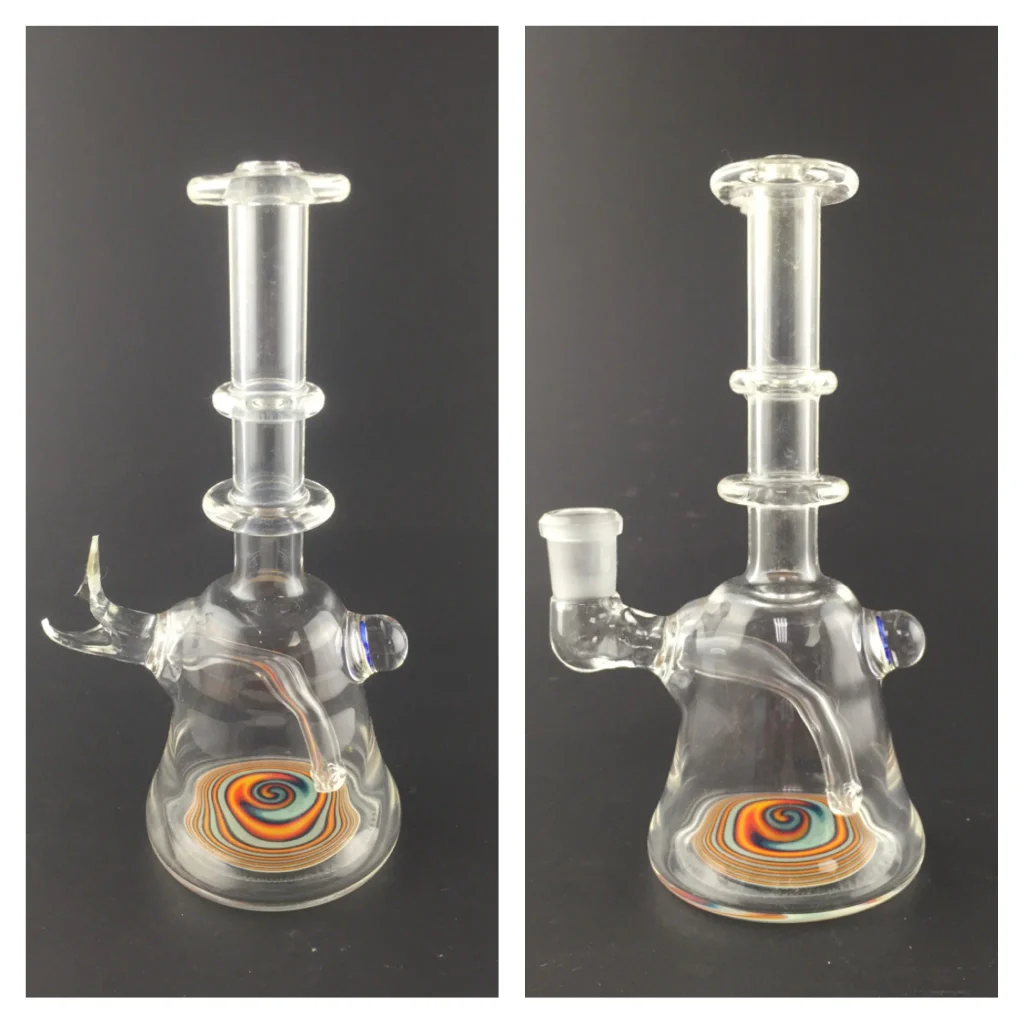
Personal significance can outweigh either calculation. An inexpensive import beaker may represent a friendship, gift, or important memory. Repair can be worthwhile even when replacement costs less, because a new piece would not carry the same connection.
Preventing Another Stuck Downstem or Bowl
To prevent a stuck slide or downstem, keep mating surfaces clean, remove residue before it hardens, and let washed joints dry before reassembly. Seat parts lightly rather than pushing or twisting them tightly into place.
For longer storage, separate removable components and keep them protected. Regular maintenance also lets you check for damage before a tight connection becomes a broken one.
If you use a manufacturer-recommended joint wax, follow its maintenance instructions and clean away old material and trapped residue before reapplying. Wax should complement regular care rather than become another layer of buildup around the connection.
Choosing and Measuring a Replacement Downstem
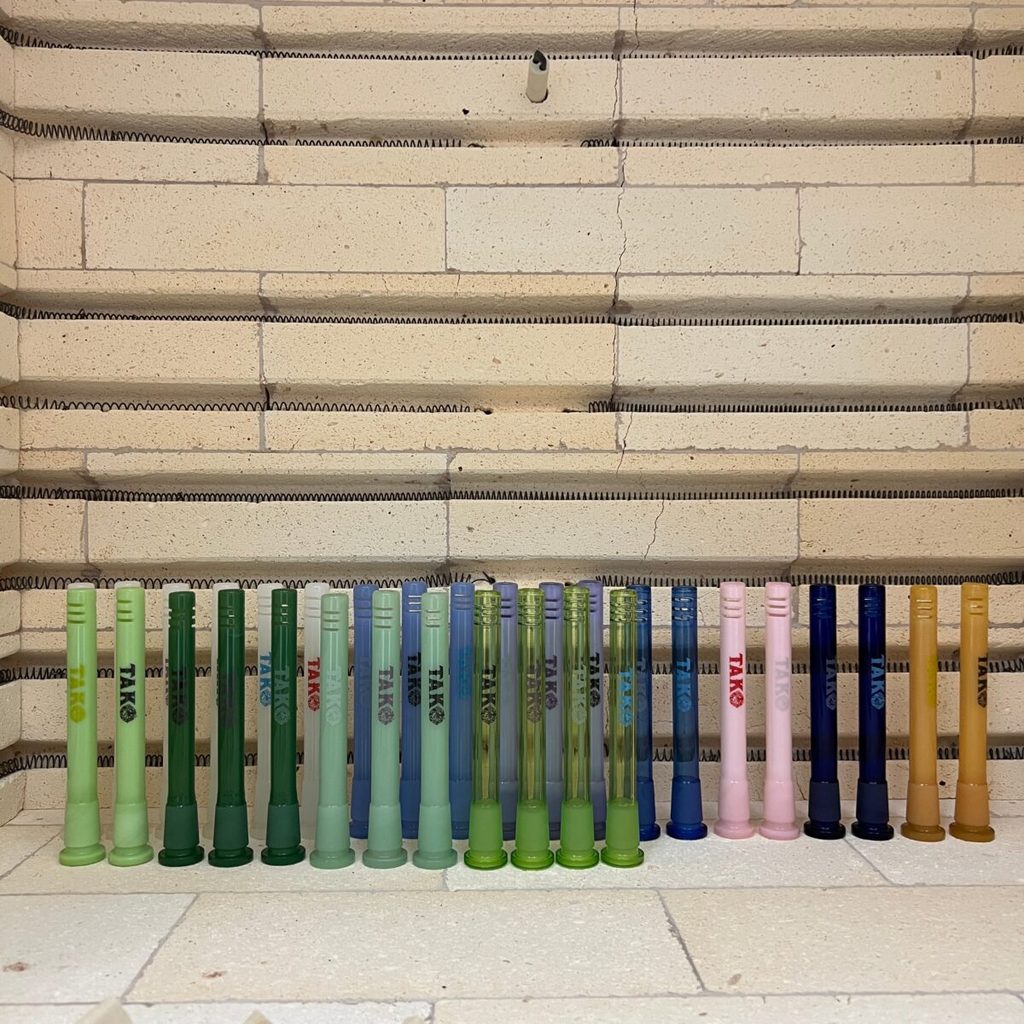
Once the old downstem is out and the bong’s receiving joint has been checked, confirm the replacement’s length and both connection sizes. For Tako Glass replacements, measure along the downstem from the top edge of the frosted ground-glass joint to the bottom tip. Include the ground-joint section, but exclude decorative collars or handles above it.
Check the listing’s measurement convention when buying elsewhere; sellers may use different reference points. If the old stem is broken, its surviving section does not give you the original length. Use a recorded measurement, the original listing, or ask for help establishing the fit.
You also need the outer joint size that fits the bong and the inner connection that accepts the bowl. Those can be different sizes. Our glass joint size guide explains how to identify the connections. The replacement should seat properly without its tip pressing against the chamber floor.
Browse our replacement downstems once you have those measurements. If the slide needs replacing too, check its connection against the new downstem before choosing a replacement flower bowl.
A stuck downstem or bong bowl does not automatically mean losing the bong. Give cleaning time to work, stop before gentle handling becomes force, and inspect the socket before fitting a replacement.
Frequently Asked Questions About Stuck Slides, Bong Bowls, and Downstems
How do you remove a stuck bong bowl or slide?
For a stuck bong bowl or slide, clean the joint and support the receiving socket while gently turning and withdrawing the bowl. The same approach applies whether the bowl is stuck in a fixed or removable downstem. Gradual warming with water is an option only for intact glass; never force or lever the parts apart.
How do you remove a broken downstem stuck inside a bong?
A broken downstem stuck inside a bong may release after cleaning loosens residue, but do not insert fingers or wedge tools into the broken opening. Ask the maker or a borosilicate repair artist to assess fragments that remain lodged. Inspect and thoroughly clean the entire piece before reuse.
How do you measure a replacement downstem for Tako Glass?
Measure a replacement downstem for Tako Glass from the top edge of the frosted ground-glass joint to the bottom tip. Include the ground-joint section, exclude decorative collars above it, and confirm both the bong and bowl connection sizes.
Can I soak a stuck bong bowl overnight?
Only soak a stuck bong bowl overnight if the cleaner’s instructions permit it and the product suits the glass and any decoration. Keep the assembly stable and follow storage, ventilation, and rinsing directions. An extended soak does not guarantee that the bowl will release.
Should I put salt directly into a stuck glass joint?
Do not pack salt into a stuck glass joint or twist the connection against trapped grains. Salt used in a cleaning method is not a joint lubricant. Rinse away grit before reassembly.
Why is my replacement bong bowl too tight?
A replacement bong bowl that is too tight may have the wrong joint size, an unsuitable fit, or contamination on the mating surfaces. Check the receiving socket’s size and condition, and contact the seller if the fit remains wrong. Do not force or sand the bowl to fit.
Will a joint clip stop my bowl from getting stuck in the downstem?
A joint clip retains compatible parts; it does not prevent residue buildup or release a bowl stuck in the downstem. Use only a correctly fitting clip according to the maker’s instructions, and keep the mating surfaces clean.
Why does my 18mm bong use a 14mm bowl?
An 18mm bong may use a reducing downstem with an 18mm outer connection and a 14mm inner opening for the bowl. Choose the bowl to match the downstem’s receiving opening, rather than the larger socket built into the bong.